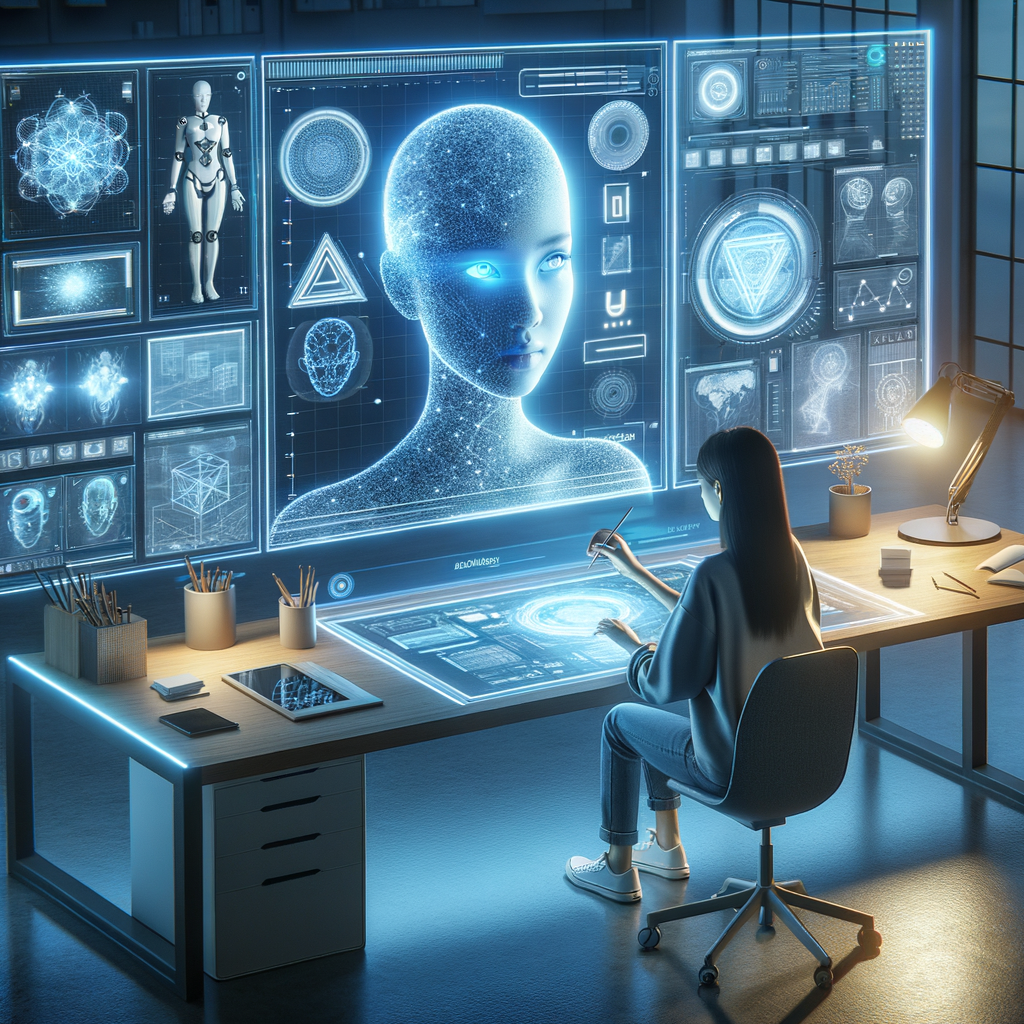
From Design to Direction: Bridging Product Design and AI Thinking
Today, the world of design is experiencing a fundamental shift. Artificial Intelligence (AI) is not just a tool for automating tasks; it is beginning to reshape the very principles and processes of product design. Designers are now challenged to rethink their roles, methodologies, and the experiences they create as AI-powered systems introduce new possibilities—and complexities—to the creative process.
What Happened
Recent developments highlight a growing convergence between traditional product design and AI-driven approaches. Organizations are increasingly integrating AI models into their design workflows, moving from static interfaces toward adaptive, generative experiences.
A major theme emerging is the evolution from "designing for users" to "designing with AI as a collaborator." Key product teams are experimenting with AI-driven prototyping, where generative models assist in creating, refining, and testing design variations at scale. This allows for rapid iteration and the exploration of diverse solutions that would be impossible through manual processes alone.
Another significant trend is the rise of generative experiential design. Here, products no longer offer fixed pathways, but instead dynamically adjust to user behaviors, preferences, and contexts. AI systems can personalize user journeys in real time, based on continuous learning from vast data streams. This shift is influencing everything from user interface layouts to content recommendations and interaction flows.
Additionally, designers are adapting their skillsets and mindsets. Design teams are increasingly hiring individuals with hybrid backgrounds in design, data science, and machine learning. Workshops and educational programs now focus on "AI thinking," emphasizing systems-level design, ethical considerations, and human-AI collaboration.
Why It Matters
This evolution carries profound implications for the future of design and user experience.
First, AI-augmented design accelerates innovation by enabling teams to test a wider array of ideas more quickly. This can lead to more inclusive and effective products, as generative models help discover solutions that traditional processes might overlook.
Second, the move toward generative experiences challenges conventional notions of authorship and control. Designers must now define not just what a product is, but how it adapts, learns, and evolves in partnership with its users—and with autonomous AI agents.
Third, the integration of AI introduces new ethical and practical challenges. Designers must grapple with questions around data privacy, algorithmic bias, and transparency, ensuring that AI-powered experiences remain trustworthy and fair.
Overall, this transition is reshaping both the design profession and the products people use daily, pushing the industry toward a future where human creativity and artificial intelligence are deeply intertwined.
Key Stats
- 68% of surveyed design teams report integrating generative AI tools into their workflows in 2025.
- Over 40% of new product design job postings in the last quarter listed experience with AI or machine learning as a preferred skill.
- AI-driven prototyping has reduced design iteration cycles by an average of 55% in leading tech firms.
- 90% of users in recent studies prefer adaptive, personalized experiences powered by AI over static interfaces.
What's Next
Looking ahead, the boundary between designer, user, and intelligent system will continue to blur. Expect to see more products that evolve in real time, tailoring themselves to individual needs and contexts. The demand for designers who can navigate both creative and technical domains will grow.
As generative AI models become more sophisticated, ethical frameworks and transparent design practices will be essential to maintain user trust. Organizations that successfully bridge the gap between design thinking and AI thinking will be well-positioned to lead in the era of generative experiences. The journey from design to direction is just beginning—its destination will be shaped by the choices designers make today.