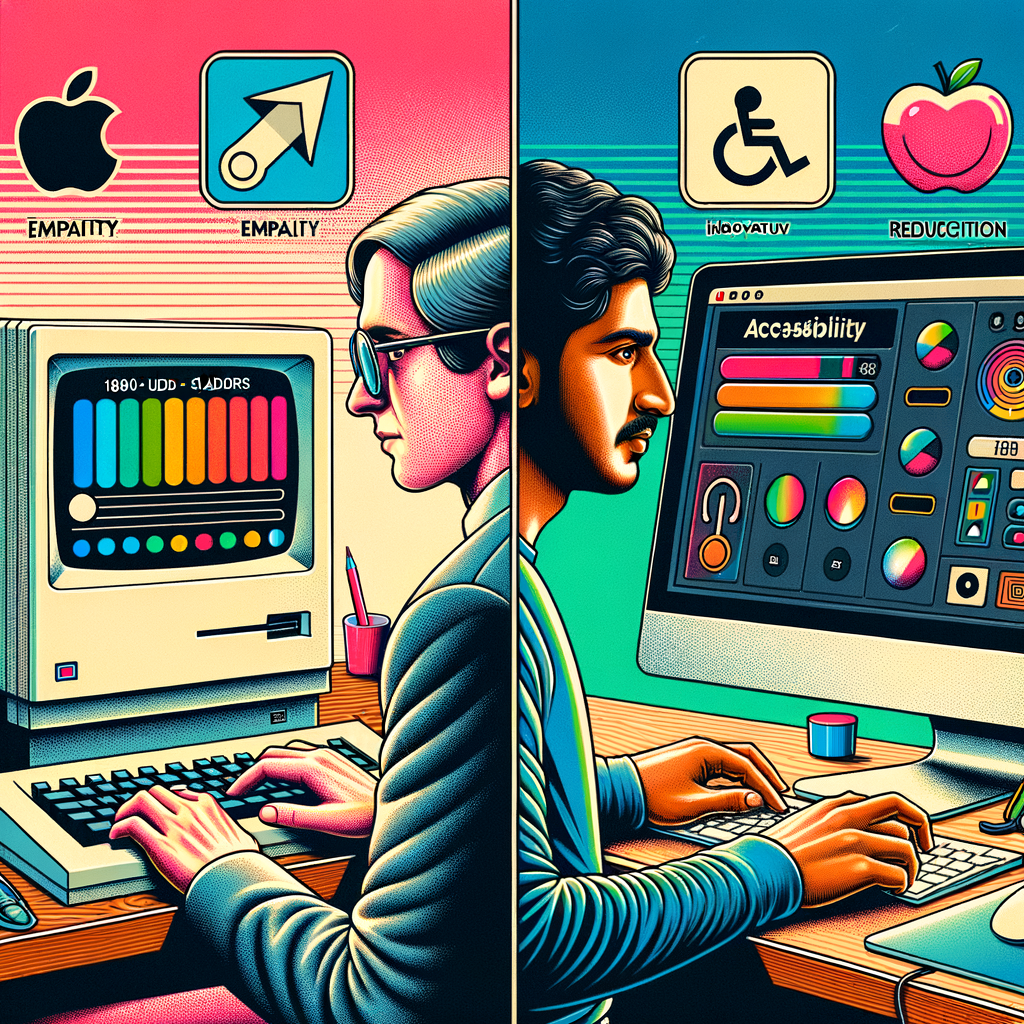
Design’s Past Shapes Its Future: Empathy, Accessibility, and the Art of User Experience
Today’s developments in the world of design offer a rare glimpse into how history, empathy, and emerging accessibility standards are shaping the tools and experiences of tomorrow. From the surprising origins of the Mac calculator’s interface, to the growing focus on inclusive design, to infrastructural innovations in terminals and desktop environments, the day’s news threads together a narrative of creativity, care, and evolution.
What Happened
A Playful History: Steve Jobs and the Mac Calculator
A story from 1982 surfaced, recounting how a young Macintosh developer let Steve Jobs experiment with on-screen sliders to customize the look of the Mac calculator. Jobs’ hands-on approach, rooted in a ten-minute session, not only influenced the calculator’s final design but also pioneered a new way of prototyping interfaces—letting non-designers physically interact with and adjust UI elements. This historic anecdote underscores the value of iterative, user-driven design methods.
Empathy at the Core of Design
Another article, “When Design Becomes Empathy: No User is Left Behind,” discusses the importance of recognizing and accommodating the diverse needs of users. The piece highlights how thoughtful design ensures access for all, especially those with visual, physical, or cognitive challenges. This focus on empathy is increasingly central as digital experiences become integral to daily life.
Design Thinking vs. AI
An exploration titled “Let designers think” makes the case for preserving space for human creativity and problem-solving in an era where artificial intelligence is rapidly automating design tasks. The article argues that while AI can assist, genuine innovation stems from designers being allowed—and encouraged—to think deeply about problems outside of algorithmic constraints.
Behavioral Design in Unlikely Places
With a touch of humor, “Everything I know about behavioral design I learned at Orange Julius” examines the subtle cues and interactions in physical and digital spaces that shape user behavior. While tongue-in-cheek, the article illustrates how even everyday experiences can inform effective, user-centered design strategies.
Accessibility Advances: GTK Adds Reduced Motion
On the technical front, the GTK graphical toolkit announced the addition of a “Reduced Motion” accessibility option, following the lead of platforms like macOS and Windows. This feature allows users who are sensitive to motion-based animations to enjoy a more comfortable experience, reinforcing the industry’s growing commitment to accessibility.
Rethinking the Terminal
Lastly, “the terminal of the future” discusses the challenges of redesigning foundational infrastructure tools, such as command-line terminals. The piece advocates for incremental adoption of new features while simultaneously pushing the boundaries of what the terminal can become, highlighting the tension between legacy compatibility and forward-thinking design.
Why It Matters
Today’s stories collectively demonstrate that design is as much about empathy and inclusion as it is about aesthetics or functionality. The retelling of Steve Jobs’ calculator session suggests that innovation often emerges from unexpected, playful experimentation. Meanwhile, the attention to accessibility—such as GTK’s reduced motion option—shows a maturing industry where user needs drive technical priorities.
The ongoing debate about the role of human thinking in design, especially amid the rise of AI, is a reminder that technology should augment, not replace, thoughtful creativity. As digital tools become more ubiquitous and complex, ensuring they remain usable and delightful for everyone is not just a technical challenge, but a societal imperative.
Key Stats
- In 1982, Steve Jobs influenced the Mac calculator interface in a single ten-minute design session.
- GTK, a major open-source toolkit, has joined macOS and Windows in offering a “Reduced Motion” accessibility setting.
- Accessibility features are now standard across all major desktop operating systems.
- The push for behavioral design principles extends beyond digital products—informing everything from fast food experiences to software interfaces.
What's Next
Looking ahead, expect to see more design processes that invite direct user participation, echoing the interactive prototyping that shaped the Mac calculator. Accessibility will continue to be a baseline expectation, not a bonus, as toolkits and platforms compete to serve the broadest possible audience. The friction between AI-assisted automation and human-led creativity will likely drive new debates—and new hybrid tools—that seek the best of both worlds. Meanwhile, infrastructural redesigns, like those proposed for the terminal, will proceed cautiously, balancing the need for innovation with the realities of legacy systems. In sum, the future of design will be shaped not just by technology, but by the human experiences it enables.