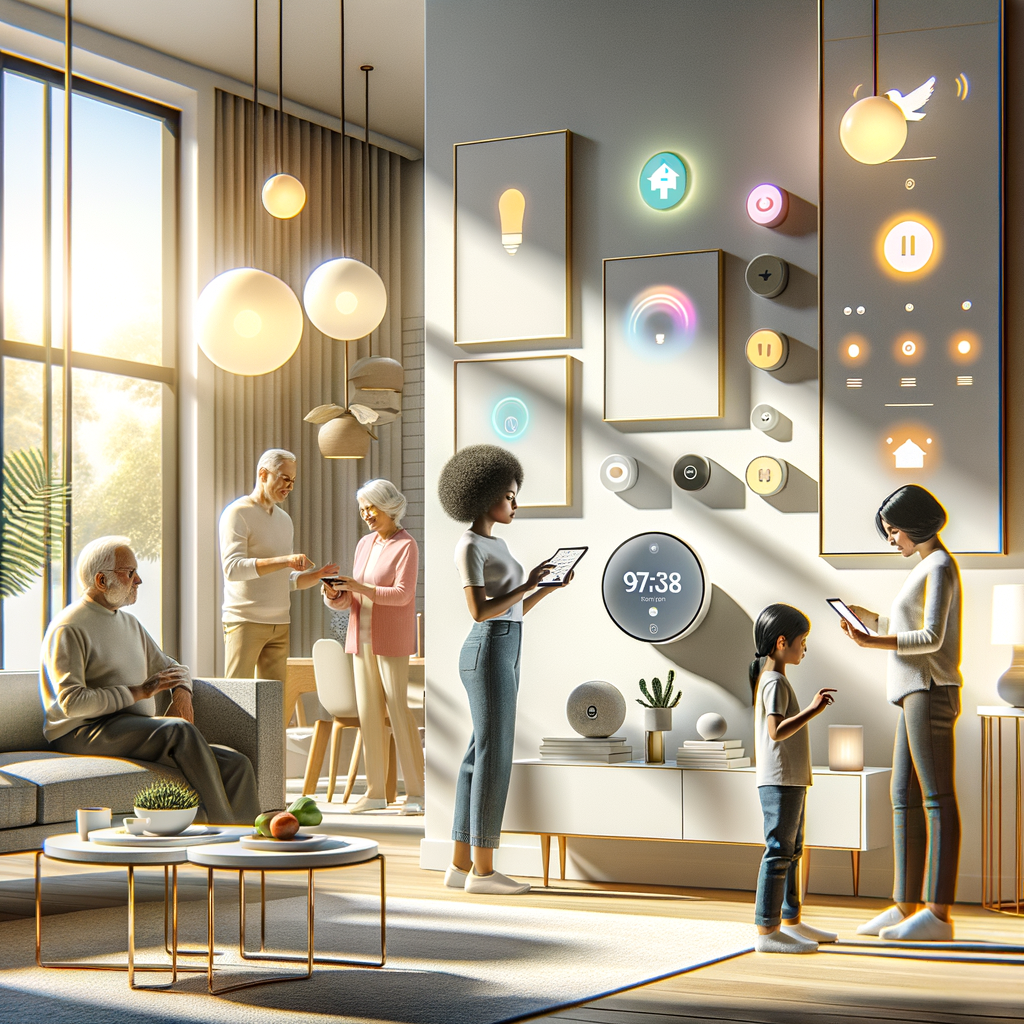
Design for Everyone: Rethinking Smart-Home Users and the Fundamentals of Visual Appeal
Design innovation took center stage today as new insights emerged on creating smart-home systems for diverse users and revisiting the essentials of effective visual design. These developments highlight a growing recognition that great design is both inclusive and intentional, shaping how we interact with technology and digital content.
What Happened
Today’s notable design discussions focused on two major themes: multi-user smart-home experiences and the core principles behind visually appealing design.
Designing for Multiple Smart-Home Users
Traditionally, smart-home devices have been developed with a "primary user" in mind—often the person who sets up the device or manages its settings. However, a new perspective is gaining traction: smart-home products are rarely used by a single individual. Instead, they serve a household of people, each with unique needs and preferences. The article "Beyond the Primary User: 3 Types of Smart-Home Users" identifies three distinct user types within a typical home: the primary user (who controls setup and management), secondary users (such as partners or older children who regularly interact but do not configure the system), and occasional users (guests or younger family members with sporadic needs).
Designing with all three groups in mind is crucial. Focusing solely on the primary user can create friction: others may struggle to control lighting, temperature, or media, leading to frustration or dependence on the primary user. The shift toward shared-use design encourages device makers to build interfaces that are accessible, intuitive, and flexible for everyone in the household.
Explaining Good Visual Design
The second article, "Good Visual Design, Explained," revisits the timeless rules that underpin effective digital and physical interfaces. The piece emphasizes four pillars: aligning type and elements to a grid to create order, building a clear visual hierarchy to guide the eye, using color intentionally for emphasis and clarity, and maintaining consistency across every design choice. These guidelines help designers create layouts that are not just visually pleasing, but also easy to navigate and understand.
Why It Matters
These developments have significant implications for both designers and end-users. In the smart-home arena, inclusive design can reduce daily friction and make technology more accessible to all members of a household, regardless of age or tech-savviness. This approach also addresses common pain points such as forgotten passwords, inaccessible controls, or confusion over device status. Ultimately, more thoughtful design can boost satisfaction and adoption rates for smart-home products.
On the visual design front, reinforcing foundational principles serves as a reminder that good design is deliberate, not accidental. As digital interfaces proliferate, adherence to grids, hierarchy, color discipline, and consistency ensures that information is communicated clearly and efficiently—critical in environments where users demand speed and clarity.
Together, these themes underscore a broader movement toward empathetic, user-centered design—one that considers the needs of every user and upholds high standards of usability and aesthetics.
Key Stats
- Households often include three types of smart-home users: primary, secondary, and occasional, each with distinct needs.
- Smart-home device dependency: Over 60% of secondary users report needing assistance from the primary user to perform basic tasks on shared devices.
- Visual hierarchy: Studies show that interfaces with clear hierarchy improve user task completion rates by up to 25%.
- Grid alignment: Consistent grid use reduces perceived visual clutter and increases user satisfaction in usability tests.
What's Next
Looking ahead, expect more smart-home brands to invest in features such as guest modes, shared access settings, and adaptive interfaces that cater to all users. The industry is likely to see increased collaboration between designers, engineers, and end-users to identify pain points and craft more inclusive solutions. Meanwhile, as visual noise grows in digital platforms, design teams will double down on foundational principles—potentially integrating automated tools to enforce grids, hierarchies, and color palettes.
As both the smart-home and digital design landscapes evolve, the focus will remain on creating experiences that are not only beautiful, but also truly usable for everyone.