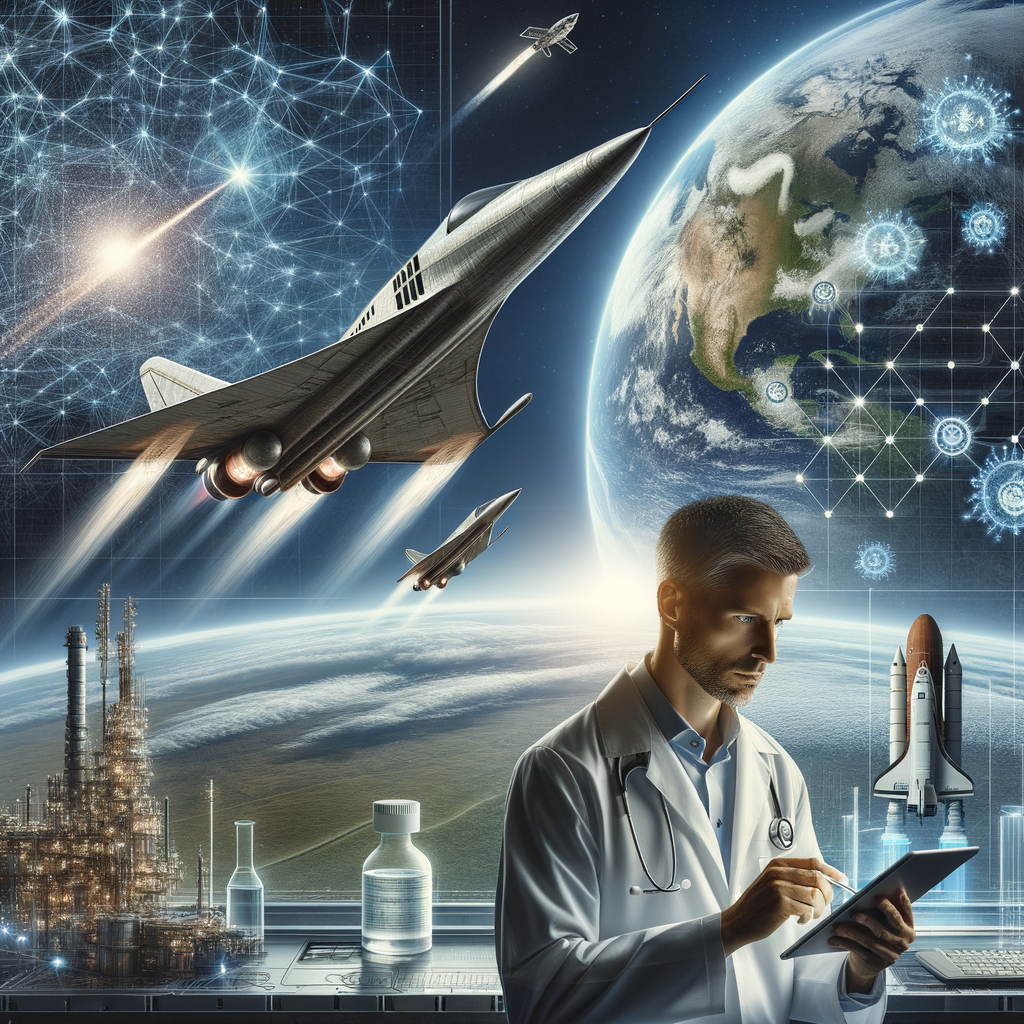
Science & Health Frontlines: From Supersonic Flights to a Looming Measles Crisis
Today’s Science & Health news cycle offers a sweeping view of how technology, medicine, and public policy intersect in 2025. From advances in supersonic aviation and space missions to new drug studies, health warnings, and the persistent threats of infectious disease, the headlines reflect both the promise and complexity of progress.
What Happened
Space, Speed, and Discovery
NASA’s quiet supersonic jet, the X-59, achieved its first flight, showcasing technology aimed at eliminating the infamous sonic boom. In orbit, China successfully launched an emergency lifeboat to return three astronauts from the Tiangong space station—demonstrating rapid-response capabilities in space safety. Meanwhile, NASA’s Starliner program with Boeing faced major downsizing: after a string of high-profile failures in 2024, the $4.5 billion deal was cut to just four flights, with only one remaining cargo mission planned for early next year and a sharply reduced number of crewed launches.
On the research front, a controversial new study claims to have detected the most promising dark matter signal yet, with gamma ray emissions hinting at the elusive substance—though skepticism remains among physicists. Another study revealed our solar system is moving three times faster than previously thought, potentially prompting a rethink of galactic models. Elsewhere, research into icy moons found that the formation of subsurface oceans could trigger boiling due to pressure shifts beneath rigid crusts.
Medicine, Policy, and Public Health
GLP-1 drugs—such as Ozempic—were found to improve heart health, but only if patients continue their regimen. Worryingly, 82% of trial participants saw weight regain and cardiovascular risks return after stopping medication. Compounding the challenges, a major study found that Ozempic had no effect on slowing Alzheimer’s progression, leading to a 6% drop in Novo Nordisk’s shares.
On the policy front, former President Trump ordered a nationwide AI Genesis Mission, instructing the Department of Energy to build a unified research platform integrating federal computing, data sets, and national laboratories—signaling a push for centralized scientific advancement.
Health safety made headlines as Walgreens recalled over 41,000 bottles of saline nasal spray due to bacterial contamination. Meanwhile, a CDC report warned that the US is just two months away from losing its measles elimination status, a setback not seen since 2000.
Tech, Brains, and Behavior
Researchers drew connections between untreated sleep apnea and neurodegenerative disorders, while another team mapped five distinct ‘eras’ of brain development, with “adult mode” not beginning until the early 30s. Technological interventions in mental health and drug use were explored in a discussion about whether technology can mitigate the effects of “bad trips.”
Elsewhere, a report cautioned that the proliferation of data centers in Texas could push the state’s electric grid to the brink this winter, risking blackouts due to their immense power demands. And in the world of natural science, mushroom foragers catalogued 160 species for food, medicine, art, and science, reflecting the ongoing intersection of biodiversity and human health.
Why It Matters
These stories highlight the delicate balance between progress, safety, and risk. The successes in space and aviation demonstrate ongoing innovation but are shadowed by costly setbacks and the need for stringent safety protocols. Medical breakthroughs remain conditional—GLP-1 drugs require lifelong adherence, and highly anticipated Alzheimer’s treatments may not deliver as hoped.
Public health is at a crossroads: resurging measles threatens decades of progress, while consumer safety recalls and new insights into chronic conditions underscore the need for vigilance. At the same time, the intersection of technology—whether in AI-driven science, electric grid stress, or mental health applications—raises new challenges and opportunities. Together, these developments illustrate the need for adaptive policy, robust oversight, and sustained investment in both innovation and infrastructure.
Key Stats
- 82% of participants in a GLP-1 drug trial regained weight after discontinuing treatment.
- Walgreens recalled over 41,000 bottles of saline nasal spray due to contamination.
- CDC data shows the US is two months away from losing measles elimination status, after first achieving it in 2000.
- NASA’s Starliner contract with Boeing was cut to just 4 flights following multiple failures.
- Mushroom foragers identified 160 wild species used for food, medicine, art, and science.
What's Next
Looking ahead, the scientific community and policymakers face critical decisions. NASA and its partners must rebuild confidence in crewed spaceflight, while China’s rapid response sets new benchmarks for astronaut safety. The US will need to act swiftly to prevent the loss of measles elimination status, requiring renewed public health campaigns and vaccination drives.
The ongoing evaluation of breakthrough drugs like GLP-1 agonists will shape the future of chronic disease management, with adherence strategies under scrutiny. Infrastructure resilience—whether in data centers or electric grids—will remain a pressing concern, especially as technological demands continue to grow. Lastly, as AI-driven policy initiatives gather momentum, scrutiny over implementation, data privacy, and effectiveness will intensify.