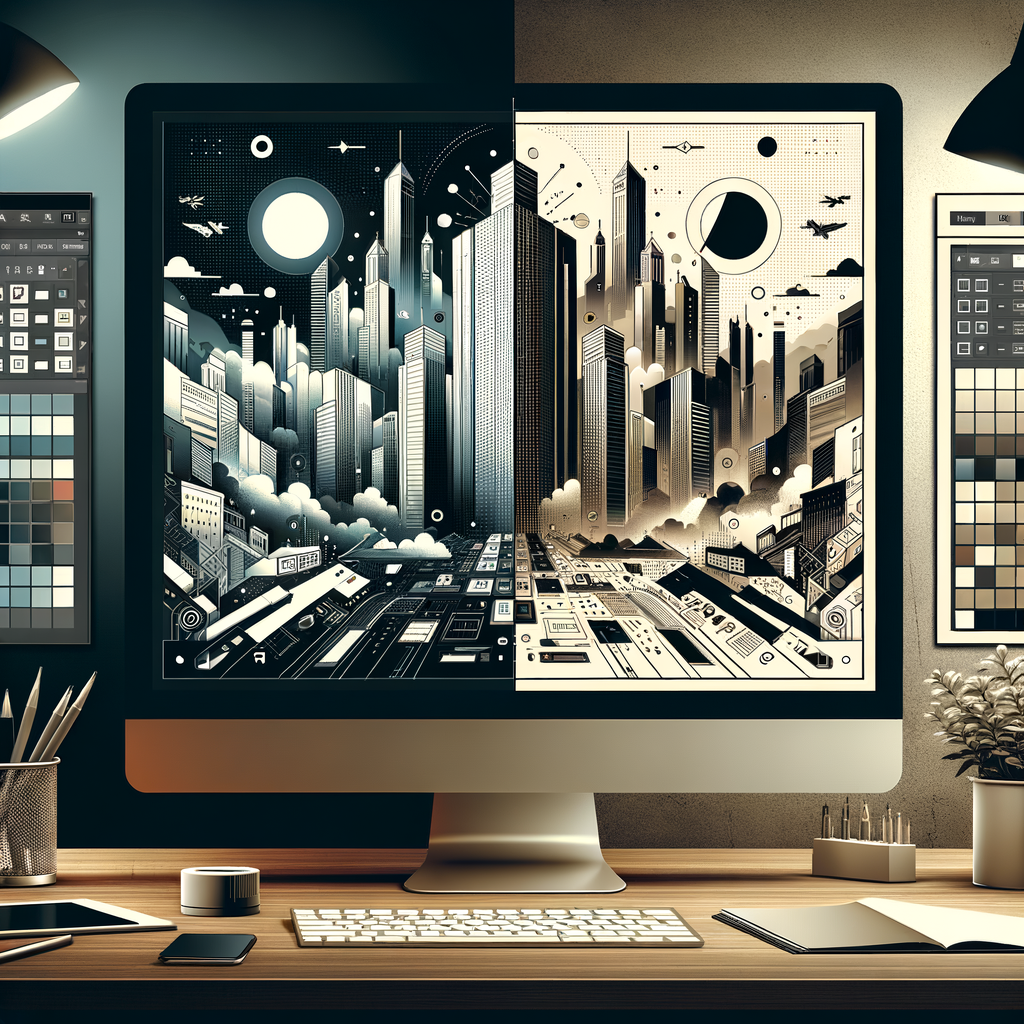
Design Choices in Focus: Visual Modes and Custom Maps Shape the Digital Landscape
Today's developments in the world of design highlight the ongoing evolution of user experience and customization. From the ongoing debate over dark mode versus light mode, to innovative tools enabling users to create personalized map posters, the design community is witnessing both scientific insight and creative empowerment.
What Happened
The Science of Visual Modes
The discussion around dark mode and light mode continues to gather momentum. Recent insights suggest that for individuals with normal vision, or those whose vision is corrected, light mode generally offers better visual performance. This advantage is most pronounced in terms of readability and speed of information processing. However, the narrative shifts for people with specific visual impairments. For example, individuals with cataracts and related ocular disorders may find that dark mode enhances their ability to discern content, reducing glare and improving contrast sensitivity.
Complicating the issue, there is emerging evidence that prolonged reading in light mode environments could be associated with increased risk of myopia (nearsightedness) over time. As digital device usage becomes ubiquitous, these findings could impact user interface design choices across the technology industry.
Creative Tools: MapToPoster
Meanwhile, on the creative front, a new tool is making waves in the digital design space. The open-source project "MapToPoster," available on GitHub under the originalankur account, allows users to transform their favorite cities into minimalist, visually striking map posters. This tool leverages code to let users customize, create, and export high-quality map-based artwork. The project is particularly notable for its focus on simplicity, enabling both designers and enthusiasts to produce elegant, data-driven visuals with minimal friction.
Why It Matters
The ongoing conversation about dark versus light mode is not just a matter of personal preference—it has significant implications for accessibility, productivity, and even long-term eye health. As more applications prioritize user-selectable themes, understanding the nuanced effects on different user groups is critical. For designers and product teams, these insights stress the importance of offering flexible, user-centric experiences.
On the creative side, tools like MapToPoster empower individuals to engage with geographic data in a personal, artistic way. By democratizing access to custom design creation through code, projects like this lower the barrier for self-expression and foster greater creativity in the intersection of art and technology. For both professionals and hobbyists, the ability to generate unique, clean visual representations of meaningful locations can serve as a powerful storytelling device.
Key Stats
- Light mode generally yields better visual performance for people with normal or corrected-to-normal vision.
- Individuals with cataract and related ocular disorders may benefit from using dark mode for improved readability.
- Long-term reading in light mode environments may correlate with increased risk of developing myopia.
- MapToPoster is an open-source tool on GitHub, enabling the creation and export of minimalist city map posters using code.
- The project emphasizes minimalist design and user control, catering to both designers and casual users.
What's Next
The debate between dark and light mode is likely to intensify as more research emerges, especially regarding long-term effects on vision and how digital interfaces can be optimized for inclusivity. Expect to see more granular customization options in operating systems and applications, allowing users to tailor visual modes not just for aesthetics but also for health and accessibility.
On the creative tooling front, projects like MapToPoster are part of a larger movement toward personalized, code-driven design. As open-source solutions mature, we can anticipate greater integration of data and design, leading to new forms of visual storytelling and self-expression. Designers, developers, and everyday users alike will continue to benefit from tools that bridge the gap between technical capability and creative aspiration.