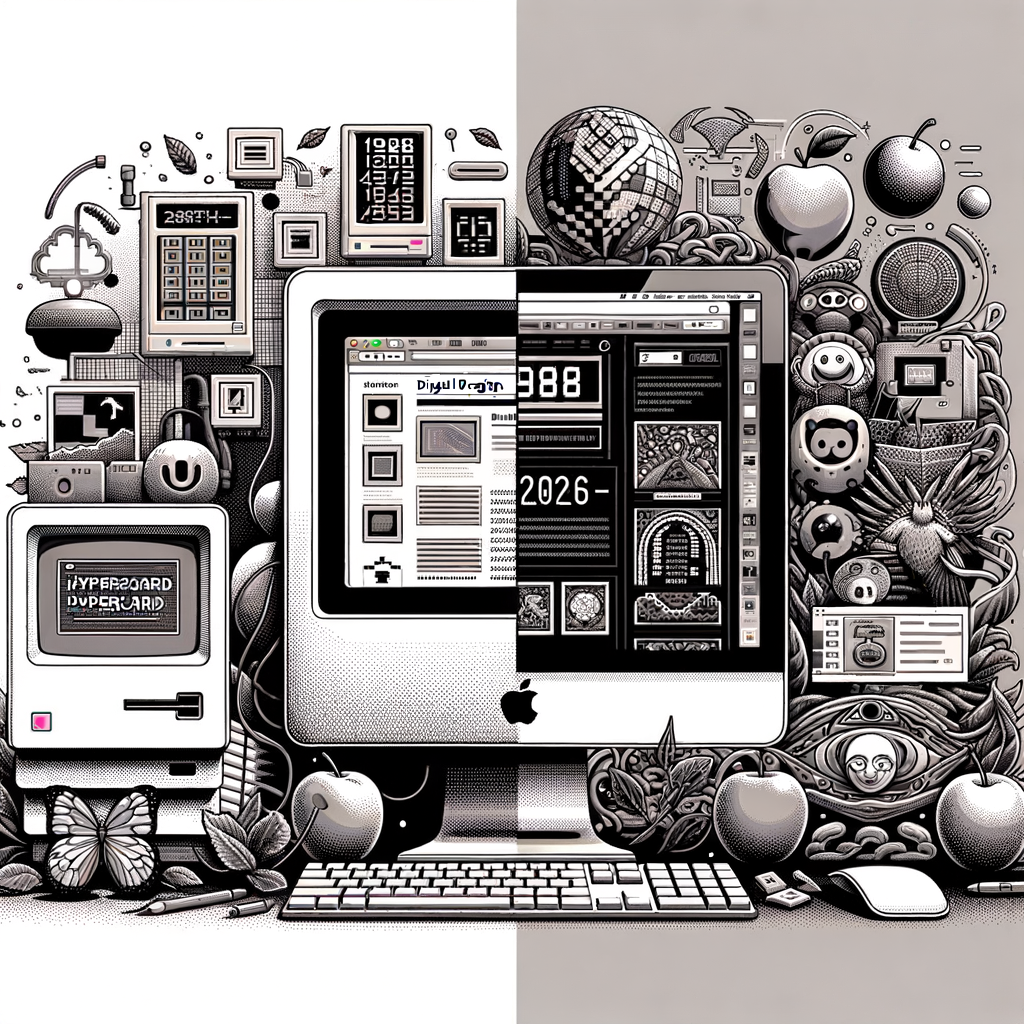
Retro Pixels and Human Touch: Design Revisited in 2026
Today in the design world, two developments captured the intersection of digital nostalgia and modern web creativity. A significant archive of HyperCard graphics from the late 1980s made a splash among designers and digital historians, while a novel CSS project explored the nuances of human expression online. Both stories highlight how design continues to bridge past and present, offering tools and inspiration for future innovation.
What Happened
Art Bits from HyperCard: A 1988 Graphic Archive
A major collection of over 700 original graphics from Apple's HyperCard platform, dating back to around 1988, has been released for public exploration. HyperCard, a pioneering hypermedia system for the Macintosh, was renowned for its "stacks"—interactive cards that allowed users to combine text, images, and scripts. The newly surfaced graphics, colloquially termed "crunchy" for their pixelated, lo-fi aesthetic, offer a rare glimpse into early digital art and interface design. The archive is being cataloged, with the original bitmaps preserved for research, remixing, and educational purposes.
"this css proves me human": Experimental Web Identity
In a separate development, a designer published a playful CSS-focused project titled "this css proves me human." The project consists of a collection of blog post layouts and visual experiments that intentionally resist rigid, machine-like uniformity. By embracing irregular margins, hand-drawn styles, and unexpected visual quirks, the CSS demonstrates subtle cues of human authorship. The creator notes that these designs are more likely to evoke organic, personal touch than to serve as practical infrastructure—"I don't think I can build a fence with these posts," they quipped, underlining the experimental nature of the work.
Why It Matters
The resurfacing of HyperCard graphics is more than an exercise in nostalgia. As designers revisit these artifacts, they gain insight into foundational UI patterns and the roots of digital creativity. Such collections inform contemporary design systems by reminding practitioners of constraints that fostered innovation—limited palettes, grid-based compositions, and the necessity for clarity at low resolutions.
Meanwhile, the CSS project challenges prevailing trends toward automation and algorithmic design. By foregrounding the "human" in digital expression, it raises questions about how designers can signal authenticity and individuality in an era of AI-generated content. This is especially relevant as web frameworks become increasingly standardized; such experiments encourage a re-examination of what makes digital experiences feel personal and engaging.
Key Stats
- Over 700 original HyperCard graphics from circa 1988 released for public access
- Archive represents work from the early Macintosh era, including pixel art and interface elements
- The "this css proves me human" project features multiple CSS layouts with hand-drawn and irregular styles
- Both projects are freely available for study, remixing, and educational use
What's Next
The HyperCard archive is expected to fuel further research into digital heritage and inspire new retro-inspired design projects. Curators plan to expand documentation, making the graphics more accessible to educators and developers. On the CSS side, the conversation around "human" web design is likely to grow, prompting more designers to experiment with breaking the mold of algorithmic uniformity. Look for fresh collaborations between digital historians and contemporary creators, as well as new tools that blend the best of both eras.