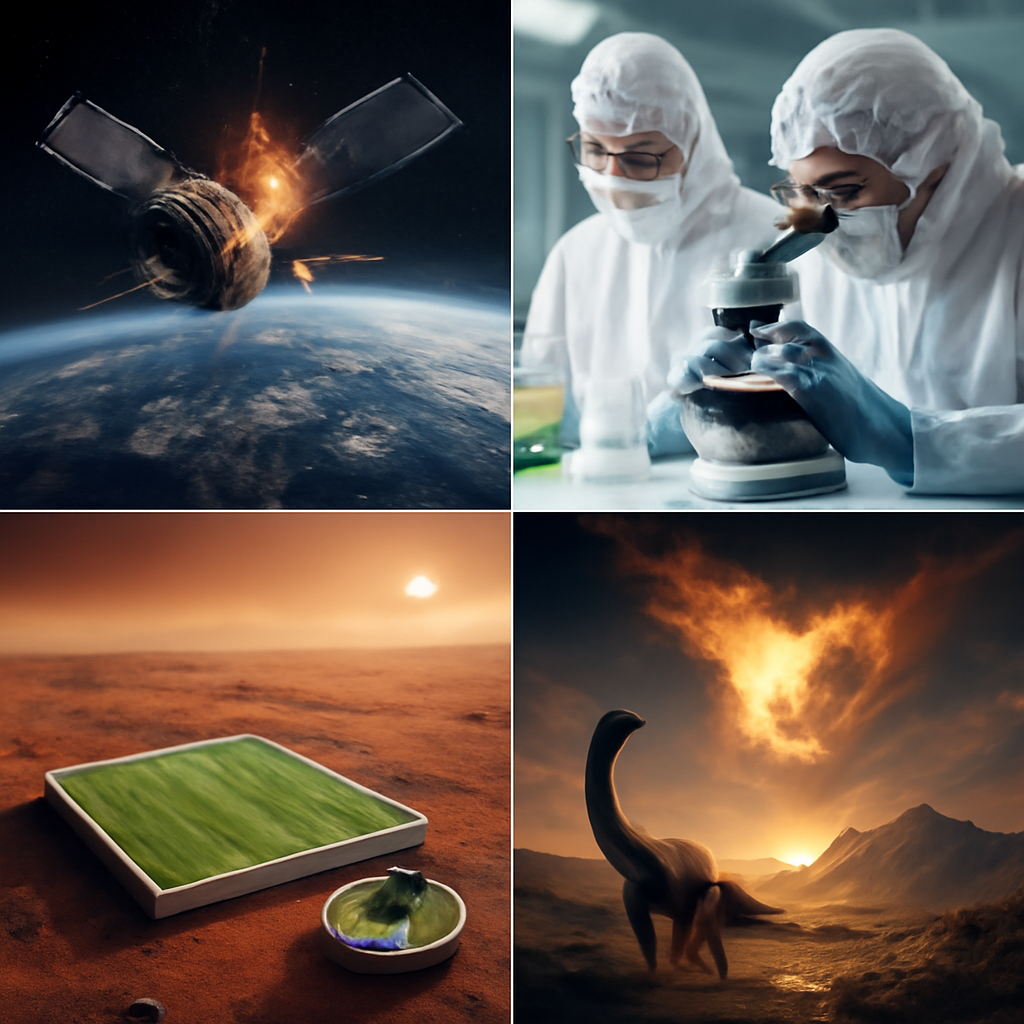
Science in Crisis: Space Missions, Lab Safety, and the Ethics of Innovation
Intro
Today's science and health headlines reveal a landscape marked by both astonishing innovation and serious setbacks. From a stalled satellite rescue mission to the ethical complexities of gene-editing trials, the stories underscore the intricate balance between discovery and responsibility. Here’s a closer look at the day’s top developments.
What Happened
1. Swift Rescue Mission Hindered by Technical Glitch
The Swift rescue mission, designed to aid the ailing Link satellite, has hit a critical snag. Preliminary investigations reveal that two of Link's three reaction wheels—vital for precise orientation in space—are inoperable. This mechanical failure threatens the mission’s ability to maneuver, potentially jeopardizing its objectives.
2. Sardinian Algae Wins Recognition for Astronaut Diets
In a notable achievement for astrobiology, a research team including the University of Cagliari has received international acclaim. Their patented discovery: a Sardinian algae with promising nutritional properties for astronaut diets, potentially paving the way for sustainable human missions to Mars.
3. Lab Mishap Exposes Students to Deadly Pathogen
A college laboratory course went awry when students, tasked with identifying a benign microorganism, instead handled a dangerous pathogen. As a result, 32 people are now on antibiotics to prevent infection, raising serious questions about lab safety protocols and oversight.
4. Gene-Editing Trial Under Investigation After Child’s Death
Researcher Zilong Qiu is under investigation for allegedly concealing the death of a six-year-old participant in a gene-editing therapy trial. The incident, which occurred more than a year ago, highlights ongoing concerns about transparency and patient safety in cutting-edge medical research.
5. Study: Chicxulub Impact Charred Dinosaurs in Hours
A new study adds vivid detail to the story of the mass extinction that ended the age of dinosaurs. Researchers now suggest that the Chicxulub asteroid impact generated enough heat to incinerate life across vast distances within hours, contributing to the rapid die-off.
Why It Matters
These developments illustrate both the promise and peril of scientific advancement. Technical failures in space missions can have costly consequences for research and commercial interests. Advances like the Sardinian algae show the potential for science to solve future challenges, such as sustaining life on Mars. At the same time, lapses in lab safety and research ethics remind us of the critical need for rigorous oversight and transparent communication.
Key Stats
- 2 of 3 reaction wheels on the Link satellite are inoperable, stalling the Swift mission.
- 32 college lab participants placed on antibiotics after accidental exposure to a deadly germ.
- 1 international patent awarded for Sardinian algae with astronaut dietary potential.
- 1+ year delay before investigation launched into the gene-editing trial death.
- Immediate extinction: New data suggest most dinosaurs died within hours after the Chicxulub impact.
What's Next
The Swift mission team faces urgent engineering decisions to salvage the rescue operation. Lab safety protocols across educational institutions are likely to undergo renewed scrutiny. The gene-editing case may prompt regulatory changes, while the Sardinian algae research could accelerate efforts to develop closed-loop food systems for space travel. Finally, the latest extinction research will inform both public understanding and academic debate on planetary catastrophes.