Science & Health Daily Recap: Hormones, Heatwaves, and Human Origins
What Happened
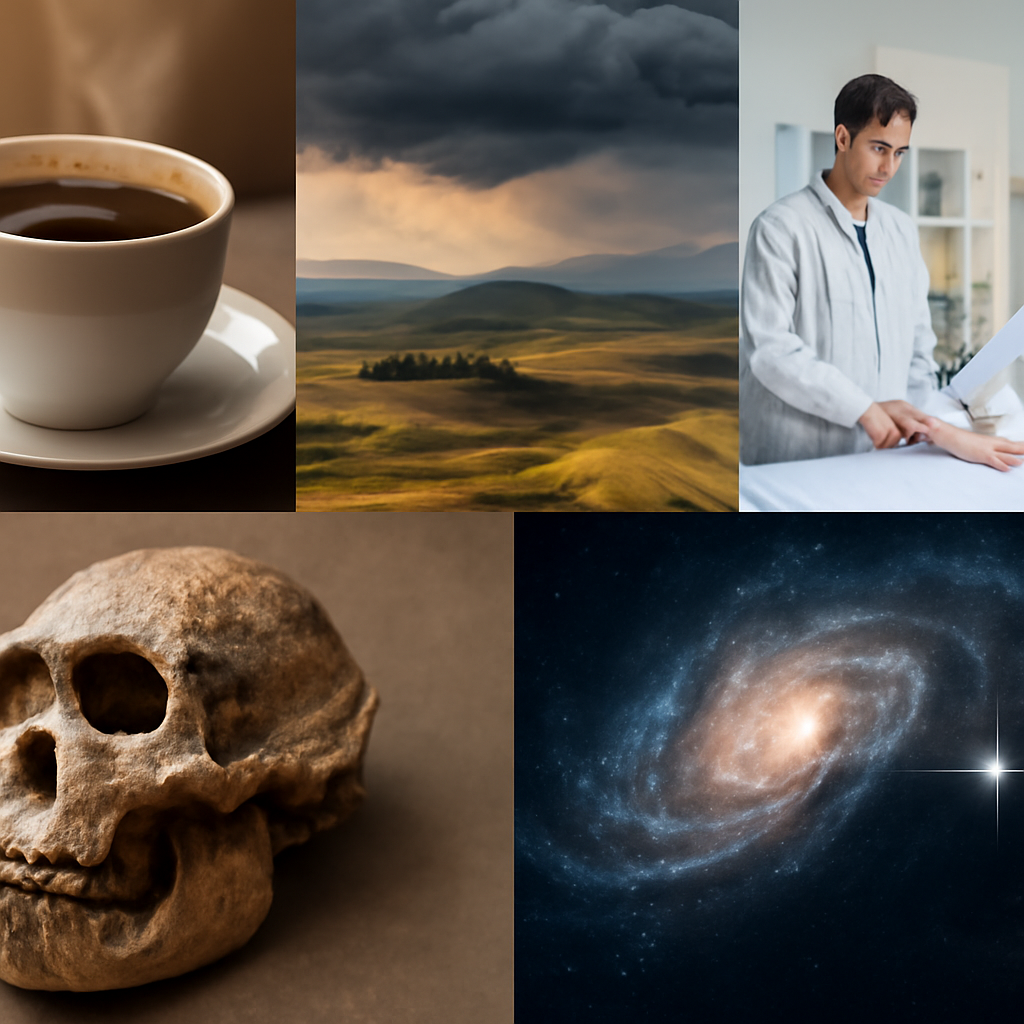
Today's science and health news spans new research on the effects of coffee on hormone levels, significant weather developments across Italy, and major updates in both medicine and space science. Highlights include a Finnish study linking regular coffee consumption to higher levels of sexual hormones, ongoing weather instability in Italy, the cancellation of planned upgrades to the Ariane 6 rocket, and a rare medical error in Tennessee. Meanwhile, new paleontological findings suggest ancient apes might have been closer to humans than previously believed, and astronomers are tracking the galaxy’s fastest star to reveal more about our black hole.
Why It Matters
These stories reflect the breadth of ongoing scientific inquiry and its direct influence on daily life. Understanding how coffee affects hormone levels could inform future dietary recommendations. Weather volatility underscores the impact of climate systems on public safety. The Ariane 6 decision could affect Europe’s standing in space exploration. Medical safety is in the spotlight following a serious hospital error. Finally, advances in astronomy and anthropology continue to reshape our understanding of the universe and human origins.
Key Stats
- Finnish study analyzed hormone levels in 2,264 adults, finding habitual coffee drinkers had higher sexual hormone levels
- Italy to experience a shift from storms to renewed heat, with "bollino rosso" (red alert) for extreme temperatures returning
- The Ariane 6 rocket’s upgrade cancellation marks a significant change in Europe's space ambitions
- S301, the galaxy’s fastest known star, orbits Sagittarius A* at speeds sufficient to test black hole physics
- At least one woman was paralyzed due to a drug mix-up at a Tennessee hospital, now under state investigation
What's Next
Researchers will likely investigate the mechanisms behind coffee’s hormonal effects, and health agencies may update dietary guidance. Italian authorities and meteorologists will monitor weather developments as the nation shifts between storms and heatwaves. European space agencies will reassess the Ariane 6 program’s future. In medicine, regulatory scrutiny is expected to increase following the Tennessee hospital incident. Further studies on ancient apes and galactic phenomena could yield new insights into human evolution and the nature of black holes.