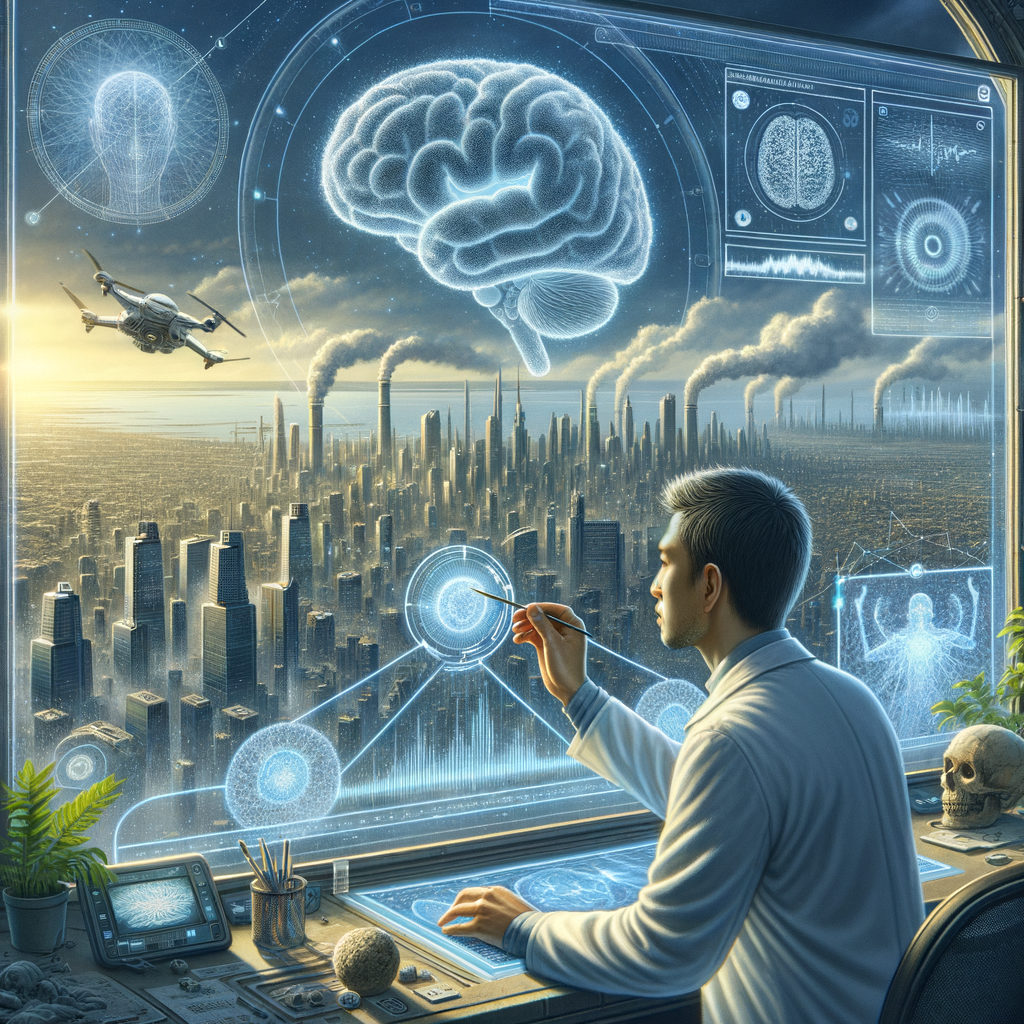
From Airborne Threats to AI Therapies: The Science & Health Breakthroughs Shaping Tomorrow
Today’s science and health headlines reveal a landscape in rapid transformation. From the invisible dangers in the air we breathe, to AI’s expanding role in nutrition and mental health, researchers are pushing boundaries across biology, technology, and the frontiers of the mind. Here’s what unfolded on November 1, 2025.
What Happened
Environment & Brain Health
A series of recent studies has strengthened the link between air pollution and neurological disease. Researchers are zeroing in on how exposure to airborne pollutants may raise the risk of dementia, highlighting the urgent need for cleaner air standards and further investigation into environmental impacts on cognitive function.
Climate change’s fingerprints became even more evident, as new research found that Hurricane Melissa was made four times more likely by unusually warm ocean waters. This underscores the rising urgency of understanding and mitigating the health impacts of extreme weather, from direct injury to long-term mental health effects in affected communities.
Technology in Health: AI, Sensors, and Data
Personalized health and wellness has taken a leap forward as AI-powered diet planning apps are now making tailored nutrition accessible well beyond specialized clinics. Machine learning is also entering mental health care, with clinical trials showing AI-based therapy can reduce depression by up to 51%. These advances are paralleled by calls to rethink the next competitive frontier—not just traditional data, but biometric data that captures the nuances of individual physiology.
Medical hardware is advancing too. Engineers have developed a silicon sensor chip that can survive reactor-level heat and radiation, opening the door to real-time monitoring inside nuclear reactors—an innovation with profound safety implications.
The Brain: Interfaces, Music, and Memory
Scientific fascination with the brain continues to grow. Brain-computer interfaces are edging closer to practical applications, raising questions about the future of neurosurgery and mind-machine communication. Meanwhile, researchers are experimenting with the impact of music on cognitive performance, and neuroscientists like Steve Ramirez are exploring how memory manipulation could treat depression and other mental conditions—blurring the boundaries of what’s possible in neurotherapy.
Fundamental Science: Quantum, Dinosaurs, and Statistics
Theoretical progress is also in the spotlight. Mathematicians have finally cracked the “10 Martini” problem, revealing new connections between quantum mechanics and intricate mathematical structures. Paleontologists, meanwhile, are uncovering dinosaur “mummies” with preserved skin, spikes, and even reptilian hooves, offering new insights into prehistoric life.
In the data science realm, simple guides to Pearson correlation and hypothesis testing are demystifying statistical tools for both scientists and the public, reflecting a broader move toward transparency and accessibility in research methodology.
Why It Matters
These developments illustrate a science and health ecosystem that is increasingly interconnected. Understanding environmental risks to brain health is critical as populations age. Climate-driven catastrophes demand new strategies for public health preparedness. AI’s integration into diet and therapy offers the prospect of more personalized and effective care—while also raising questions about privacy, equity, and the unintended consequences of digital health solutions.
The breakthroughs in brain-computer interfaces and memory manipulation signal a potential revolution in how we treat cognitive and psychological disorders. At the same time, fundamental advances in quantum mathematics and paleontology expand our grasp of both the universe’s deepest principles and the story of life on Earth.
Key Stats
- Air pollution is increasingly linked to higher rates of dementia, according to multiple new studies.
- AI therapy has demonstrated a 51% reduction in depression symptoms in recent clinical trials.
- A newly developed sensor chip can function at temperatures up to 1,500 degrees—suitable for nuclear reactor cores.
- Hurricane Melissa was found to be four times more likely due to climate change-amplified ocean temperatures.
- Paleontologists have discovered duck-billed dinosaur mummies with preserved skin and the first evidence of reptilian hooves.
What's Next
Expect to see continued momentum in personalized and AI-driven health tools, with growing attention to ethical standards and data privacy. Climate change will remain a central concern as scientists further unravel its cascading effects on human and ecological health. Advances in brain science and neurotechnology may soon yield new therapies for mental health and cognition, while fundamental research continues to inspire fresh perspectives on old scientific mysteries. Public understanding of statistics and scientific reasoning is likely to deepen as accessible resources proliferate, empowering more people to engage meaningfully with the research that shapes their lives.