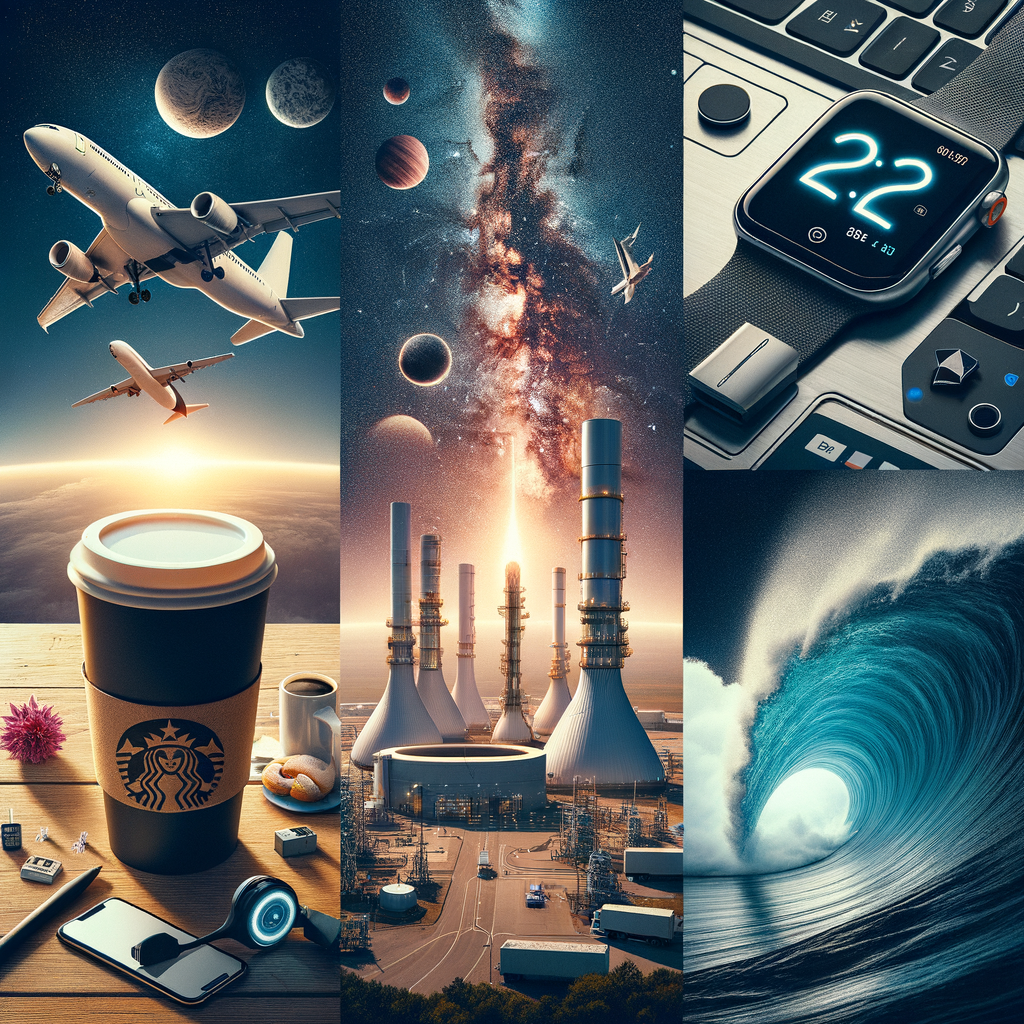
From Coffee Quality at 30,000 Feet to Cosmic Clues: Today’s Science & Health Highlights
Today’s roundup in Science & Health underscores the breadth and depth of current research and innovation. From the surprising risks of in-flight coffee to breakthroughs in fusion energy and cosmic discoveries, these five stories highlight how science is shaping our understanding of health, technology, and the universe.
What Happened
Airline Water Quality Under Scrutiny
A new report has revealed that many airlines are serving drinking water of relatively poor quality, raising concerns about the safety of beverages prepared onboard, including coffee. Researchers found that water tanks and supply chains on aircraft often fail to meet high hygiene standards, potentially exposing travelers to contaminants.
Integration of Glucose Monitoring with Consumer Tech
Abbott’s over-the-counter glucose monitors can now be used with Withings devices, marking a significant step in consumer health technology integration. The partnership mirrors previous collaborations, such as that between Dexcom and Oura, making continuous health monitoring more accessible and actionable for users managing blood sugar levels.
Betelgeuse’s “Betelbuddy” Companion Edges Closer to Confirmation
Astronomers have long speculated that Betelgeuse, the red supergiant star, has a hidden companion—nicknamed “Betelbuddy.” New evidence from recent observations is bringing the astronomical community closer to confirming its existence, with implications for our understanding of stellar evolution and binary star systems.
Fusion Progress: Commonwealth Fusion Systems Installs Reactor Magnet
Commonwealth Fusion Systems (CFS) has announced the successful installation of a critical reactor magnet for its Sparc fusion reactor. In parallel, CFS has partnered with Nvidia to build a digital twin of the reactor, promising more precise tuning and accelerated development of fusion power technology. Construction of Sparc remains on schedule, reinforcing CFS’s frontrunner status in the fusion race.
Russian Tsunami Breaks the Mold, Thanks to Satellite Data
New satellite data has revealed that the massive tsunami triggered by a giant Russian earthquake in 2025 did not follow established models of tsunami behavior. The event’s unusual characteristics, recorded from space, are prompting scientists to reconsider how tsunamis are predicted and understood globally.
Why It Matters
These developments collectively reflect the evolving landscape of science and health:
- Airline water quality presents a tangible public health concern for millions of travelers, highlighting overlooked risks in routine experiences like drinking coffee on planes.
- Technology integration in health devices empowers individuals to better manage chronic conditions, signaling a shift toward more personalized and preventive healthcare.
- Progress with Betelgeuse’s possible companion could reshape fundamental astrophysical theories, while advances in fusion energy promise a clean and nearly limitless power source.
- The unprecedented Russian tsunami event underscores the need for improved disaster modeling, potentially enhancing early warning systems and saving lives in the future.
Key Stats
- The 2025 Russian tsunami defied established models, as revealed by new satellite observations.
- Commonwealth Fusion Systems has completed installation of a major reactor magnet and is developing a digital twin with Nvidia.
- Abbott’s over-the-counter glucose monitors now integrate with Withings devices, following similar partnerships like Dexcom-Oura.
- Many airlines were found to have subpar drinking water quality, according to a new research report.
- Evidence for Betelgeuse’s hidden stellar companion is stronger than ever, bringing astronomers closer to confirmation.
What’s Next
Looking ahead, airlines may face increased pressure to improve water safety standards, potentially prompting regulatory changes and new testing protocols. In personal health tech, expanded device integration is likely to accelerate, further empowering consumers. Astronomers will continue to monitor Betelgeuse for definitive signs of its companion, which could lead to new discoveries about massive stars. Fusion energy remains on the cusp, with CFS’s digital twin and reactor construction setting the stage for potential milestones. Finally, tsunami researchers will revise predictive models, leveraging satellite data to better anticipate and mitigate future disasters.