Science & Health Daily: From Space Discoveries to Game-Changing Health Tech
Today’s science and health news reveals a landscape shaped by rapid innovation, unexpected setbacks, and the promise of better living. From the frontiers of space exploration to advances in women’s health and nutrition, the latest developments underscore how science and technology continue to redefine what’s possible.
What Happened
Space: Surprises and Setbacks
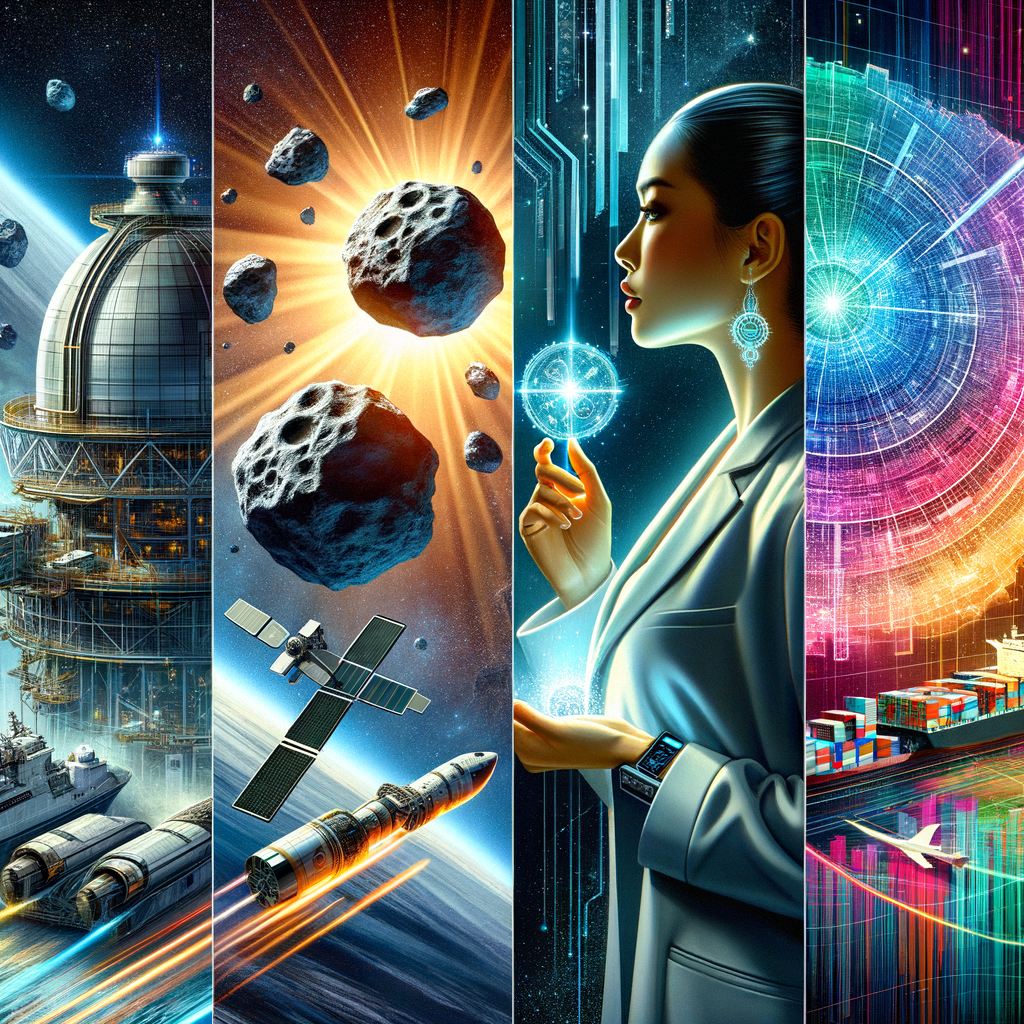
Astronomers have identified a record-breaking asteroid spinning faster than any other of its size in the asteroid belt, challenging current models of asteroid cohesion and evolution. Meanwhile, NASA is postponing a scheduled spacewalk outside the International Space Station (ISS) due to a crew medical issue. This incident has sparked discussions about an early crew return and highlights the ever-present risks of long-duration spaceflight. In a separate milestone, historic NASA test towers used for the Apollo and Shuttle programs are set for demolition, marking a symbolic transition to the Artemis era. In a bold philanthropic move, former Google CEO Eric Schmidt has announced plans to personally fund a replacement for the Hubble Space Telescope—a gesture described as a "very significant contribution to the astronomical community."
Health & Medicine: New Devices and Guidelines
A new review finds that people who stop taking the obesity drug Ozempic rapidly regain lost weight, often at a faster rate than those who shed pounds through lifestyle modifications alone. This finding raises critical questions about the sustainability of pharmaceutical weight-loss interventions. On the women’s health front, CES 2026 showcased two notable advancements: OhmBody, a neurostimulation device designed to alleviate menstrual symptoms, and a perimenopause tracker aiming to demystify and manage this transitional phase. Meanwhile, the U.S. government has updated its Dietary Guidelines for Americans, emphasizing evidence-based nutrition, real food, and common sense as the cornerstones of public health policy.
Technology & Visualization: Health and the Environment
OpenAI has launched ChatGPT Health, a new mode that integrates medical records to provide tailored health guidance—marking a significant evolution in AI-powered healthcare assistance. In environmental science, researchers have unveiled a cheap, effective carbon capture material that could accelerate efforts to combat climate change if brought to market at scale. Additionally, Shipmap.org offers a striking visualization of global shipping traffic, providing insights into trade flows and their environmental impact.
Why It Matters
These developments illustrate how science and technology are both confronting persistent challenges and seizing new opportunities. The rapid weight regain seen in Ozempic users spotlights the complexity of obesity and the need for sustainable interventions. Advances in women’s health technology are beginning to fill long-standing gaps in care, offering hope for millions. In space, the ISS setback and the demolition of legacy infrastructure reflect the risks and transitions inherent in pushing the boundaries of exploration, while private funding for a Hubble successor signals a new era of public-private collaboration. OpenAI’s move into health data raises important questions about privacy, data security, and the role of AI in personal medical decision-making. On the environmental front, breakthroughs in carbon capture and real-time shipping data visualization could inform policy responses to climate change and global trade.
Key Stats
- A newly discovered asteroid in the main belt is spinning faster than any previously observed object of its size.
- People discontinuing Ozempic typically regain lost weight quickly—often more rapidly than those losing weight through lifestyle changes.
- NASA has postponed an ISS spacewalk and is considering an early crew return due to a crew member’s medical issue.
- The U.S. Dietary Guidelines have been updated, reinforcing science-based nutrition policy for the nation’s 330 million residents.
- OpenAI’s new ChatGPT Health mode integrates users’ medical records for personalized health advice.
What's Next
Expect follow-up research into long-term obesity treatments and the broader impact of AI-driven health tools like ChatGPT Health. The demolition of NASA’s historic test towers will clear the way for Artemis-era infrastructure, while the astronomical community awaits further details on Eric Schmidt’s Hubble successor project. In women’s health, devices like OhmBody and perimenopause trackers are poised for clinical testing and broader adoption. The rollout of new Dietary Guidelines will influence food industry trends and public health campaigns. Environmental researchers are likely to focus on scaling up the new carbon capture material, while tools like Shipmap.org may become essential for policymakers navigating the intersection of trade and sustainability.