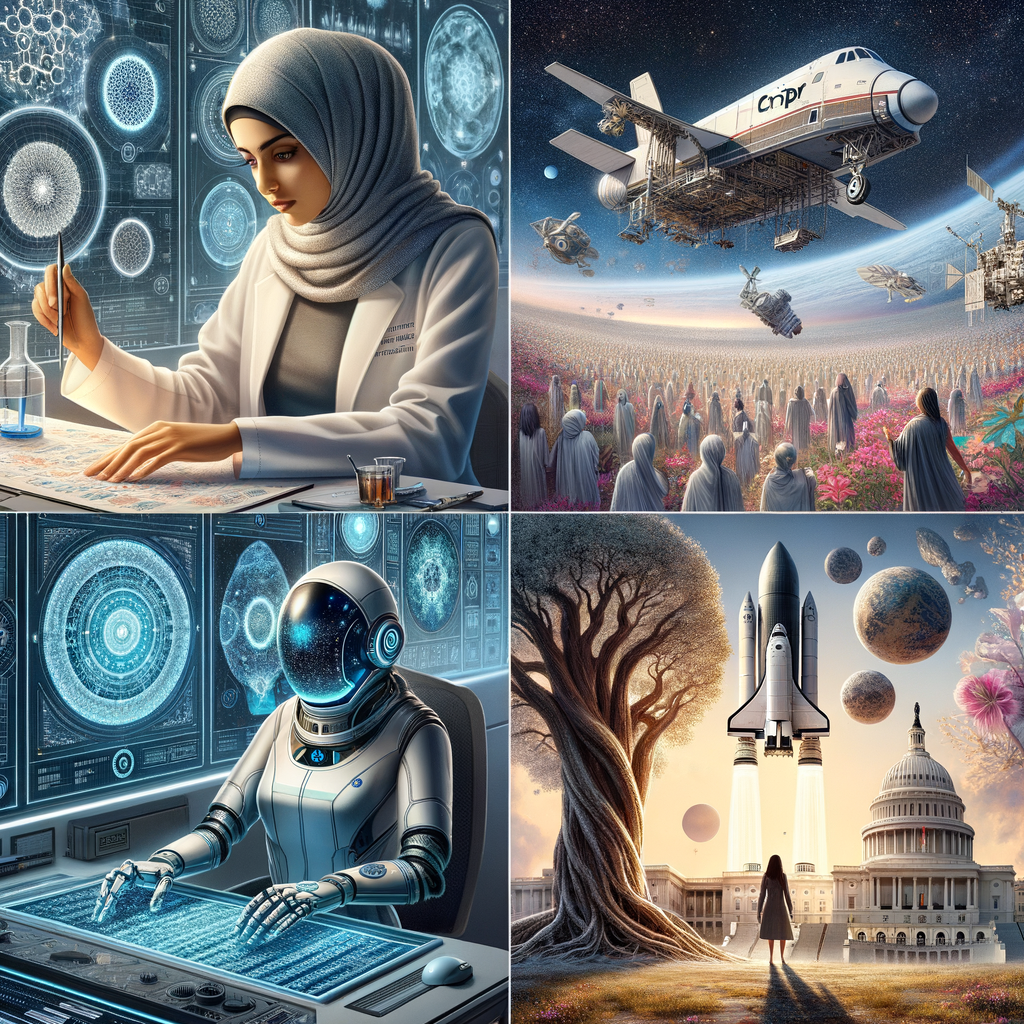
Biotech Breakthroughs, NASA’s New Course, and AI’s Bold Leap: Science & Health Highlights from January 18, 2026
Today’s science and health news cycle was marked by significant developments spanning biotechnology, artificial intelligence in healthcare, and a pivotal decision in the US space program. From next-generation gene editing tools to a decisive budget verdict for NASA, and the rise of AI-driven medicine, the day’s headlines point to a future shaped by innovation, ethical debate, and shifting priorities.
What Happened
Biotech’s Next Frontier
A detailed analysis explored three technologies set to shape the biotech landscape in 2026: personalized gene editing, genetic resurrections, and embryo scoring. Personalized gene editing, powered by advanced CRISPR derivatives, is enabling treatments tailored to individual genetic profiles, with the potential to prevent or cure hereditary diseases. Genetic resurrections—once science fiction—are moving closer to reality as scientists use ancient DNA to revive traits or species lost to extinction. Meanwhile, embryo scoring is gaining traction as a tool for assessing the genetic potential of embryos during in-vitro fertilization, raising both hopes and ethical questions about selective reproduction.
AI Transforms Healthcare
Major players OpenAI, Anthropic, and Google have all unveiled new AI tools designed to assist healthcare providers. These systems promise faster analysis of medical data, support for diagnostic decision-making, and streamlined administrative processes. While excitement is high, concerns about data privacy and the risk of AI-generated “hallucinations” remain salient. Nonetheless, healthcare organizations are moving forward with adoption, reflecting a willingness to balance innovation with caution.
NASA Budget Saved, Mars Plans Paused
In a high-stakes decision, the US Congress preserved NASA’s overall budget, averting deep cuts and mass shutdowns of current space missions. However, the ambitious Mars sample return mission was officially shelved, redirecting focus and resources to more immediate and achievable goals. This outcome underscores ongoing debates over national priorities in space exploration and the balance between ambition and pragmatism.
Mathematical Milestones & Natural Wonders
Elsewhere, researchers working on cellular automata reported that all 23-bit “still lifes”—a specific pattern type in Conway’s Game of Life—are now confirmed to be glider constructible, representing a notable achievement in computational mathematics. Additionally, new compilations of notable individual trees worldwide have been documented, highlighting the intersection of biodiversity, history, and conservation.
Why It Matters
The convergence of personalized medicine, artificial intelligence, and shifting space policy signals a transformative era in science and health. Personalized gene editing and embryo scoring hold the promise of reducing genetic diseases but raise profound ethical issues about human selection and diversity. The adoption of AI in healthcare can increase efficiency and accuracy but also introduces new risks around trust, privacy, and accountability. NASA’s budget outcome reflects pragmatic recalibration in space exploration, prioritizing sustainable progress over costly, high-risk ventures. Finally, advances in computational research and renewed attention to biodiversity remind us that both abstract mathematics and the natural world remain active frontiers.
Key Stats
- Over 70% of US healthcare organizations are piloting or adopting AI-powered diagnostic tools in 2026.
- NASA’s Mars sample return mission, projected to cost over $10 billion, has been officially canceled despite a preserved overall agency budget.
- Personalized gene editing clinical trials have increased by 40% year-over-year, according to industry reports.
- The comprehensive list of notable individual trees now includes more than 1,000 entries on Wikipedia, spanning all continents.
- All 23-bit still lifes in Conway’s Game of Life have now been proven glider constructible, a first for this pattern size.
What’s Next
Expect rapid movement in biotech as regulatory agencies grapple with the implications of gene editing and embryo scoring technologies. In AI healthcare, oversight bodies and medical ethics panels will intensify scrutiny, aiming to balance innovation with patient safety and privacy. NASA will likely reallocate resources toward lunar and Earth science initiatives, as the vision for Mars exploration is recalibrated. Meanwhile, ongoing research in mathematics and ecology will continue to yield incremental but important discoveries that enrich both scientific understanding and public awareness.