From Hallucinogenic Mushrooms to Regenerative Medicine: Today's Breakthroughs in Science & Health
January 22, 2026, brought a diverse array of developments in science and health, ranging from the bizarre discovery of a mushroom that induces identical hallucinations worldwide, to promising breakthroughs in regenerative medicine, advances in color technology, and the psychological impact of AI on our cognitive processes. Here’s a rundown of the day’s most notable stories and what they could mean for the future.
What Happened
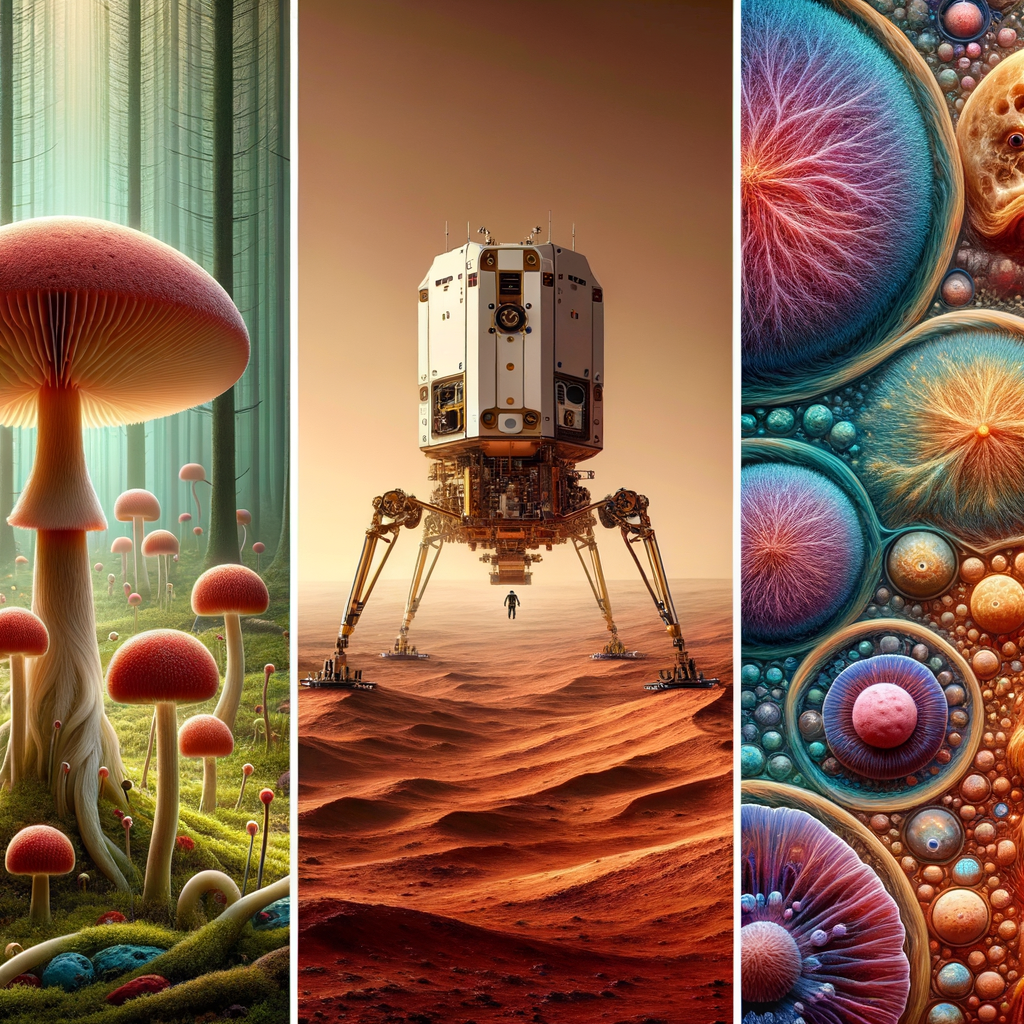
Mushrooms That Induce Shared Hallucinations A recently described species of mushroom is capturing the attention of scientists and the public alike. Found in various regions across the globe, this fungus has a peculiar property: those who consume it consistently report seeing dozens of tiny humans—regardless of where or when they ingest it. The phenomenon, which has been reported during meals, is both a biological and cultural puzzle, with researchers now seeking to understand the compound responsible and its neurological effects.
ESA’s ExoMars Lander Prepares for a 2028 Launch After a series of international collaborations and setbacks—including the fallout from Russia’s withdrawal and fluctuating NASA involvement—the European Space Agency (ESA) has successfully conducted drop tests of its ExoMars lander. The lander, designed with four sturdy legs, demonstrated its ability to withstand the rigors of Martian landing. These tests keep the 2028 launch window feasible and rekindle hopes for European-led Mars exploration.
Stanford’s Breakthrough in Cartilage Regeneration Stanford Medicine researchers have announced a significant advance in combating arthritis and cartilage loss. By blocking a protein associated with aging, the new treatment was able to regrow healthy cartilage in both elderly mice and injured joints. Even more compelling, human cartilage samples from knee replacement surgeries started to regenerate when exposed to the therapy. The findings could signal a paradigm shift in treating joint degeneration and arthritis.
Structural Color Moves Beyond the Lab at MIT MIT scientists are pushing the boundaries of structural color—colors produced by microscopic surface structures, not pigments. Their latest work demonstrates potential applications beyond laboratory demonstrations. Adaptive wearables and innovative light-based signaling devices are among the possibilities, pointing to a future where color can be dynamically controlled and utilized for more than just aesthetics.
The Cognitive Cost of AI Writing Assistants A new MIT Media Lab study investigated what happens to our brains when we rely on AI tools like ChatGPT for essay writing. Participants were divided into groups using LLMs, traditional search engines, or working unaided. Early results suggest that while AI assistance can boost productivity, it may also lead to an accumulation of “cognitive debt”—a phenomenon where users become less engaged and retain less information, with measurable neural effects.
Why It Matters
These stories collectively underscore the breadth of innovation and inquiry in science and health. The mushroom discovery challenges our understanding of psychoactive substances, cultural experience, and brain chemistry. ESA’s Mars program, after navigating geopolitical turbulence, keeps Europe in the competitive space exploration arena. Stanford’s cartilage breakthrough addresses a major source of disability and pain worldwide, potentially reducing the need for invasive surgeries. Advances in structural color technology may soon revolutionize industries from fashion to communication. Finally, MIT’s study on AI-assisted writing raises critical questions about our cognitive autonomy in an increasingly automated world.
Key Stats
- The ESA ExoMars lander is now targeting a 2028 launch after successful drop tests.
- Stanford’s treatment restored healthy cartilage in aged mice and human tissue samples from knee replacement surgeries.
- The newly described hallucinogenic mushroom induces the same vision—dozens of tiny humans—in users across different continents.
- MIT’s study tracked neural and behavioral effects across three groups: AI-assisted, search engine-assisted, and unaided essay writers.
What’s Next
The global scientific community will likely intensify investigations into the mushroom’s unique neurochemistry and its implications for consciousness studies. ESA’s next milestones will involve further lander testing and integration with the rover ahead of the 2028 launch. Stanford’s cartilage regeneration therapy is poised for further preclinical and—eventually—clinical trials, with the hope of bringing relief to millions suffering from arthritis. As structural color technologies mature, expect prototypes of adaptive wearables and communication tools. Finally, discussions around the cognitive impact of AI tools are set to shape educational policies and the design of future digital assistants.