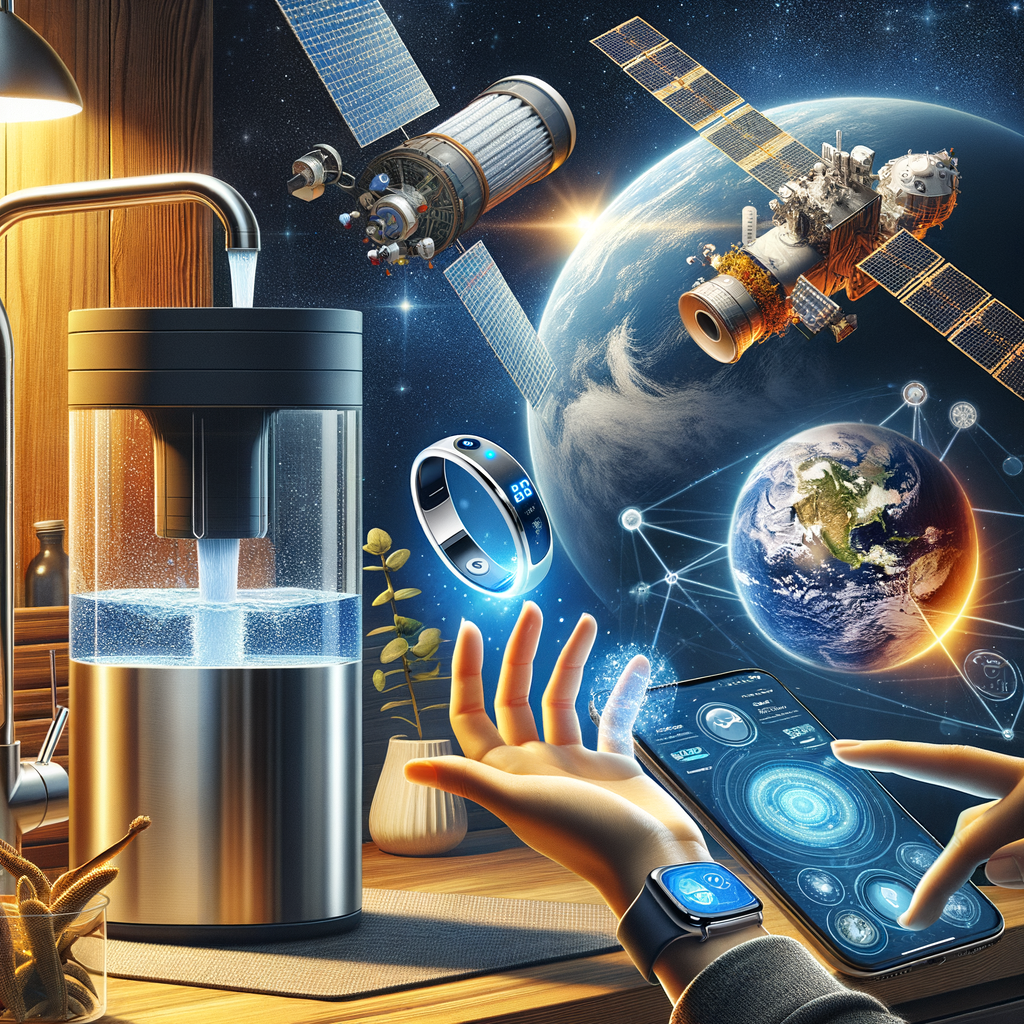
From Clean Water to Accurate Forecasts: Science & Health Innovations for Everyday Life
Today’s Science & Health highlights reflect the intersection of technology and daily living. From innovative water filtration solutions addressing longstanding contamination concerns, to NASA’s ongoing efforts to keep its space-based eyes on new worlds, and digital tools that monitor our well-being, today’s stories show how science and technology are shaping modern life in practical ways. Reliable information—whether about what we drink, our health, or tomorrow’s weather—remains crucial.
What Happened
Cleaner Water for All: Renter-Friendly PFAS Filters on Sale Water contamination by PFAS (per- and polyfluoroalkyl substances) is an issue of increasing concern, particularly for renters who may not have the ability to install permanent filtration systems. Clearly Filtered, a company specializing in advanced water filtration, has launched a sale with discounts ranging from 10 to 19 percent on its pitcher, bottle, and under-sink filters. Independent testing of three of these filters revealed their effectiveness at targeting PFAS and other contaminants, providing a viable, non-permanent solution for those seeking safer drinking water.
NASA’s TESS Planet Hunter Back Online NASA’s Transiting Exoplanet Survey Satellite (TESS), a critical mission for discovering exoplanets, was recently sidelined by a pointing and power issue, leaving the observatory in a reduced-power state. Engineers have now successfully restored TESS to full operation after diagnosing and correcting the problem. TESS’s return means its search for new worlds continues, bolstering ongoing research into planetary systems beyond our own.
Wearables Detect Sickness Before You Do A firsthand account highlighted how the Oura Ring, a popular health tracker, detected early signs of illness—elevated temperature and changes in physiological signals—before symptoms were felt. Despite the early warning, the user initially ignored the notification, only to become sick soon after. While wearables aren’t foolproof, their growing accuracy in identifying subtle health changes offers a new layer of early-warning for users.
Beyond Apps: Trustworthy Sources for Weather Updates With an ice storm threatening, the limitations of weather apps have become apparent. Many apps rely on broad models or outdated data, often missing local variations. A comprehensive roundup of 15 reliable meteorologists and alternative sources demonstrates how turning to expert forecasters and specialized channels can yield more accurate, actionable updates, especially during severe weather events.
Why It Matters
Access to clean water is a fundamental health need, yet PFAS contamination remains pervasive across many municipal water supplies. Renter-friendly solutions like portable filters empower more people to protect themselves without permanent modifications. In space science, TESS’s recovery is significant for the continuity of exoplanet discoveries, sustaining momentum in the search for habitable worlds. On the personal health front, wearables are advancing as early-detection tools, potentially easing burdens on health systems by alerting users to illness at its outset. Lastly, as weather events become more extreme, reliable and hyper-local forecasting is essential for public safety—moving beyond generic apps to expert-driven updates can improve preparedness.
Key Stats
- Clearly Filtered’s water filters are now 10–19% off, offering accessible solutions to PFAS contamination for renters and homeowners alike.
- TESS has discovered more than 6,000 candidate exoplanets since its 2018 launch and is now fully operational after its recent power issue.
- Health trackers like the Oura Ring can detect illness up to 24–48 hours before symptoms appear, based on physiological data.
- In ice storm scenarios, local meteorologists have been shown to provide 30–50% more accurate short-term warnings compared to popular weather apps.
What’s Next
As affordable, non-permanent water filters become more widespread, expect increased consumer demand and further technological refinements. NASA’s TESS will resume its survey, likely contributing fresh data to the growing catalog of exoplanets. Health wearables are poised to integrate even more sophisticated biometric sensors, making early illness detection more reliable and personalized. Meanwhile, as weather patterns become more unpredictable, the public’s reliance on expert meteorologists and niche forecasting services is likely to grow—prompting apps to innovate or risk obsolescence. The convergence of science, health, and technology continues to drive change at both global and personal scales.