Unlocking Longevity, Battery Breakthroughs, and a Celestial Spectacle: Today in Science & Health
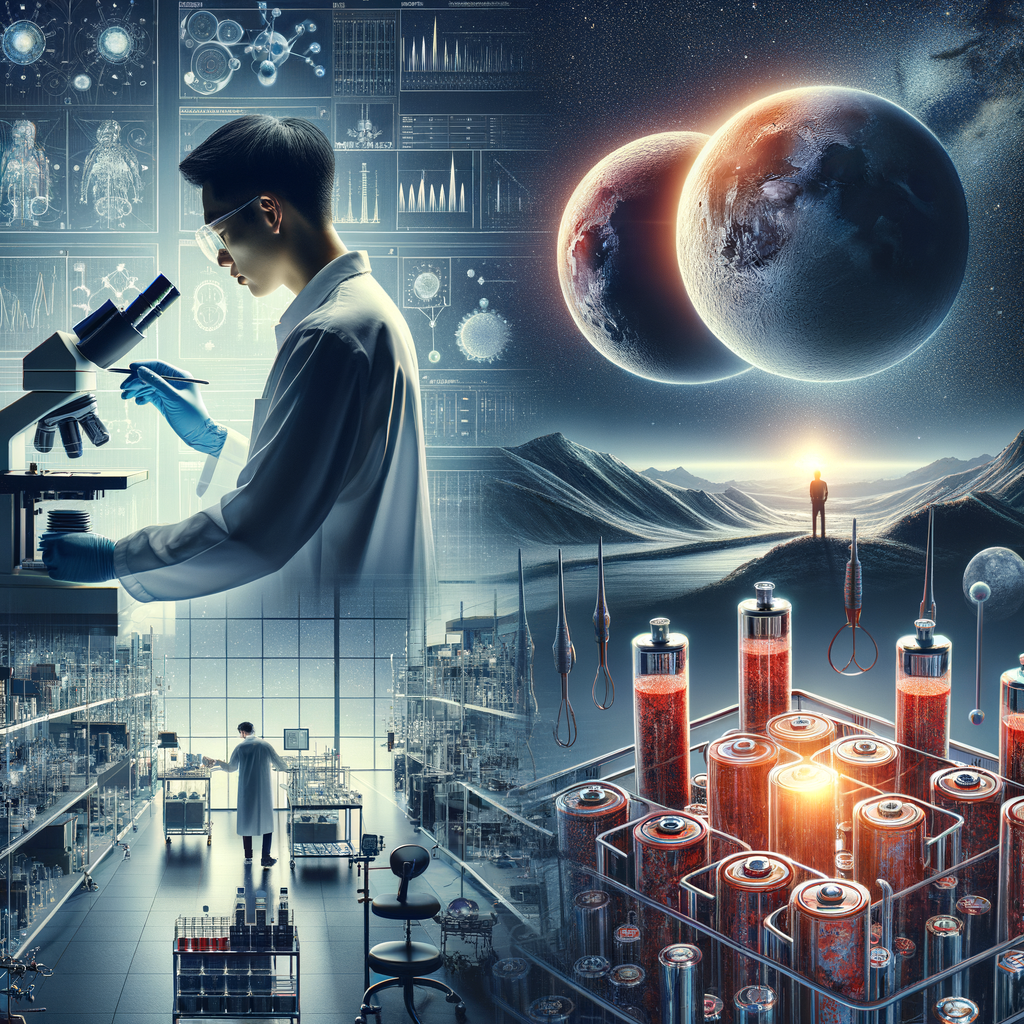
Today’s Science & Health headlines deliver a fascinating mix of innovation and natural wonder. From the unveiling of a blood test that predicts human longevity, to a pivotal year for sodium-ion battery technology, and the anticipation of a total lunar eclipse, the advances and events shaping our world span both the microscopic and the cosmic.
What Happened
Predicting Longevity with a Blood Test
A pioneering blood test, reported by Startupbusiness.it and Adnkronos, claims to assess an individual's potential lifespan. This new diagnostic tool analyzes biomarkers related to aging and health, offering a glimpse into a person’s likely longevity. The test leverages recent advances in molecular biology and machine learning to interpret complex patterns in blood chemistry. As questions about healthspan and lifespan become more pressing with aging populations, such predictive diagnostics could become a mainstay in preventive medicine.
The Rise of Sodium-Ion Batteries
MIT Technology Review hosted a roundtable discussion on why 2026 is set to be the breakthrough year for sodium-ion batteries. Recognized as one of their 10 Breakthrough Technologies of 2026, sodium-ion batteries are gaining momentum due to their cost-effectiveness, abundance of raw materials, and environmental benefits compared to traditional lithium-ion counterparts. Experts discussed recent advances in energy density, cycle life, and manufacturability, suggesting that sodium-ion technology is on the cusp of commercial viability, with pilot projects and early deployments expected soon.
Upcoming Total Lunar Eclipse
Skywatchers across North America are preparing for a total lunar eclipse in the early hours of March 3. According to reports, the eclipse will be most visible in western and central regions, while observers in the eastern half of the continent may face limited visibility due to timing and local weather. This celestial event offers both scientific opportunity and popular interest, as lunar eclipses provide unique insights into Earth’s atmosphere and the dynamics of our planet-moon system.
Why It Matters
The emergence of a blood test for longevity represents a profound shift towards personalized, predictive medicine. Such technology could enable earlier interventions, tailored wellness programs, and a better understanding of aging processes. However, it also raises ethical questions about privacy, psychological impacts, and potential misuse of predictive health data.
Sodium-ion batteries could reshape the global energy landscape. As demand for renewable energy storage surges, sodium-ion’s reliance on more abundant and less geopolitically sensitive materials offers a strategic advantage. If commercialized successfully, the technology could lower battery costs and reduce supply chain vulnerabilities, accelerating the transition to cleaner energy systems.
The total lunar eclipse, while a transient event, highlights ongoing public engagement with science and astronomy. It also provides scientists with a natural laboratory to study atmospheric composition and lunar surface properties, reinforcing the value of observational science.
Key Stats
- The new blood test for longevity analyzes a panel of aging-related biomarkers, using machine learning to predict life expectancy.
- Sodium is approximately 1,000 times more abundant than lithium in the Earth’s crust, reducing concerns about resource scarcity.
- Sodium-ion batteries are projected to reach energy densities of up to 160 Wh/kg, closing the gap with today’s lithium-ion cells.
- The total lunar eclipse on March 3, 2026, will be observable across the majority of North America, peaking in the early morning hours.
What's Next
The longevity blood test is expected to become more widely available as regulatory frameworks adapt and public interest grows. Ongoing research will refine its accuracy and explore interventions to extend healthy lifespan. In the battery sector, 2026 could mark the first wave of commercial sodium-ion deployments, with manufacturers scaling up production and utilities integrating new storage solutions. For astronomy enthusiasts, March’s lunar eclipse is a prelude to several other celestial events anticipated this year, ensuring continued opportunities for science communication and community engagement.