New Study Detects Significant Acceleration in Global Warming After Record-Hot Years
Today in Science & Health, a team of climate scientists published a landmark study indicating that global warming is now accelerating at a statistically significant rate. This research comes after several consecutive record-hot years and addresses previous uncertainties regarding whether the observed temperature increases were due to natural variability or represented a genuine uptick in the anthropogenic warming trend.
What Happened
Recent years have seen global surface temperatures repeatedly break historical records, prompting renewed scrutiny from the scientific community and the public. Previous analyses had suggested that, while the warming trend was clear, the evidence for its acceleration—beyond the expected year-to-year fluctuations caused by natural factors—was not yet strong enough to meet standard thresholds of scientific confidence.
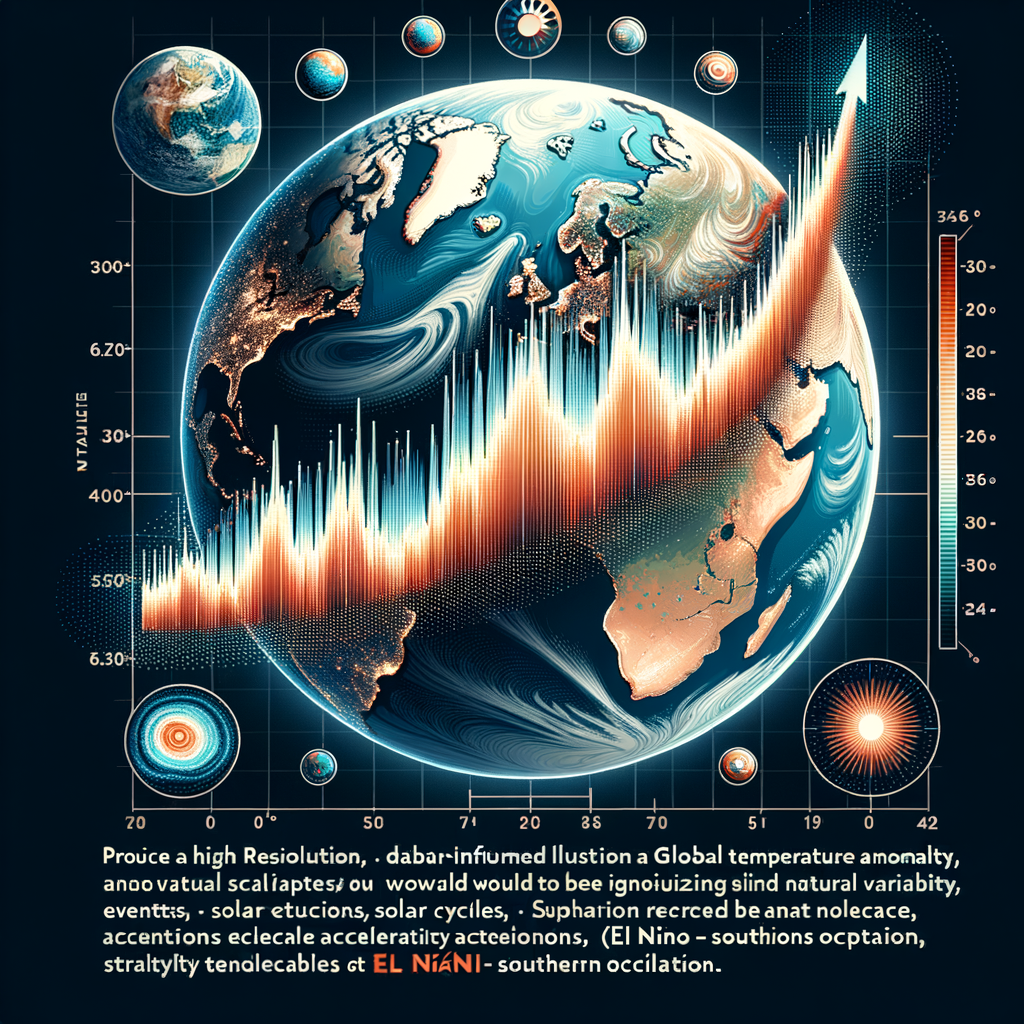
In the new study, researchers revisited the temperature data using a refined approach. They statistically accounted for three main sources of natural variability: volcanic activity, solar cycles, and the El Niño–Southern Oscillation (ENSO). By filtering out these influences, the team was able to isolate the underlying, human-driven temperature trend with greater precision.
The findings reveal that, once natural variability is properly accounted for, the rate of global warming has indeed accelerated in recent decades. The acceleration now surpasses the 95% confidence level, a rigorous benchmark commonly used in climate science. This marks a shift from earlier assessments, which could not rule out the possibility that the apparent acceleration was simply the result of short-term climate fluctuations.
Why It Matters
The confirmation of an accelerating warming trend has significant implications for both climate science and policy. First, it strengthens the evidence that human activities—primarily fossil fuel combustion and deforestation—are not only driving global warming but also causing it to speed up. This reinforces the urgency of international efforts to reduce greenhouse gas emissions.
Second, an accelerated warming rate suggests that the impacts of climate change, including heatwaves, sea-level rise, and ecosystem disruptions, may arrive sooner and with greater intensity than previously projected. Policymakers and planners may need to revisit adaptation and mitigation strategies to account for a faster-changing climate.
Finally, the study demonstrates the importance of robust statistical methods for distinguishing long-term trends from short-term variability, a challenge that has long complicated public understanding and policy debates around climate change.
Key Stats
- 2023 and 2024 were the hottest years on record, each surpassing global average surface temperatures by more than 1.3°C above pre-industrial levels.
- The new study finds the rate of global warming increased by approximately 0.02°C per decade in the past 20 years, after adjusting for natural variability.
- The statistical confidence level for detecting acceleration in the warming trend now exceeds 95%, up from less than 80% in previous analyses.
- Volcanic activity, solar cycles, and ENSO together account for up to 40% of short-term fluctuations in global temperatures, according to the researchers.
What's Next
Going forward, the study’s methodology is likely to be applied to regional and seasonal climate data, potentially revealing areas where warming is accelerating even more rapidly. Climate models may also be updated to reflect the observed acceleration, which could influence projections of future impacts and timelines for action. Policymakers at upcoming international climate forums are expected to reference these findings as they negotiate new emissions targets and adaptation strategies. Public communication efforts may also shift to emphasize the increasing pace of change, underscoring the need for both mitigation and resilience planning in the face of accelerating global warming.