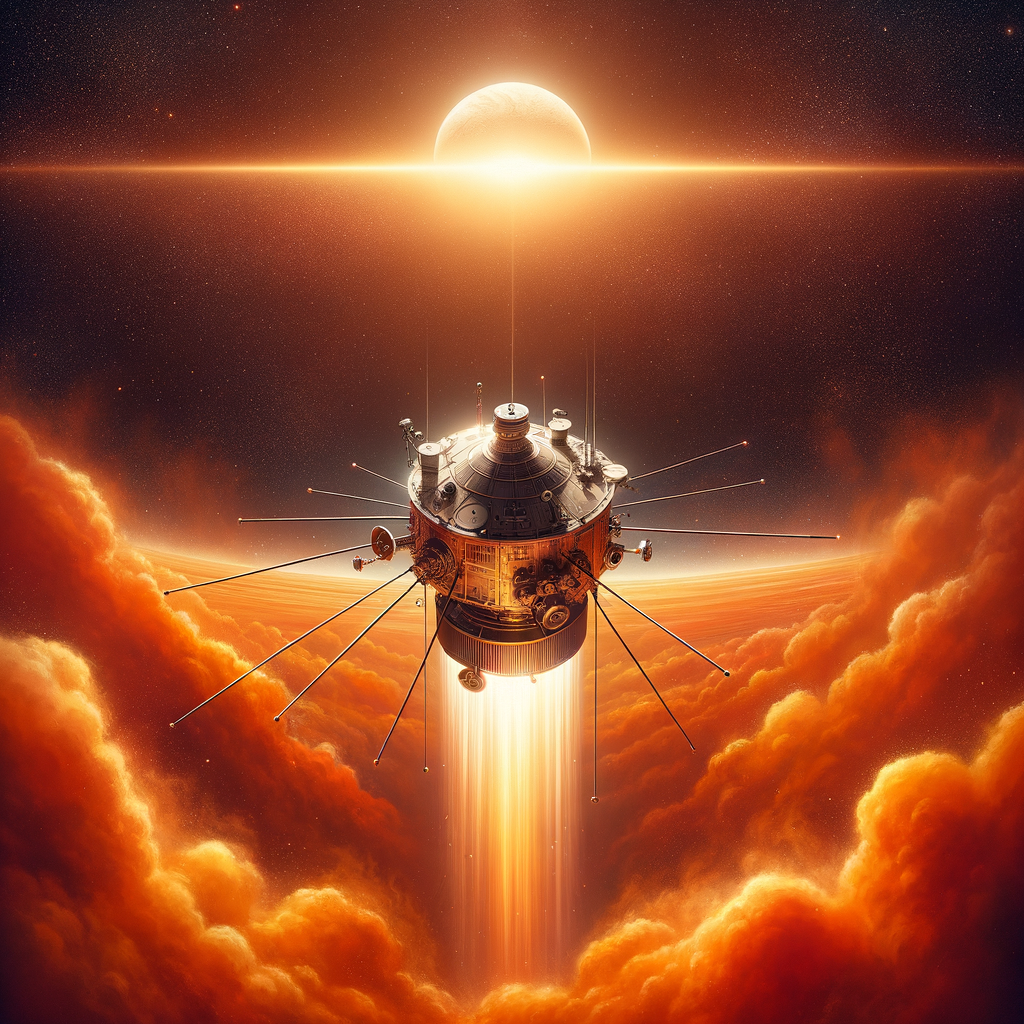
Sixty Years Since Venera 3: Marking Humanity’s First Contact with Another Planet
Today, the world marks six decades since a milestone in space exploration. On March 1, 1966, the Soviet spacecraft Venera 3 crash-landed on Venus, becoming the first human-made object to impact the surface of another planet. While the probe did not survive its journey to transmit data back to Earth, its arrival on Venus remains a pivotal moment in the history of science and health, symbolizing both the triumphs and challenges of interplanetary exploration.
What Happened
The 1960s were a defining era for the space race, with both the United States and the Soviet Union vying for milestones beyond the Earth’s atmosphere. Venera 3, launched by the USSR on November 16, 1965, was part of a series of missions aimed at exploring Venus, our solar system’s enigmatic “morning star.”
Venera 3’s mission was ambitious: to deliver a descent capsule containing scientific instruments to the Venusian surface. After a four-month journey through interplanetary space, Venera 3 entered Venus’s thick atmosphere on March 1, 1966. Although contact with the spacecraft had been lost days earlier due to a systems failure, its impact marked the first time a human artifact had reached the surface of another planet.
The significance of Venera 3’s journey transcended its technical shortcomings. It set a precedent for planetary exploration, spurring future missions not only to Venus but also to Mars, Mercury, and beyond. Despite failing to transmit data from Venus’s surface, Venera 3’s voyage provided valuable engineering lessons for subsequent missions in the Venera series, which would later succeed in sending back the first images and atmospheric data from another planet.
Why It Matters
The legacy of Venera 3 is multifaceted. From a scientific perspective, it demonstrated the feasibility of interplanetary travel, encouraging more sophisticated missions. Technologically, its failure informed iterative improvements in spacecraft design, communications, and environmental shielding. Politically, the mission underscored the Cold War-era drive for technological supremacy, but also set the stage for later international collaborations in space science.
In terms of health and science, Venera 3’s mission contributed indirectly but crucially to our understanding of planetary environments—and, by extension, the limits of human survivability and the search for life beyond Earth. Today, as space agencies and private companies plan for crewed missions to Mars and robotic explorers to Europa and Titan, the lessons from early missions like Venera 3 remain foundational.
Key Stats
- Venera 3 was launched on November 16, 1965, and impacted Venus on March 1, 1966.
- The spacecraft traveled an estimated 120 million kilometers (75 million miles) from Earth to Venus.
- Venera 3’s descent capsule weighed about 960 kilograms (2,116 pounds).
- The atmospheric pressure at Venus’s surface is over 90 times that of Earth, a challenge that destroyed many early probes.
- The Venera program would later achieve the first successful transmission of images from another planet’s surface (Venera 9, 1975).
What's Next
Sixty years after Venera 3, planetary exploration is undergoing a renaissance. NASA, ESA, and Roscosmos all have Venus missions in various stages of planning or development. The renewed interest is driven by new findings, including evidence of phosphine in Venus’s atmosphere—a possible biosignature—along with technological advances that make surface exploration more feasible than ever before. As we look ahead, the pioneering spirit of Venera 3 serves as a reminder of both the risks and rewards inherent in pushing the boundaries of human knowledge.