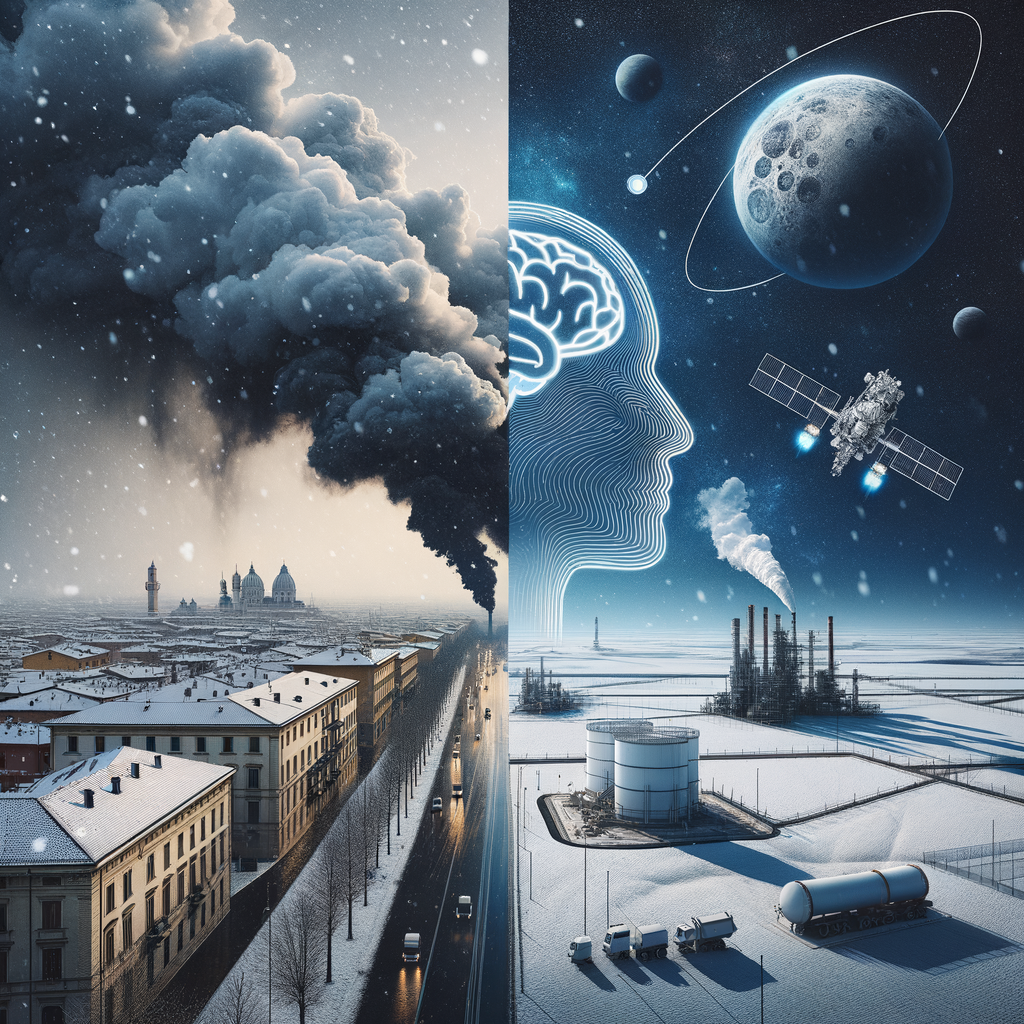
Science & Health Daily: Arctic Weather, Brain-Eating Viruses, and the Looming Food Crisis
Today’s Science & Health landscape was marked by unusual weather patterns across Europe, emerging threats to public health, and growing anxieties about the stability of the global food supply. Meanwhile, new research is reshaping our understanding of space, nutrition, and technology’s role in health.
What Happened
Climate & Environment
Italy is experiencing an unexpected return of wintry conditions despite the official arrival of spring. Arctic air masses have brought cold, rain, and snow from Milan to Rome, disrupting the seasonal transition (Startupbusiness.it). Meanwhile, new satellite data suggest that methane emissions in America’s Permian Basin are almost four times higher than the official EPA estimates, igniting political debate over environmental transparency and regulatory accuracy.
Health & Disease
A striking report warns that many people may already be infected with a previously little-known brain-eating virus—not solely confined to those with severe immune suppression. On the wellness front, the DASH diet is gaining traction for its dual benefits: lowering blood pressure and supporting cognitive health. At the same time, experts caution that daily showers may be counterproductive, as over-cleansing can lead to irritated, dry skin and micro-abrasions.
Space & Technology
Space exploration saw several notable developments. ESA’s Proba-3 solar-eclipsing probe has reestablished contact after a month of silence due to an anomaly, underscoring the challenges of space missions. NASA is weighing the future of its heavy-lift SLS rocket as it considers a closer partnership with SpaceX’s Starship for Artemis lunar missions—potentially reshaping the way astronauts reach the Moon. Meanwhile, NASA is also planning the possible relocation of key spacecraft, including the iconic space shuttle Discovery or the Orion capsule, though details remain undecided.
Materials & Physics
A new study highlights unexpected weaknesses in carbon fiber, particularly under heat and humidity—findings that resonate with concerns after the Titan submersible incident. In physics, researchers announced they have demystified the phenomenon of volcanic lightning, attributing it to science rather than superstition.
Health Tech & Advocacy
A US tribunal ruled that Apple’s blood oxygen measurement technology in its Watch does not infringe on Masimo's patents, removing the threat of an import ban. In Italy, the OneSight EssilorLuxottica Foundation launched a new initiative to defend the right to sight, emphasizing the ongoing importance of accessible vision care.
Global Food Security
Finally, the ongoing Iran war is threatening the global food supply. About one-third of all fertilizer shipments pass through the Strait of Hormuz, but conflict has brought shipments to a near standstill, raising the specter of a worldwide food shortage.
Why It Matters
The unseasonal cold snap in Italy illustrates the increasing volatility of global weather patterns, likely intensified by climate change, with direct impacts on agriculture, infrastructure, and daily life. The under-reporting of methane leaks in major oil fields highlights gaps in environmental oversight at a time when accurate emissions data are crucial for climate action.
Public health concerns are mounting as research uncovers previously underestimated infectious risks and underscores the importance of balanced self-care routines. Advances and setbacks in space technology reflect both the promise and complexity of next-generation exploration, while the evolving role of private industry signals a shift in how we approach lunar missions.
The potential disruption to global fertilizer supplies due to geopolitical conflict is a stark reminder of how interconnected global systems are—and how quickly local instability can ripple through to global food security.
Key Stats
- Methane emissions in the Permian Basin are nearly four times higher than EPA estimates, according to satellite data.
- About one-third of all global fertilizer shipments pass through the Strait of Hormuz, now largely blocked due to conflict.
- Multiple models of the Apple Watch have been cleared of patent infringement, averting a US import ban.
- The DASH diet is associated with lower blood pressure and improved cognitive function, according to recent studies.
- ESA’s Proba-3 probe reestablished contact after a month-long communication blackout.
What's Next
Meteorologists will continue monitoring Europe’s weather volatility, looking for signs that climate instability is becoming the new normal. Environmental agencies and policymakers are likely to revisit methane reporting standards as satellite surveillance grows more sophisticated. In public health, expect increased scrutiny of infectious diseases previously considered rare, and further research on the broader effects of personal hygiene habits.
Space agencies are poised to refine their strategies as public-private partnerships mature, especially in the Artemis lunar program. Meanwhile, the global community will closely watch the Strait of Hormuz and its impact on food and fertilizer markets, with ripple effects possible in commodity prices and food security across continents.