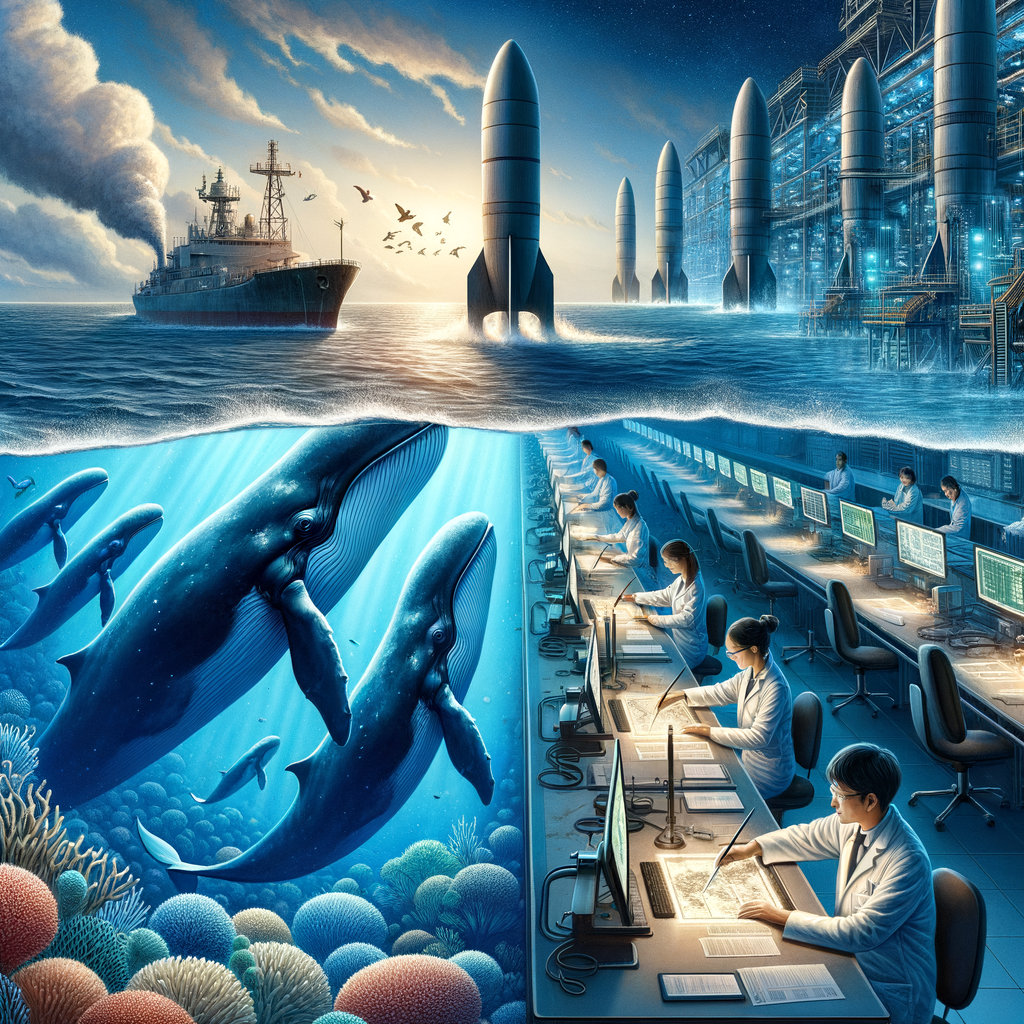
From Whale Midwives to Hypersonic Missiles: Science & Health Highlights for March 26, 2026
Today’s science and health news offers a sweeping view from the depths of the ocean to the stratosphere and beyond. Breakthrough research unravels the mysteries of whale midwifery, while global headlines highlight critical advances in environmental sustainability, battery health misconceptions, and next-generation warfare technology. Experts also warn of climate shifts ahead of Easter and new insights into how farming practices affect soil resilience. Here’s what you need to know.
What Happened
Climate and Environment
A dual weather system is set to impact Italy as Easter approaches, with cold northern air followed by moist currents from Africa, promising unsettled conditions. Meanwhile, European sustainability priorities are evolving: Carmelina Cicchiello of ANCI (National Association of Italian Municipalities) emphasized a strategic pivot from waste collection to recycling, aligning with new EU directives. Complementing this, the launch of the “Shift” alliance unites industrial, research, and local governance stakeholders to accelerate ecological transition by fostering integrated solutions.
On the agricultural front, University of Washington researchers have published new findings on how intensive tilling (overplowing) weakens soil structure. Using seismic monitoring techniques typically reserved for earthquakes, the study demonstrates that excessive plowing decreases soil moisture retention, potentially undermining crop yields and ecosystem resilience.
Health and Technology
Contrary to common belief, fully charging your smartphone battery is not as detrimental as feared. Recent discussions clarify that battery health is more affected by the number and depth of charge cycles rather than simply reaching 100% capacity. This nuanced view encourages consumers to focus on usage patterns rather than arbitrary charging limits.
Space and Defense
The race for technological supremacy continues. China’s mass production of hypersonic missiles, priced as low as $99,000 each, signals a radical shift in modern warfare’s economics and capabilities—potentially accelerating the global arms race. In parallel, space exploration remains a focal point, with roundtable discussions exploring upcoming missions, new propulsion technologies, and collaborative international initiatives that could define the next era of discovery beyond Earth.
Animal Behavior
In the natural world, scientists have captured unprecedented images of sperm whales assisting a fellow whale during birth. This “midwifery” behavior, involving coordinated support and protection by members of the pod, suggests complex social structures and evolutionary roots that may date back millions of years.
Why It Matters
These developments underscore the interconnectedness of ecological, technological, and social systems. The shifting focus from waste collection to recycling and integrated sustainability alliances reflects the urgent need for systemic approaches to environmental challenges. Advances in soil science highlight the importance of sustainable agriculture for food security and climate resilience. In technology and defense, the affordability of advanced weaponry could destabilize existing security frameworks, while the democratization of space exploration promises both risks and rewards. Finally, new insights into animal behavior enrich our understanding of intelligence and cooperation in the natural world, offering potential lessons for human society and conservation.
Key Stats
- China is producing hypersonic missiles at a unit cost of $99,000, dramatically reducing the barrier to advanced weaponry.
- European Union policy now prioritizes recycling over mere collection, shifting targets for member states and municipalities.
- University of Washington research confirms that overplowing measurably reduces soil moisture retention, linking agricultural practices to ecosystem health.
- Sperm whale “midwifery” observed in the wild supports theories of complex social evolution in marine mammals.
- Meteorologists forecast a “double vortex” over Italy, with cold and humid air masses affecting weather patterns into early April.
What’s Next
Looking ahead, the impact of new recycling policies will hinge on how swiftly municipalities adapt, while platforms like Shift may set the template for cross-sector collaboration in sustainability. In agriculture, further studies are expected to refine best practices for soil management, potentially influencing EU-wide regulation. On the tech front, battery design and user habits will continue to evolve in response to growing consumer awareness. The proliferation of hypersonic weapons could drive new arms control efforts or defense innovations. Meanwhile, the scientific community will keep probing animal societies for clues to the origins of cooperation and intelligence, with implications for both conservation and our understanding of life on Earth.