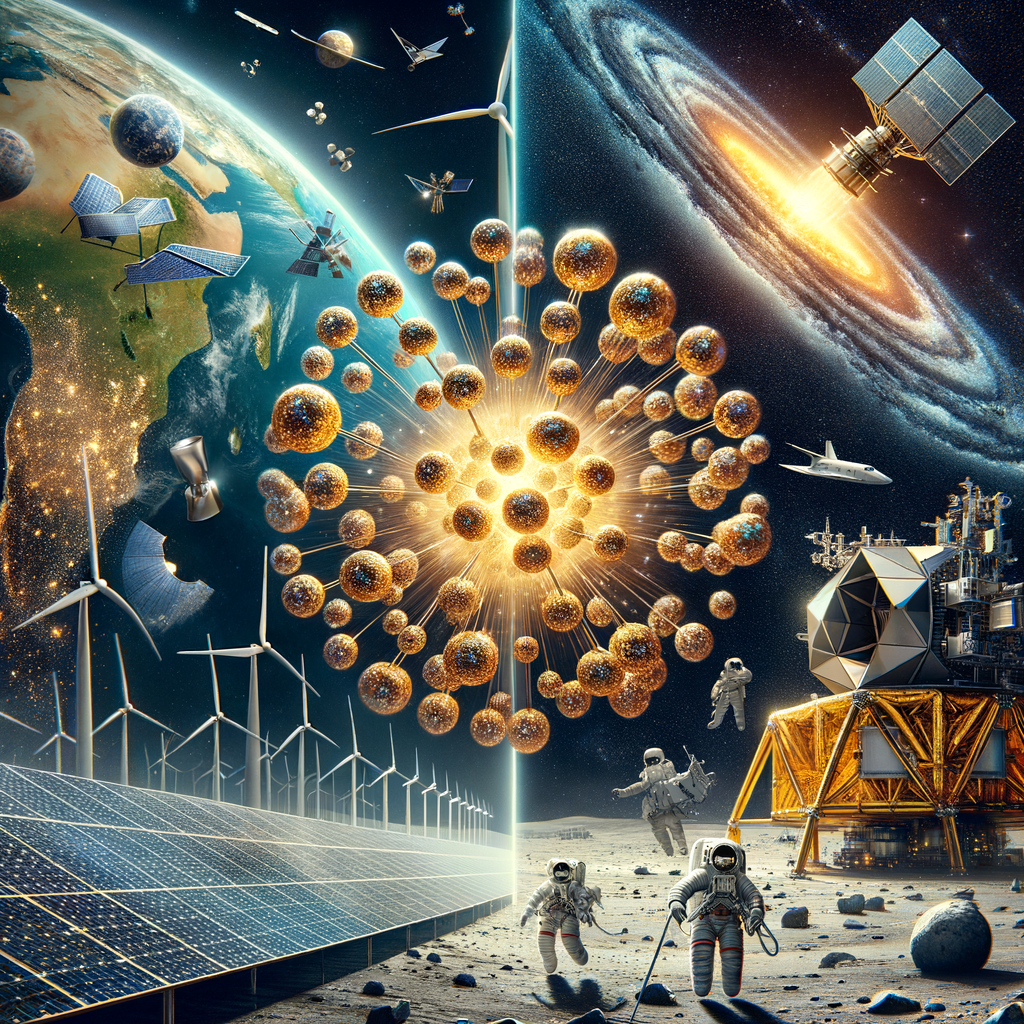
From Gold’s Cosmic Origins to the Moon’s New Era: Major Breakthroughs in Science & Health
Today in Science & Health, we saw the world edge closer to a renewable energy future, scientists resolve a cosmic mystery about how gold forms, and NASA marks a new milestone in human space exploration. These developments signal shifting frontiers in how we generate power, understand our universe, and push the boundaries of human presence in space.
What Happened
Renewables Approach Half of Global Electricity Capacity
According to new data, renewable energy sources reached 49.4% of global electricity capacity by the end of 2025. Solar, wind, and other renewables now nearly equal the world’s fossil-fuel generation capacity. However, this milestone comes with two major caveats: fossil-fuel power additions continue in some regions, and the rapid rise in electricity demand—driven in part by AI-era data centers—complicates the path to true decarbonization. While the world is building more renewables than ever, overall emissions reductions remain uncertain due to these countervailing trends.
Decoding Gold’s Nuclear Origins
In a breakthrough two decades in the making, nuclear physicists have illuminated the process by which gold and similarly heavy elements are forged in the universe. The research focused on the rapid neutron-capture process (r-process), a sequence of nuclear reactions occurring during violent cosmic events like supernovae and neutron star collisions. For years, the precise nuclear decay pathways within this process remained unclear. Now, scientists have identified three pivotal discoveries about how unstable atomic nuclei decay and transform during r-process events, clarifying the steps that lead to the creation of elements such as gold and platinum.
Artemis II: NASA’s Historic Lunar Flyby
NASA’s Artemis II mission successfully launched, marking the first crewed journey beyond low Earth orbit in over five decades. The mission’s crew—diverse and record-breaking in composition—will orbit the Moon before returning to Earth, serving as a critical test for future lunar landings and deep-space exploration. Artemis II is a key step in NASA’s broader Artemis program, which aims to establish a sustainable human presence on and around the Moon, and to pave the way for eventual Mars missions.
Why It Matters
The near parity of renewables and fossil-fuel electricity capacity illustrates both progress and complexity in the fight against climate change. Substantial renewable investments have been made globally, yet persistent fossil-fuel expansion and surging demand from digital infrastructure raise questions about the net impact on emissions. The new nuclear physics findings provide foundational knowledge not just for astrophysics, but for understanding the chemical evolution of the cosmos—including how some of Earth’s most valuable elements came to exist. Meanwhile, Artemis II’s successful launch represents a technological and symbolic leap, rekindling human exploration beyond Earth’s orbit and setting the stage for a new era of lunar and planetary science.
Key Stats
- Renewables reached 49.4% of global electricity capacity in 2025, nearly matching fossil-fuel sources.
- Three key discoveries were made about nuclear decay pathways in the rapid neutron-capture process—the mechanism that creates gold and platinum in cosmic events.
- Artemis II is the first crewed deep-space mission since Apollo, carrying a record-breaking, diverse crew on a lunar flyby.
What's Next
Despite the headline progress in renewable energy, the interplay between rising energy demand and ongoing fossil-fuel use will remain a major focus for climate policy in 2026 and beyond. The new insights into element formation may prompt further astrophysical research and refinement of stellar models, deepening our grasp of the universe’s chemical history. With Artemis II underway, attention will turn to the mission’s milestones, the health and performance of the crew, and the implications for future lunar landings and Mars exploration. The coming months and years promise continued transformation across energy, science, and space.