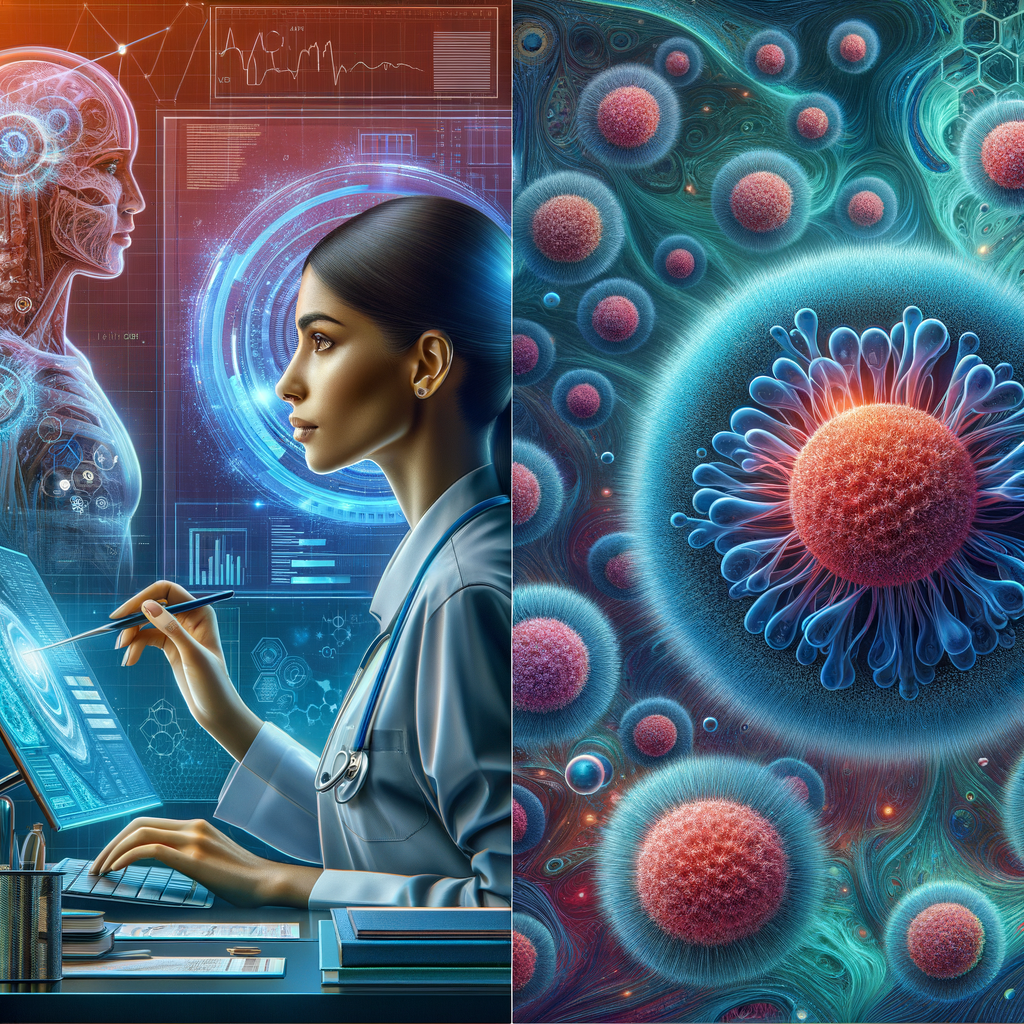
Beyond Algorithms: Unspoken Knowledge and New Frontiers in Cellular Science
Today's Science & Health landscape presents a thought-provoking mix of technological promise and human complexity. As artificial intelligence (AI) becomes increasingly embedded in scientific research, questions emerge about what technology cannot replicate—especially the unspoken dimensions of human expertise. Meanwhile, landmark imaging of immune system processes inside cells opens new avenues for medical treatments.
What Happened
The Limits of AI in Science
The first article, "The machines are fine. I'm worried about us," examines the growing role of AI agents in performing scientific grunt work. These systems can automate tasks, process vast datasets, and even propose hypotheses. However, the author raises concerns that, while machines excel at repetitive or structured labor, they cannot substitute the intuition, curiosity, and informal communication that drive scientific breakthroughs. The irreplaceable part of science often lies in tacit knowledge—insights unrecorded in formal papers or code.
The Value of the Unspoken: The Dimensionality Problem
Building on this theme, "Why the Most Valuable Things You Know Are Things You Cannot Say" explores the so-called Dimensionality Problem. It highlights the fact that much of what experts know cannot be easily articulated or transferred—whether due to its complexity, context-dependence, or the limitations of language. This tacit knowledge is crucial for innovation, but difficult to encode in AI systems or formal training programs. The article suggests that progress in science and health may increasingly hinge on our ability to navigate, recognize, and cultivate this silent expertise.
Visualizing Inflammation at the Cellular Level
In a significant experimental advance, scientists at SLAC (Stanford Linear Accelerator Center) succeeded in capturing, for the first time, the formation of an immune signaling complex inside living cells. Using advanced imaging techniques, the team visualized how cells trigger inflammation—a fundamental process underlying many diseases. This breakthrough provides unprecedented insight into the molecular choreography of immune response and could inform the development of new anti-inflammatory therapies.
Why It Matters
The convergence of these stories underscores a central tension in modern science: as computational power accelerates, the irreplaceable value of human intuition and tacit knowledge becomes more pronounced. AI agents can take over routine tasks, but the most transformative insights often arise from what cannot be easily explained or replicated by machines. Recognizing and preserving this human dimension is essential, especially as research becomes more automated and collaborative.
At the same time, technological advances in cellular imaging—like those achieved at SLAC—demonstrate how machines and human ingenuity can intersect to push the boundaries of what’s possible. By capturing the real-time formation of immune complexes, scientists now have a new window into disease mechanisms, potentially informing better drug design and clinical interventions.
Key Stats
- SLAC scientists observed immune signaling complexes forming inside living cells for the first time.
- AI agents now routinely handle data analysis, literature review, and experimental design in many research labs.
- Studies suggest that up to 70% of expert knowledge in scientific fields is tacit and not formally documented.
- Inflammation is implicated in more than 50% of global disease-related deaths, underscoring the medical importance of today's imaging breakthrough.
What's Next
Looking forward, the interplay between AI and human expertise will shape the trajectory of scientific discovery. Expect heightened debates about the role of tacit knowledge and new methods for cultivating it within research communities. On the biomedical front, the next steps will involve translating cellular imaging discoveries into actionable treatments, with potential ripple effects for autoimmune disorders, cancer, and infectious diseases. As technology evolves, the challenge will be to harness the best of both machine efficiency and the unspoken wisdom of human minds.