Dark Matter, Dinosaur Survivors, and the Limits of AI: Today in Science & Health
Today's Science & Health news spans the universe—literally. From a provocative new theory about the origins of dark matter to critical findings about AI’s role in medicine, the day’s headlines reflect the breadth and complexity of ongoing research. In addition, practical safety concerns, climate-driven ecological change, and mathematical puzzles provided a rich tapestry of developments.
What Happened
Cosmic Mysteries and the Early Universe
A new model of the cyclic universe has reignited debate around the origins of dark matter. According to the theory, dark matter may consist of black holes that formed before the Big Bang, possibly in a previous cosmic cycle. If true, this would fundamentally reshape our understanding of both dark matter and the universe’s timeline.
Survival and Extinction in Deep Time
Paleontologists are revisiting why the small, plant-eating Lystrosaurus survived the mass extinction that wiped out most dinosaurs’ ancestors. Research suggests their large, moisture-retaining eggs played a pivotal role, allowing the species to thrive while their predators perished in the harsh, post-extinction environment.
Consumer Safety and Technology Recalls
Casely has reannounced its 2025 power bank recall following a fatal incident. Despite the initial recall, there have been 28 additional safety incidents, including a notable fire and explosion aboard an aircraft. The situation underscores ongoing challenges in consumer electronics safety and post-recall monitoring.
Material Science Breakthroughs
After a century of research, engineers have finally uncovered why reinforced rubber is so tough. The answer lies in how rubber’s internal structure resists its own incompressibility, providing new insights that could influence the design of safer, more durable materials.
Ecological Change in the Arctic
For the first time, mosquitoes have been identified in Iceland, raising concerns among scientists. With the Arctic’s climate and ecosystem undergoing rapid change, researchers are calling for a new approach to insect monitoring to anticipate and manage potential ecological disruptions.
Mathematical Challenges
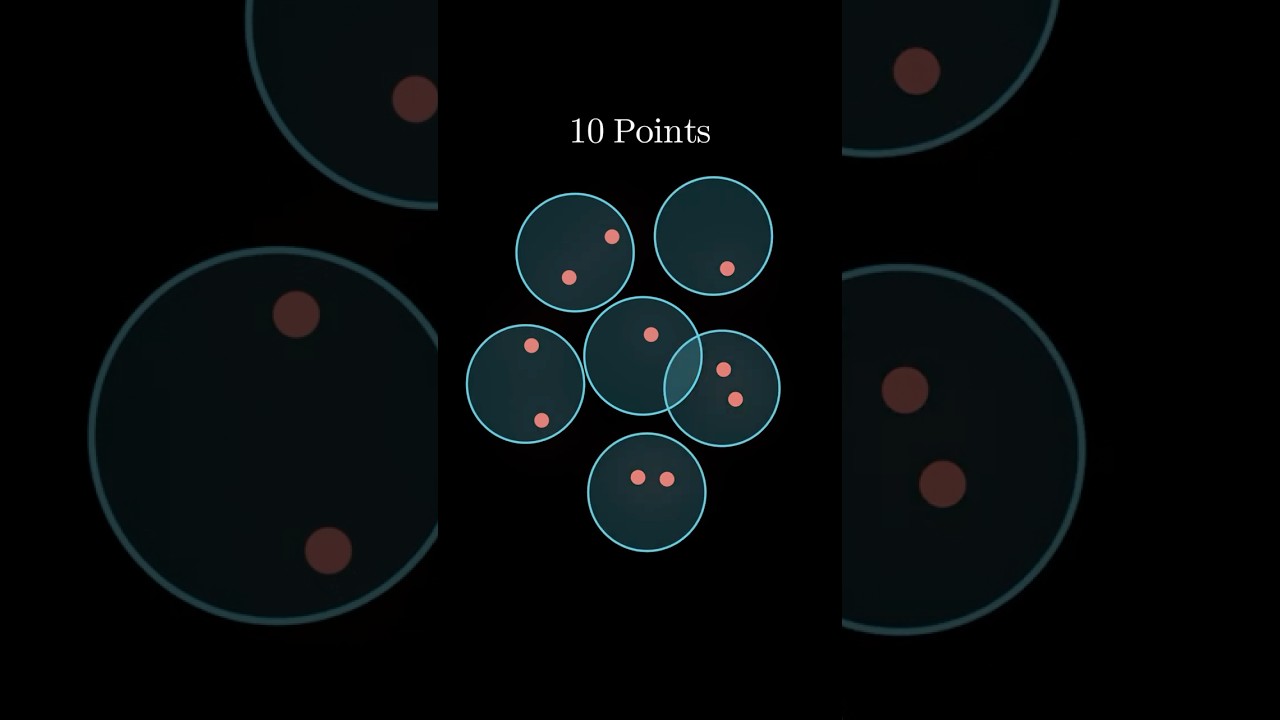
As part of the ongoing 2026 Year of Math, a new puzzle—“Covering 10 points, a surprisingly tricky puzzle”—was released, challenging readers and contributing to the popularization of mathematical thinking.
Energy Efficiency and the Electric Vehicle
A brief mention highlighted the role of electric vehicles (EVs) in increasing home energy efficiency, though further details were not provided in today’s roundup.
Language Analysis: AI vs. Traditional Methods
A study from The University of Manchester found that a traditional grammar-based approach (LambdaG) can match or outperform advanced AI systems in authorship attribution. By focusing on grammar and sentence construction patterns, LambdaG offers a resource-efficient alternative to large-scale AI models.
Limits of Large Language Models in Medicine
A separate study found that large language models (LLMs) fail in 8 out of 10 early differential diagnosis cases. Experts advise against trusting LLMs for patient-facing diagnostic reasoning, citing significant accuracy concerns.
Why It Matters
These stories underscore the interplay between technological advancement, scientific discovery, and public safety. The dark matter theory challenges foundational assumptions about the cosmos, while the survival of Lystrosaurus offers lessons in resilience and adaptation. The Casely recall and LLM diagnosis failures highlight the importance of rigorous safety protocols and the limits of current AI technology, particularly in sensitive domains like health care. The emergence of mosquitoes in Iceland signals how climate change is redrawing ecological boundaries faster than monitoring systems can adapt. Meanwhile, the success of grammar-based language analysis methods suggests that sometimes, traditional scientific approaches can still outperform cutting-edge AI.
Key Stats
- 28 additional safety incidents reported since Casely’s initial power bank recall in 2025, including a fatality and a fire on an airplane.
- LLMs failed in 8 out of 10 early differential diagnosis scenarios, according to new research.
- Lystrosaurus, a small plant-eating synapsid, survived the end-Permian extinction due to its uniquely large, moisture-retaining eggs.
- First documented appearance of mosquitoes in Iceland, an unprecedented event attributed to rapid Arctic climate change.
What's Next
Looking forward, the proposed dark matter theory will prompt further observational and theoretical research to test its predictions. Consumer electronics companies may face increased scrutiny and regulatory pressure to improve post-recall follow-up. The introduction of mosquitoes to Iceland will likely accelerate efforts to monitor and model ecological changes in polar regions. In medicine and linguistics, the debate between AI and traditional methods will intensify, especially as demands for reliability and transparency grow. Expect ongoing public engagement with mathematical puzzles and educational initiatives as the Year of Math continues.