From Ancient Kraken to Space Tech: The Day in Science and Health
Today's Science & Health updates traverse deep time and urgent present: from a giant Cretaceous octopus and the beauty of handmade data visualizations to troubling developments in public health, satellite security, and environmental sustainability. Here’s a look at the most significant breakthroughs and controversies shaping our scientific and medical landscape on April 23, 2026.
What Happened
Public Health and Scientific Integrity
A key moment in the ongoing debate over vaccine efficacy unfolded in the US Senate. Robert F. Kennedy Jr., a prominent vaccine skeptic, reiterated his rejection of germ theory, arguing that vaccines played a minimal role in reducing childhood mortality. His claims were directly challenged and debunked by scientific experts during the hearing, underscoring the critical importance of evidence-based health policy.
Separately, a major data breach rattled the research world. The health information of 500,000 UK Biobank volunteers—one of the world’s premier biomedical datasets—was listed for sale on Alibaba. Three Chinese research institutions are alleged to have violated strict data-sharing agreements, prompting an investigation by the UK’s Information Commissioner’s Office (ICO). The breach raises urgent questions about global data stewardship and participant trust.
Space and Defense
US Space Command issued a stark warning: Russia is deploying operational co-orbital anti-satellite (ASAT) weapons, with systems now positioned within striking range of critical US satellites. The announcement signals an escalation in the militarization of space and the vulnerability of vital orbital infrastructure.
On a more optimistic note, the Roman Space Telescope—a major NASA mission—has completed integration eight months ahead of schedule and under budget. Originally built on repurposed spy satellite hardware, the telescope is now ready to begin its mission: mapping the universe in the infrared, with the promise of unprecedented astronomical insights.
NASA also reported that the Artemis II mission’s heat shield performed “like a champ,” with initial findings confirming the robustness of its design. This bodes well for future crewed lunar missions and the Artemis program’s broader ambitions.
Science History and the Environment
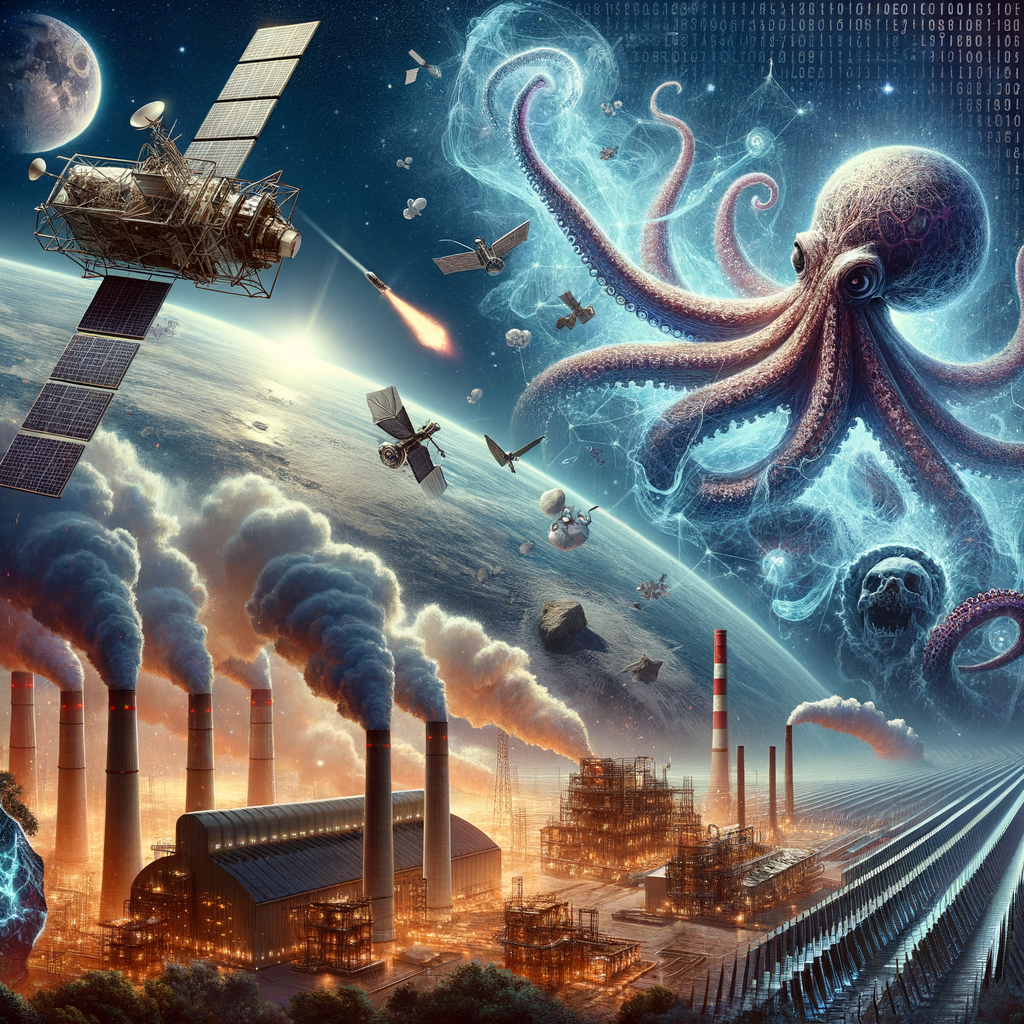
A newly described 62-foot “Kraken” octopus from the Cretaceous period offers a stunning glimpse into ancient marine ecosystems. Unlike their armored contemporaries, these giant octopuses had already abandoned shells, gaining agility and predatory prowess—traits that proved evolutionary winners.
In a nod to the pre-digital era, a review explores the handmade beauty of Machine Age data visualizations. Pioneers such as William James, W.E.B. Du Bois, and Francis Galton “thought with diagrams,” producing intricate, hand-drawn graphics that shaped early scientific understanding.
Meanwhile, Earth Day brought sobering news: the ongoing datacenter boom in the US is prolonging the life of aging coal power plants. As digital demand soars, so too does the environmental cost—highlighting the energy sector’s uneasy relationship with tech-driven growth.
Why It Matters
The threads running through today’s news highlight a critical tension: the promise of scientific and technological progress, and the social, ethical, and environmental challenges that accompany it. The UK Biobank breach strikes at the heart of trust in medical research, while the Senate hearing on vaccines underscores the persistence of misinformation in public discourse.
In space, both the militarization revealed by ASAT deployments and the rapid progress of NASA’s telescope and Artemis programs show that technological advances are often double-edged. Meanwhile, the environmental cost of digital expansion serves as a reminder that innovation, unchecked, can undermine sustainability goals.
Finally, the rediscovery of ancient predators and historical visualization techniques reminds us that science is a cumulative journey—one that draws from the past even as it shapes the future.
Key Stats
- 500,000: Number of UK Biobank volunteer records listed for sale after a major data breach.
- 62 feet: Estimated length of the newly described Cretaceous “Kraken” octopus.
- 8 months: Time by which the Roman Space Telescope completed integration ahead of schedule.
- 3: Number of Chinese research institutions implicated in the UK Biobank data violation.
- 1: Confirmed Artemis II heat shield success, boosting confidence in NASA’s lunar mission plans.
What's Next
Expect heightened scrutiny of cross-border health data sharing, with regulatory bodies likely to tighten controls and penalties. In the public health arena, the persistence of vaccine misinformation means ongoing challenges for science communicators and policymakers. Space security will remain a critical concern, with further developments likely as nations respond to new ASAT capabilities. On the environmental front, calls for cleaner datacenter energy sources will intensify, especially as demand shows no sign of slowing. Meanwhile, discoveries from both paleontology and the history of science will continue to inform and inspire future innovation.