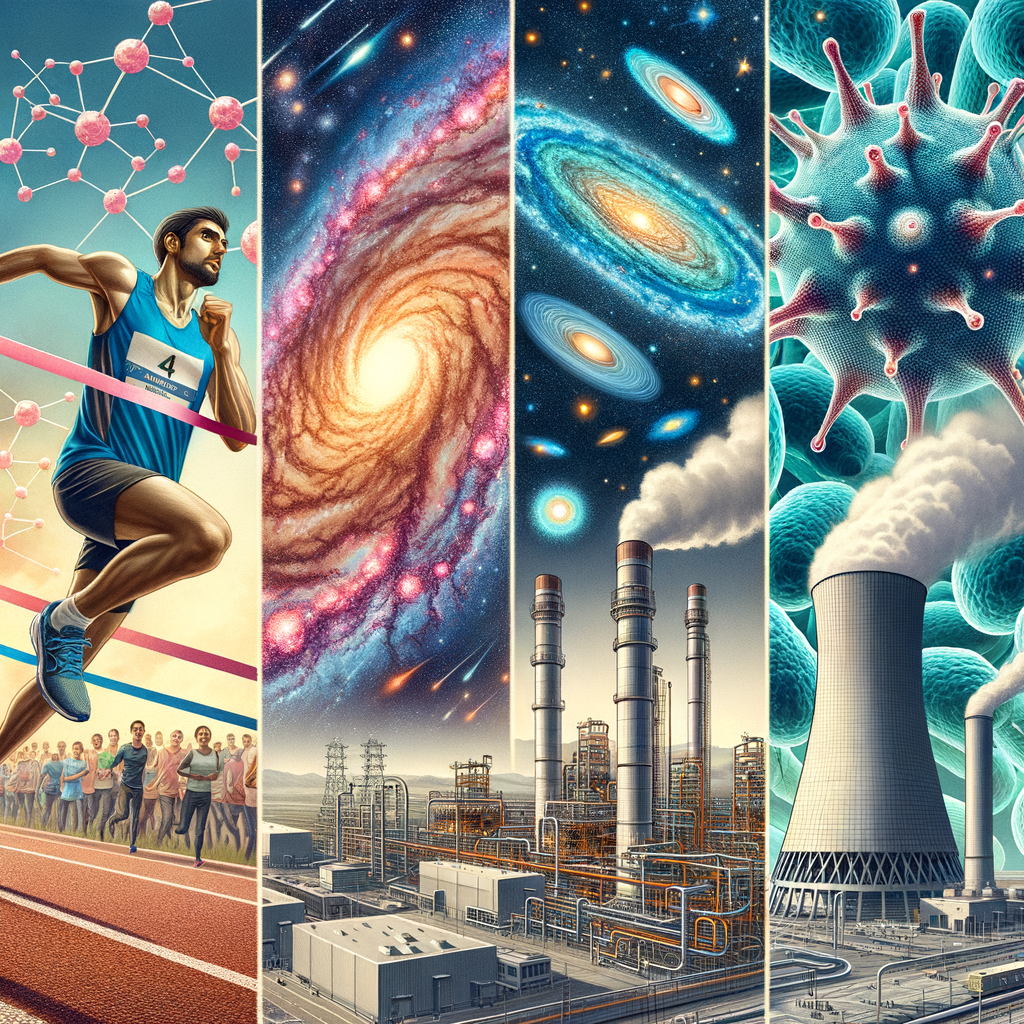
From Sub-Two-Hour Marathons to Geothermal Breakthroughs: The Science & Health Stories Shaping April 26, 2026
April 26, 2026, proved to be a consequential day for science and health, with developments spanning record-breaking athletic achievements, urgent public health concerns, and major advances in energy technology. From a historic marathon performance to the rising threat of flesh-eating bacteria and a potential revolution in geothermal energy, today’s stories reflect the diverse challenges and opportunities shaping our collective future.
What Happened
Warming Waters and Bacterial Threats
A concerning trend is unfolding along the U.S. East Coast as warming sea temperatures drive the spread of Vibrio vulnificus, a so-called "flesh-eating" bacteria. Once largely confined to the Gulf Coast, this pathogen is being detected further north, raising questions about public health preparedness and personal risk. Experts emphasize that while most people remain at low risk, those with open wounds or compromised immune systems should be vigilant when entering warm, brackish waters.
Marathon History Rewritten
In London, Sabastian Sawe made sports history by becoming the first athlete to run a competitive marathon in under two hours. This milestone, long considered unbreakable under race-day conditions, signals a new era in human performance, training science, and sports medicine.
Mapping the Universe at Unprecedented Scale
The Dark Energy Spectroscopic Instrument (DESI) has completed its first survey, resulting in the largest-ever 3D map of the universe. While this achievement offers an unparalleled look at cosmic structure, it also intensifies the so-called "cosmology crisis"—the growing tension between different measurements of the universe’s expansion and composition.
AI and Health: Market Intelligence Reimagined
Terra API, a Y Combinator-backed health data company, is redefining how organizations identify and act on opportunities at the intersection of artificial intelligence and health. Their "Applied AI Strategist" role is less about conventional market research and more about real-time, actionable intelligence—leveraging live user conversations, proprietary data, and emerging product patterns to guide rapid product and go-to-market decisions.
Chernobyl’s Wildlife: Forty Years On
Four decades after the Chernobyl disaster, scientists are revisiting the area’s wildlife. Contrary to some expectations, animals in the exclusion zone have adapted in complex ways, challenging simplistic narratives of either devastation or resilience. The research underscores radiation’s nuanced impact on ecosystems and the importance of long-term ecological monitoring.
Tackling Bean-Induced Gas with Science
A collaboration between culinary scientists at Harvard and health researchers tested 17 common remedies for reducing gas from beans. Their findings provide evidence-based guidance to those seeking dietary solutions for digestive discomfort, highlighting which approaches are effective (and which are not).
US Geothermal Energy Poised for Expansion
A report from OilPrice.com suggests that enhanced geothermal systems (EGS) could unlock up to 150 gigawatts of clean, reliable energy in the United States. By tapping deeper, previously inaccessible underground heat, EGS could play a pivotal role in the transition to sustainable, round-the-clock power generation.
Other Notable Headlines
- The Trump administration’s firing of the National Science Board is raising concerns over the independence and future direction of the National Science Foundation.
- New anatomical research, mathematical discussions, and technical resources such as HEALPix (a pixelization scheme for data on a sphere) continue to inform the academic and scientific landscape.
Why It Matters
Today’s developments underscore the interconnectedness of environmental change, scientific discovery, and technological innovation. The northward migration of dangerous marine bacteria is a tangible consequence of climate change, with direct implications for public health. Breakthroughs like Sawe’s marathon and DESI’s universe mapping push the limits of human and technological potential, while also raising questions about the boundaries of what we know—and what remains unresolved. The geothermal report hints at a possible leap in clean energy capacity, addressing both climate and energy security concerns. Meanwhile, the evolving nature of health market intelligence and the ongoing scrutiny of government science policy reflect the dynamic forces shaping research, product development, and public trust.
Key Stats
- Vibrio vulnificus infections along the East Coast have increased in frequency as ocean temperatures rise.
- Sabastian Sawe completed the London Marathon in under 2 hours, a first for a competitive event.
- DESI’s 3D map now covers over 35 million galaxies, the largest such map to date.
- Enhanced geothermal systems could provide up to 150 gigawatts of energy—enough to power tens of millions of homes.
- Harvard’s bean study tested 17 remedies, providing the most comprehensive evidence yet on dietary strategies for reducing gas.
What's Next
Looking ahead, public health agencies will need to adapt risk communication and monitoring strategies as environmental changes alter the range of pathogens like Vibrio. The sports science community will analyze Sawe’s performance for lessons on physiology and training. Cosmologists will grapple with new data and persistent mysteries about the universe’s structure and fate. If geothermal technologies deliver as promised, the next decade could see a surge in clean, reliable energy production. Finally, as AI-driven health market strategies mature, expect a shift toward data-native, actionable intelligence guiding product and policy decisions.