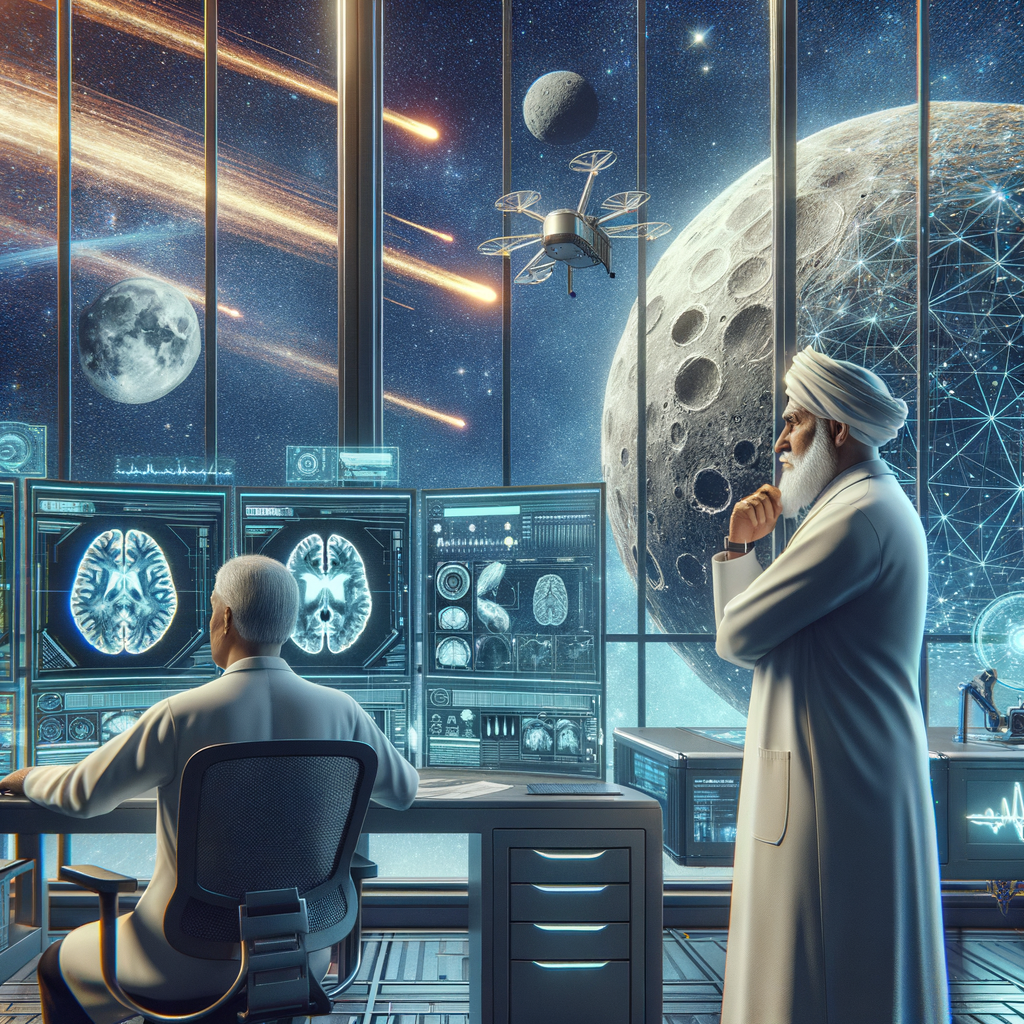
Rewiring the Future: UK Brain Research, NASA’s Lunar Ambitions, and Innovations in Health Tech
Today’s Science & Health headlines showcase a world in rapid transformation. From multi-million dollar efforts to understand the human brain, to NASA’s development of advanced lunar drones and the continuing evolution of wearable health tech for seniors, innovation is taking bold steps. Meanwhile, astronomical phenomena and the challenge of color perception remind us both of the vastness of the universe and the intricacies of human experience.
What Happened
Pioneering Brain Research in the UK
The UK’s Advanced Research and Invention Agency (ARIA)—often described as the British answer to DARPA—has announced ambitious plans to “rewire the human brain.” With a budget of £800 million (approximately $1 billion USD), ARIA is targeting neurological conditions that have eluded significant progress for decades, including epilepsy and Alzheimer’s disease. The agency aims to fund high-risk, high-reward research that bridges neuroscience, engineering, and computing, hoping to catalyze breakthroughs in brain-computer interfaces and neural therapies.
Lunar Exploration: NASA’s MoonFall and Artemis III
NASA is intensifying its focus on lunar exploration. The agency revealed details of MoonFall, a project deploying a fleet of drones to map the lunar south pole. This initiative is crucial for identifying future landing sites for Artemis missions, particularly Artemis III. However, new updates indicate that Artemis III—originally slated for an earlier date—will not launch before late 2027. SpaceX and Blue Origin, responsible for developing lunar landers, have both communicated revised timelines to NASA, reflecting the complexity of integrating commercial and governmental space technologies.
Advances in Senior Health Tech
In Berlin, health tech startup Patronus has raised €11 million in a round led by 3TS Capital Partners. The funds will accelerate the adoption of its senior emergency smartwatch. Unlike traditional emergency devices that often remain unused, Patronus’ smartwatch boasts an 85% daily wear rate, signaling a shift toward more practical, user-friendly health monitoring for elderly populations.
Space Imagery and Human Perception
Elsewhere, the latest Astronomy Picture of the Day (APOD) featured Comet R3 PanSTARRS obscured by satellite trails—a reminder of both the beauty and challenges of modern skywatching. Rounding out the day’s science news, a novel interactive test invites readers to explore whether their experience of the color blue matches that of others, highlighting the subjectivity of human perception.
Why It Matters
The convergence of neuroscience, space exploration, and digital health reflects broader trends reshaping society:
- Neurological breakthroughs could transform quality of life for millions suffering from chronic brain conditions, while advancing our understanding of consciousness and cognition.
- NASA’s lunar initiatives are not just about returning humans to the Moon; they set the stage for sustained exploration, resource mapping, and eventual Mars missions.
- Wearable health technology that is actually used daily represents a major step forward in proactive, real-world health management for aging populations.
- Astronomy and perception science remind us of the dual scales of human curiosity: from the cosmic to the personal.
Each development carries implications for policy, industry, and everyday life, moving us toward a future where technology and science are deeply intertwined with health and exploration.
Key Stats
- ARIA’s brain research initiative is backed by a $1 billion budget.
- Patronus’ emergency smartwatch achieves an 85% daily wear rate among senior users.
- Patronus raised €11 million in its latest funding round, led by 3TS Capital Partners.
- NASA’s Artemis III mission is now scheduled for launch no earlier than late 2027.
- APOD’s featured image on April 27, 2026, highlighted Comet R3 PanSTARRS behind satellite trails, illustrating the growing impact of satellite constellations on astronomy.
What's Next
Expect continued momentum in brain research as ARIA and global counterparts pursue transformative therapies and interfaces. NASA’s lunar mapping efforts will accelerate, with MoonFall’s drone fleet gathering vital data for upcoming Artemis missions—though delays underscore the challenge of deep-space logistics. In health tech, Patronus and similar startups will likely scale their solutions across Europe and beyond, as demand for effective, user-friendly senior monitoring grows. Finally, as mega-constellations multiply, astronomers and policymakers will increasingly grapple with the tension between connectivity and clear skies, while public engagement with science—whether through interactive perception tests or cosmic imagery—remains as vital as ever.