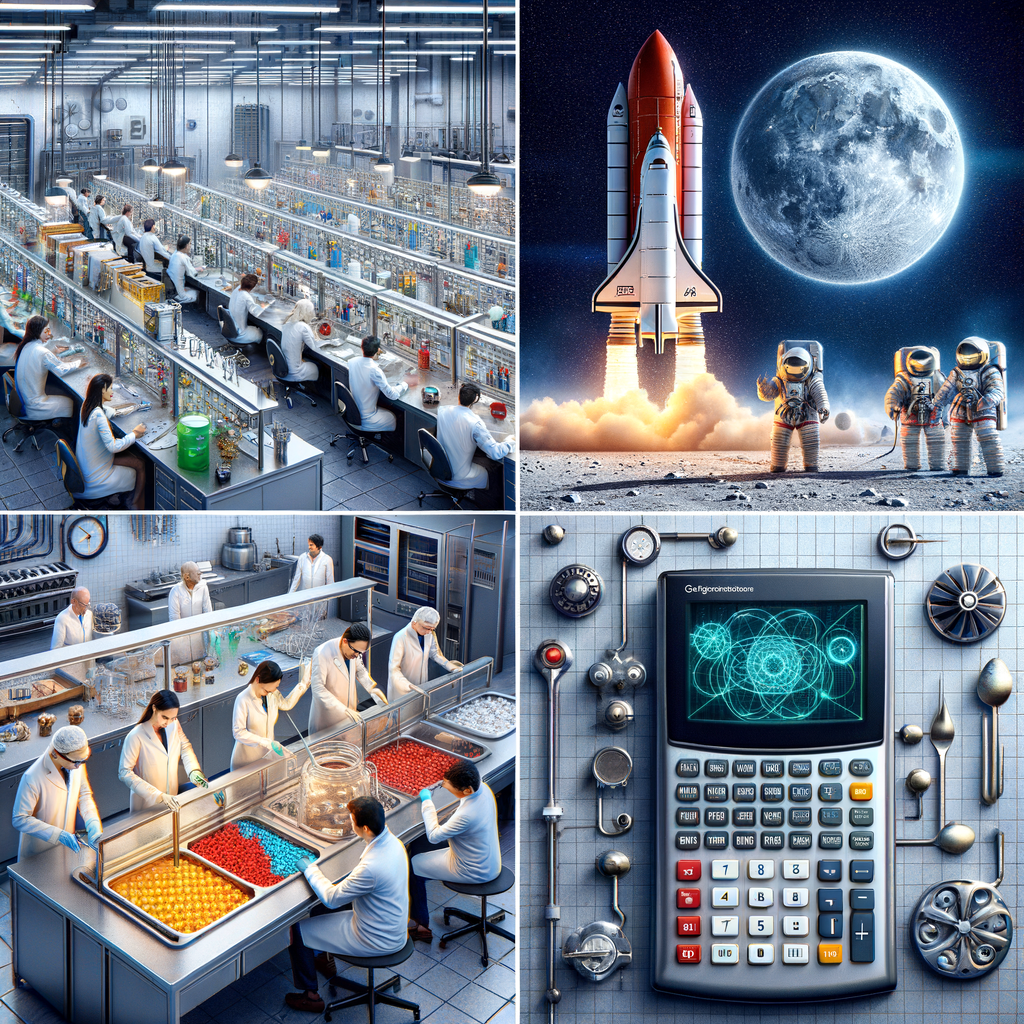
From Sound Waves to Space Debris: Today's Breakthroughs in Science and Health
Today’s Science & Health news highlights a dynamic mix of discovery and innovation. From the lab to outer space, researchers and companies are pushing boundaries—whether it’s using sound to stop fires, uncovering the secrets of dolphin speed, or debuting the world’s most advanced classroom calculator. Here’s an overview of the day’s most notable developments.
What Happened
Science Roundup: Oddities and Insights
A collection of six offbeat yet insightful scientific studies made headlines. Researchers crushed soda cans to better understand material physics, investigated the hydrodynamics that allow dolphins to swim at remarkable speeds, and uncovered the surprising role of urine in helping mushrooms communicate underground. The roundup underscores how even the quirkiest experiments can yield valuable knowledge across disciplines.
Infrasound Fire Suppression Goes Commercial
A promising new approach to fire prevention hit the market as companies began deploying infrasound-based fire suppression systems for kitchens. Unlike traditional sprinklers, these systems use low-frequency sound waves to disrupt combustion, snuffing out flames without water or chemical agents. The technology is now being tested in commercial kitchens, raising questions about its effectiveness and whether it could eventually replace tried-and-true sprinkler systems.
SpaceX Rocket Debris Set for Lunar Impact
A piece of a SpaceX rocket is expected to crash into the Moon, according to an astronomy software developer. Unlike most space debris, this fragment will strike the lunar surface at speeds exceeding the speed of sound. The event highlights ongoing concerns about the accumulation of man-made objects in both Earth and lunar orbits and the challenges of tracking and mitigating space debris.
ByteDance’s Anew Labs Enters AI Drug Discovery
Marking a new chapter in the intersection of technology and health, ByteDance’s Anew Labs unveiled its first AI-designed drug candidate at a Boston conference. The molecule, an IL-17 inhibitor, targets a protein-protein interaction previously considered “undruggable” by pharmaceutical standards. While the breakthrough is promising, efficacy and safety will only be determined through clinical trials.
Texas Instruments Launches TI-84 Evo
Texas Instruments introduced the TI-84 Evo, the most advanced model in its iconic graphing calculator series. Designed for secondary school students tackling algebra, geometry, and calculus, the TI-84 Evo aims to support both traditional and advanced math education with expanded functionality and improved performance.
Why It Matters
Today’s stories reveal the breadth and depth of modern science and health innovation. The expansion of AI into drug discovery could potentially accelerate the development of therapies for complex diseases, changing the pharmaceutical landscape. Meanwhile, acoustic fire suppression offers a waterless alternative that could reduce property damage and maintenance costs, provided it proves reliable at scale.
The impending lunar impact of SpaceX debris draws attention to the management of space junk—not just in Earth’s orbit, but on the Moon as humanity eyes future lunar missions. Quirky research, like the study of mushroom communication or dolphin swimming, demonstrates that fundamental curiosity-driven science often leads to practical insights. Lastly, the TI-84 Evo underscores the continuing evolution of educational tools to meet the needs of modern classrooms.
Key Stats
- The SpaceX rocket fragment will hit the Moon at a speed exceeding Mach 1 (the speed of sound).
- ByteDance’s Anew Labs’ AI-designed IL-17 inhibitor targets a protein interaction previously labeled “undruggable.”
- The TI-84 Evo is positioned as the most advanced calculator in the TI-84 series, supporting algebra, geometry, and calculus.
- Infrasound fire suppression systems are now being tested in commercial kitchen environments, presenting a potential alternative to water-based sprinklers.
- Research included studies on dolphin hydrodynamics and novel communication mechanisms in fungi mediated by urine.
What's Next
Looking ahead, the success of infrasound fire suppression systems in real-world settings will determine their adoption beyond kitchens. ByteDance’s AI-designed drug will move into clinical trials, where its effectiveness and safety will be rigorously assessed—a step that could validate AI’s role in future drug discovery. The lunar impact event will likely intensify the debate over space debris management on and off Earth. Finally, as educational tools like the TI-84 Evo evolve, expect further integration of technology into classrooms to support advanced STEM learning.