Quantum Sensors, Smarter ERs, and the Battle for Science: May 3 Science & Health Daily Roundup
Today’s Science & Health news brings together advances in quantum technology, artificial intelligence in medicine, and space exploration, while also highlighting critical challenges facing research funding and environmental monitoring. As the worlds of fundamental physics, healthcare, and engineering continue to intersect, new claims and innovations are rapidly shaping the landscape.
What Happened
Quantum Sensors and the 'Ghost Murmur' Controversy
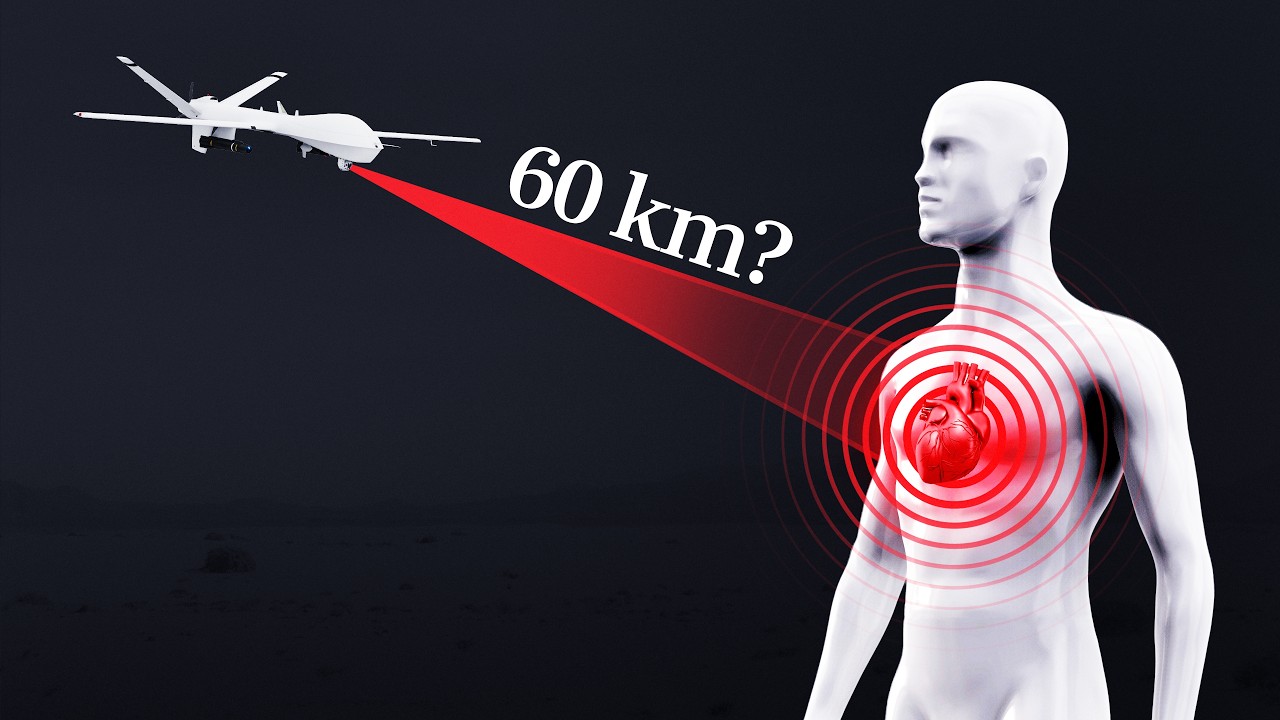
The science community has been abuzz with reports about the CIA’s alleged “Ghost Murmur” technology—a quantum sensor purportedly capable of detecting heartbeats from up to 60 kilometers away. This claim, originating from a New York Post exclusive and confirmed by former President Trump, has drawn both intrigue and skepticism. Experts in magnetometry and biomagnetism, including Patrick Maletinsky and Brad Roth, caution that current quantum sensors, such as those using nitrogen-vacancy (NV) centers in diamond, are powerful but face enormous challenges in real-world, long-range biological detection.
AI Surpasses Doctors in ER Diagnoses
A Harvard-led study published by TechCrunch has found that large language models can outperform human doctors in emergency room diagnostic accuracy. In real-life ER scenarios, at least one AI model provided more accurate diagnoses than two experienced physicians, underscoring the growing role of AI in medical decision-making and its potential to augment or even surpass human expertise in certain contexts.
Rethinking Dark Matter
A new debate is emerging in cosmology: what if dark matter doesn’t exist? For decades, the existence of dark matter has been a foundational assumption underpinning models of the universe, yet direct evidence remains elusive. Scientists are exploring alternatives, including modified theories of gravity, to explain observed galactic phenomena.
Air Quality & Earth Monitoring Upgrades
Coway, a well-known air purifier brand, has released a major upgrade to its flagship model, offering increased purification power and a fresh aesthetic. Meanwhile, Europe’s Copernicus Sentinel-1 radar constellation has reached full operational capacity with the addition of Sentinel-1D, strengthening Europe’s ability to monitor environmental changes, natural disasters, and land use.
Science Funding Under Threat
Research in the United States faces new uncertainty after another round of mass firings at the National Science Foundation, reportedly prompted by administrative changes. This move could have significant repercussions for ambitious scientific projects and the nation’s research ecosystem.
Deep-Sea Exploration Goes Budget-Friendly
Orpheus Ocean, a startup, is developing cost-effective, seafloor-hopping submersibles. These affordable vehicles aim to expand deep-sea exploration and could open new doors for both scientific discovery and commercial mining—a development with both promise and controversy.
Artemis III and the Race for Lunar Orbit
NASA’s Artemis III mission, in partnership with SpaceX and Blue Origin, is now targeting a ‘late 2027’ Earth orbit demonstration. While officials insist the timeline is achievable, industry observers remain watchful for further delays.
Why It Matters
The convergence of cutting-edge sensing technologies, AI-driven medical tools, and advanced monitoring systems marks a pivotal moment for science and health. Quantum sensors, if proven to work as claimed, could redefine surveillance and medical diagnostics—but they also raise profound ethical and technical questions. Meanwhile, the demonstrated capabilities of AI in clinical settings suggest a future where machines will increasingly support, or even guide, critical healthcare decisions.
The debate around dark matter challenges scientific orthodoxy, reminding us that even deeply held assumptions must be open to scrutiny. Advances in air purification and Earth observation directly impact public health and disaster response, while the strengthening of Europe’s Sentinel-1 constellation enhances global environmental awareness.
Conversely, the turmoil at the National Science Foundation illustrates the fragility of scientific progress in the face of political and administrative upheaval. Finally, innovations in deep-sea exploration technology promise to broaden humanity’s reach, but also spark discussions on sustainability and stewardship of the ocean’s depths.
Key Stats
- The CIA’s alleged 'Ghost Murmur' quantum sensor is claimed to detect heartbeats from 60 kilometers away, though experts question its plausibility.
- In a Harvard study, AI outperformed two human doctors in emergency room diagnostic accuracy in real-case scenarios.
- All four Sentinel-1 satellites are now operational, boosting Europe’s radar imaging capacity for environmental observation.
- The Artemis III mission is now aiming for a ‘late 2027’ Earth orbit demonstration.
- Budget seafloor submersibles from Orpheus Ocean could make deep-sea research—and mining—more accessible and affordable.
What's Next
Expect continued scrutiny and investigation into the true capabilities and limitations of quantum sensors for surveillance and medical use. AI’s growing role in healthcare will provoke further trials and ethical discussions, particularly regarding trust, oversight, and integration into clinical workflows. In fundamental physics, alternative explanations for cosmic phenomena will compete with—and potentially upend—longstanding models like dark matter.
On the environmental front, enhanced satellite constellations will provide richer data for scientists and policymakers, while consumer air quality technologies continue to evolve. The future of U.S. research funding remains uncertain, with potential ramifications for global scientific leadership. Meanwhile, affordable deep-sea vehicles could democratize ocean exploration, but also intensify debates over marine resource management. Artemis III’s progress will be closely watched as the next milestone in lunar exploration approaches.