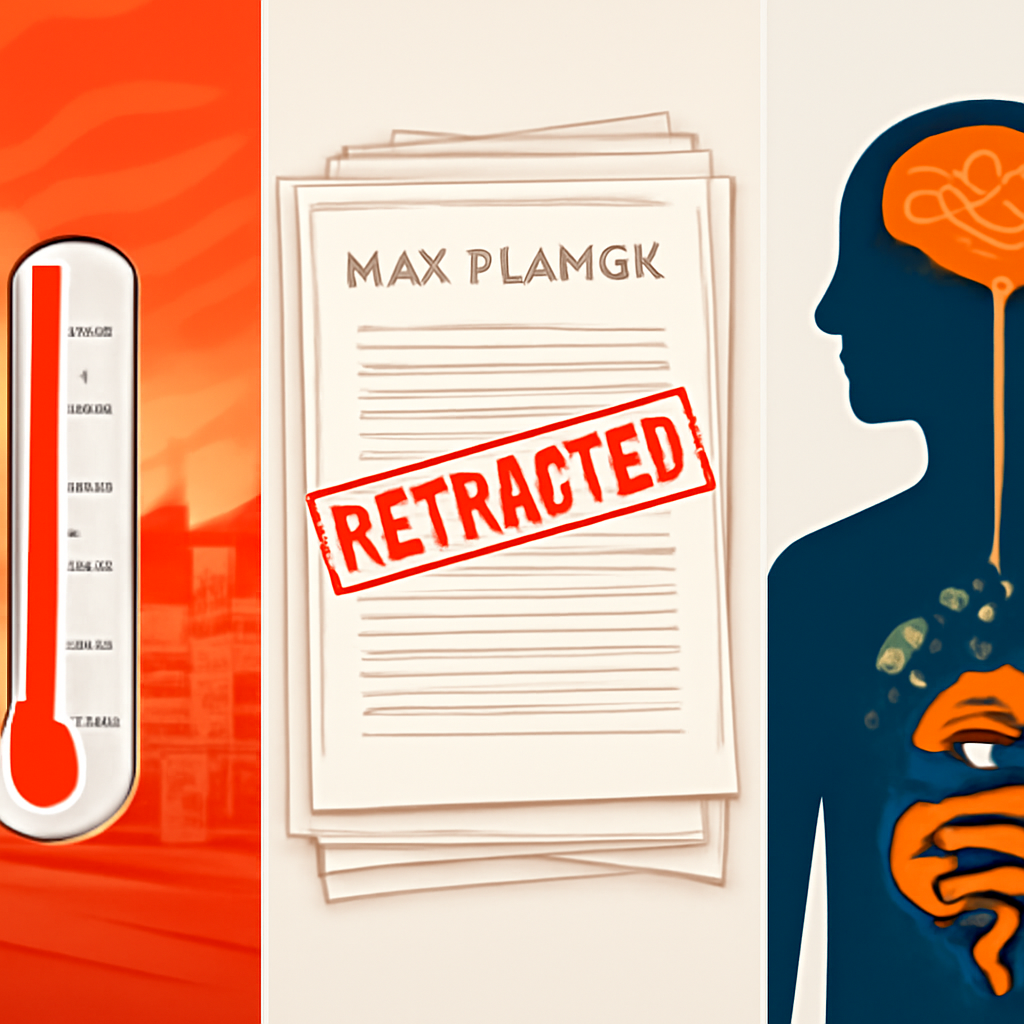
Europe Faces Shifting Extreme Heat, Scientific Controversies, and New Insights on Gut-Brain Drugs
Today’s headlines in Science & Health reflect an interconnected world grappling with environmental extremes, scientific integrity, and the evolving understanding of medical treatments. From the migration of unprecedented heatwaves across Europe to the retraction of historic scientific papers, and new findings on weight-loss medications’ impact on mental health, the day’s news underscores the ongoing challenges and advances in global health and research.
What Happened
Extreme Heat Shifts Across Europe
A severe heatwave that recently affected Italy, Spain, France, and the UK is now sweeping eastward, targeting Germany, the Czech Republic, and Hungary. Temperature records continue to be broken, with Germany and Poland experiencing unprecedented highs. Meanwhile, Italy is expected to see some relief as temperatures drop starting Wednesday, signaling a west-to-east progression of the extreme weather pattern.
Retraction of Historic Papers by Max Planck
A scientific journal has retracted two papers from the 1940s authored by Max Planck, one of the most influential physicists of the 20th century. The papers, once accessible, now lead to blank pages and empty PDFs. The move has stirred debate within the academic community about the appropriateness of retracting historical scientific work, with critics questioning the intellectual justification for such actions decades after publication.
New Research on Ozempic and the Gut-Brain Axis
Recent research highlights an unexpected benefit of weight-loss drugs like Ozempic: their potential antidepressant effect. Scientists have found that these drugs influence not just body weight, but also the gut-brain axis, altering the gut microbiome in ways that may improve mood. Importantly, the research suggests that similar benefits to mental health might be achievable through targeted dietary changes, emphasizing the role of nutrition in the gut-brain connection.
Why It Matters
The eastward shift of the European heatwave underscores the growing impact of climate change on regional weather patterns, with potential consequences for public health, infrastructure, and agriculture. As countries brace for record temperatures, the resilience and adaptability of health systems are being tested.
The retraction of Max Planck’s decades-old papers highlights ongoing debates about scientific integrity, historical revisionism, and the stewardship of the scientific record. Such actions raise important questions about how the scientific community manages legacy literature and the criteria for posthumous correction or removal.
The findings on Ozempic’s effect on the gut-brain axis contribute to a broader understanding of the relationship between physical and mental health. With weight-loss drugs now being considered for their antidepressant properties, this research could influence future treatment protocols and public health advice, especially as the role of the microbiome in mood regulation becomes clearer.
Key Stats
- Germany and Poland have recorded their highest June temperatures on record as the heatwave moves eastward.
- Two scientific papers by Max Planck from the 1940s were retracted by a journal, causing their online versions to be replaced by blank pages.
- Recent studies indicate that Ozempic, a GLP-1 receptor agonist, alters the gut microbiome and may have antidepressant effects beyond weight loss.
- The Italian heatwave is expected to subside by Wednesday, while Germany, Czech Republic, and Hungary remain on alert for extreme temperatures.
What's Next
As the heatwave continues its march across Eastern Europe, authorities are expected to increase warnings and implement protective measures for vulnerable populations. Scientific publishers and academic institutions may engage in deeper discussions about the criteria for retracting historic papers and the preservation of the scientific record. In the medical field, further studies are likely to explore how manipulating the gut-brain axis—whether through pharmaceuticals or dietary interventions—can benefit both physical and mental health, potentially shaping new guidelines for treating obesity and depression.