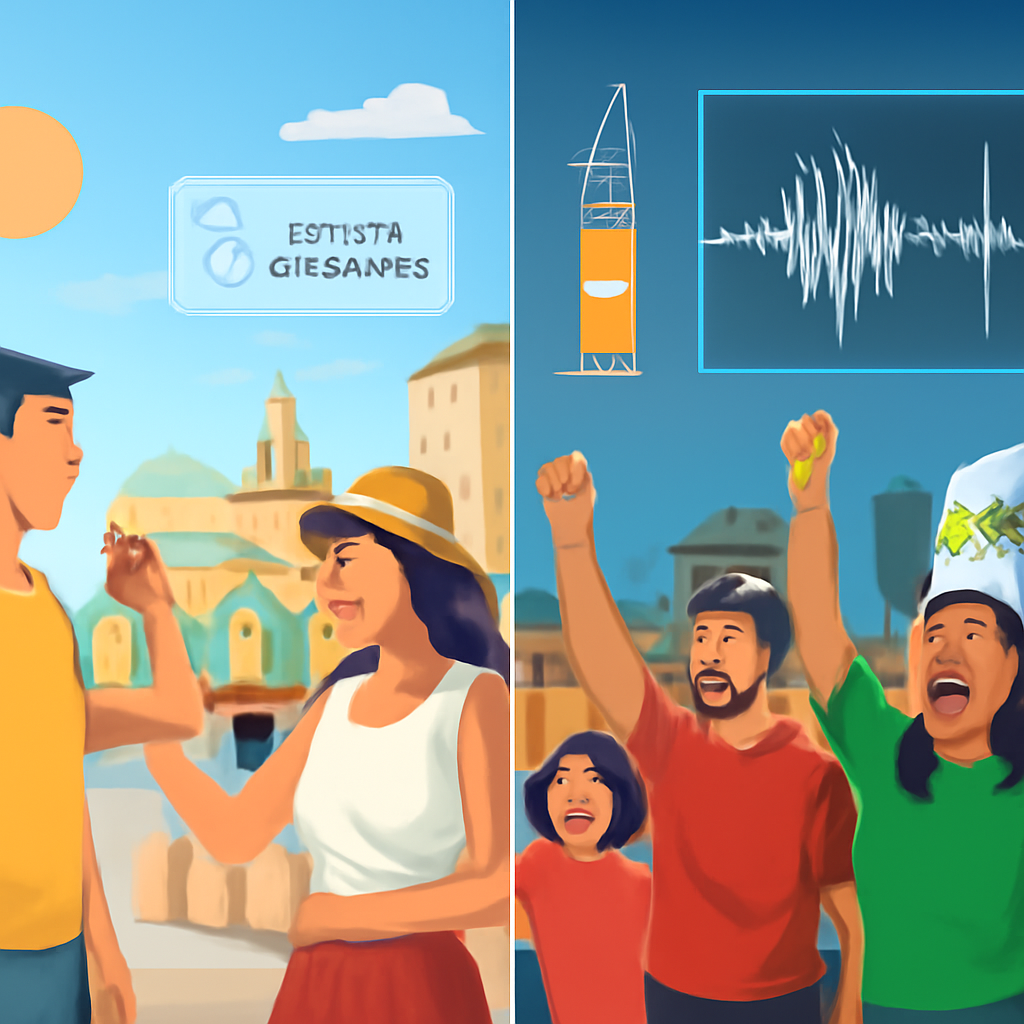
Science & Health Daily: Viral Risks on Vacation, Heatwave Relief, Seismic Soccer, and Brainwave Breakthroughs
Today's highlights in Science & Health span diverse frontiers: from public health warnings about vector-borne diseases during vacation season, to Italy's much-needed respite from extreme heat, seismic celebrations in Mexico following a World Cup victory, and groundbreaking advances in brain-computer communication. Each story underscores the interplay between environmental factors, societal behavior, and scientific innovation.
What Happened
Viral Threats During Vacation Season
A report from Italy underscores growing concerns over the risk of viral infections—not just from exotic destinations, but increasingly within Europe itself. Professor Matteo Bassetti warns that travelers face threats from viruses transmitted by ticks and mosquitoes, such as Hantavirus and the persistent threat of Ebola. Recent months have seen a spike in viral activity coinciding with the transition from spring to summer, prompting heightened vigilance for those embarking on holiday travel.
Relief from Extreme Heat in Italy
Following weeks of record-breaking temperatures, Italian authorities have announced a temporary reprieve. On July 2, only 24 cities remain under a yellow heat alert, with nationwide conditions expected to improve further, turning the map “green” as temperatures normalize. This shift brings relief after a period marked by health warnings and strained infrastructure.
Seismic Celebrations in Mexico
In an extraordinary instance of collective euphoria, Mexico’s national football team’s victory over Ecuador in the 2026 World Cup was so enthusiastically celebrated that seismic sensors detected unusual ground vibrations. While not an actual earthquake, the event illustrates the impact of human activity on sensitive scientific instruments and highlights the intersection of culture and earth sciences.
Engineering in Everyday Objects
A spotlight on the humble mechanical pencil serves as a reminder of the intricate engineering present in daily life. This object embodies the fusion of design, precision, and utility, illustrating how engineering shapes even the most familiar items.
Breakthrough in Brainwave Communication
Researchers have unveiled Brain2Qwerty, a novel technology enabling communication through brain waves—without the need for surgical implants. While details remain limited, this development represents a significant step toward accessible brain-computer interfaces, potentially transforming communication for individuals with severe motor impairments.
Why It Matters
The convergence of these developments highlights the importance of vigilance, adaptability, and innovation in the face of evolving public health threats and environmental challenges. Vector-borne diseases remain a pressing concern as climate change alters the distribution of ticks and mosquitoes, making viral outbreaks a global—not just exotic—risk. The temporary heatwave reprieve in Italy demonstrates the value of robust public health monitoring and adaptive responses to climate extremes. Mexico’s seismic celebration showcases the profound impact of collective human behavior, while advances like Brain2Qwerty open new frontiers for accessibility and human-machine interaction.
Key Stats
- 24 Italian cities under yellow heat alert as of July 2; nationwide conditions expected to normalize imminently.
- Multiple viral threats (including Hantavirus and Ebola) reported in Europe during late spring and early summer.
- Seismic sensors in Mexico detected crowd-generated ground vibrations during the 2026 World Cup victory celebration.
- Non-invasive brain-computer interface: Brain2Qwerty allows communication without surgical implants.
What's Next
Looking ahead, travelers and public health officials must remain vigilant to emerging viral risks, even in traditionally “safe” regions. Climate-driven shifts in disease vectors may necessitate new preventive strategies and surveillance measures. In Italy, the ongoing management of heatwaves will continue to test the resilience of infrastructure and healthcare systems. The intersection of societal events and environmental monitoring, as seen in Mexico, may prompt further research into the effects of mass gatherings. Meanwhile, continued advances in non-invasive brain-computer interfaces could soon redefine communication and accessibility, offering hope for millions worldwide.