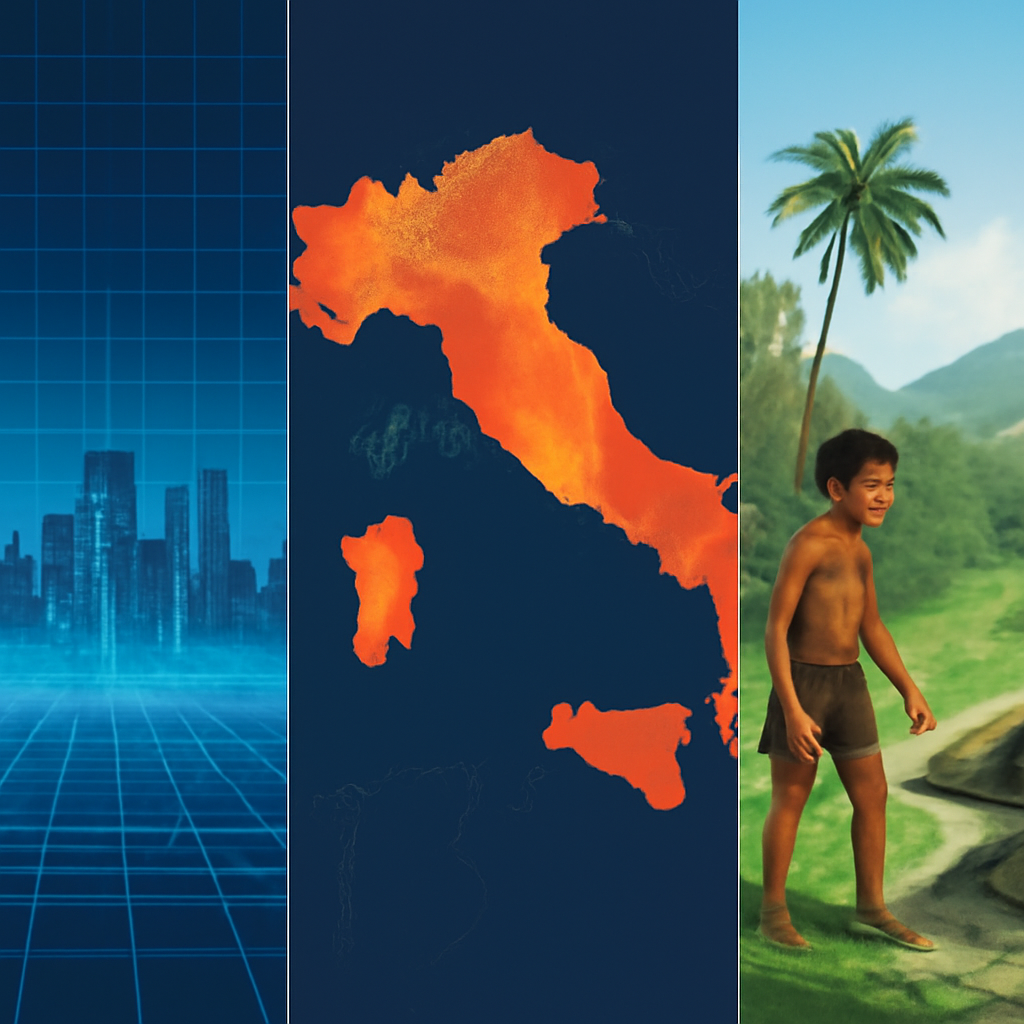
Simulated Realities, Scorching Heatwaves, and Ancient Survivors: Today in Science & Health
Science and health headlines on July 3, 2026, traversed profound questions about our universe, present-day climate extremes, and the remarkable survival strategies of ancient humans. From new insights into the simulation hypothesis to record-breaking heat forecasts in Italy and groundbreaking anthropology, today’s developments offer a window into both the origins and future of human existence.
What Happened
Evidence Emerges on the Simulation Hypothesis
Fresh scientific discourse has reignited one of philosophy and physics’ most tantalizing debates: Are we living in a computer-generated simulation? Recent publications and theoretical explorations have reportedly provided new evidence and frameworks, pushing the boundaries of our understanding about the nature of reality itself. Though definitive proof remains elusive, these theories are gaining traction among physicists and computer scientists, influencing both academic and popular discussions.
Italy Braces for a Renewed Heatwave
Meteorological reports from Italy point to the return of extreme heat after a brief reprieve. While the coming weekend may not bring uniformly sweltering conditions across the country, forecasts suggest the current relief will be short-lived. Experts warn of another “fiammata” (flare-up) in July, with temperatures expected to surpass seasonal norms. These conditions are part of a wider pattern of climate extremes affecting Southern Europe.
Unraveling the Life of ‘Hobbit’ Humans on Flores Island
In paleoanthropology, researchers affiliated with the Smithsonian Institution have made progress in understanding how Homo floresiensis—often nicknamed the “hobbit” for its diminutive stature—survived in the hostile environment of Flores Island, Indonesia. By examining over 10,000 artifacts alongside faunal remains, the team investigated whether these early humans mastered fire or hunted large prey, such as the island’s formidable Komodo dragons. Findings hint at complex adaptation strategies that enabled their coexistence with dangerous megafauna.
Why It Matters
The ongoing debate over the simulation hypothesis challenges our perceptions of consciousness, physics, and the universe’s ultimate nature. If credible evidence supporting the simulation theory emerges, it could redefine scientific inquiry and philosophical outlooks alike.
Italy’s intensifying heatwave underscores the growing impact of climate change on daily life and public health. Recurring extreme weather events strain infrastructure, agriculture, and healthcare systems, prompting urgent calls for adaptation and mitigation.
The discoveries about Homo floresiensis shed light on the diversity and resilience of human ancestors. Understanding how “hobbit” humans survived amid predators like Komodo dragons provides valuable context for evolutionary biology, island biogeography, and the spectrum of human adaptability.
Key Stats
- Researchers analyzed 10,061 artifacts in their study of Homo floresiensis on Flores Island.
- Italian meteorological forecasts predict July temperatures will exceed historical averages, marking another record-setting summer.
- The “hobbit” humans are estimated to have stood about 1 meter (3.3 feet) tall, living on Flores Island approximately 50,000–100,000 years ago.
- The simulation hypothesis, first popularized in the early 2000s, now commands growing attention in peer-reviewed scientific discourse.
What's Next
Expect further interdisciplinary research on the simulation hypothesis, potentially involving experimental tests and computer modeling. In Italy and across Southern Europe, authorities are preparing for ongoing heatwaves through public health advisories and infrastructure adaptations. Paleoanthropologists will continue to unearth clues from Flores and similar sites, aiming to clarify how ancient human relatives adapted to extreme and isolated environments. Collectively, these threads point toward a future where both the nature of reality and the story of humanity remain open to discovery.