AI Tutors for the Elite and a Revolutionary Way to Measure Time: Today in Science & Health
Today’s Science & Health news highlights two striking innovations. First, a growing number of wealthy families are turning to advanced AI tutors, investing significant sums to offer their children a technological edge. Second, researchers have introduced a groundbreaking method to measure time that sidesteps the need for knowing the precise starting moment—an advance with broad scientific implications.
What Happened
AI Tutors for the Wealthy
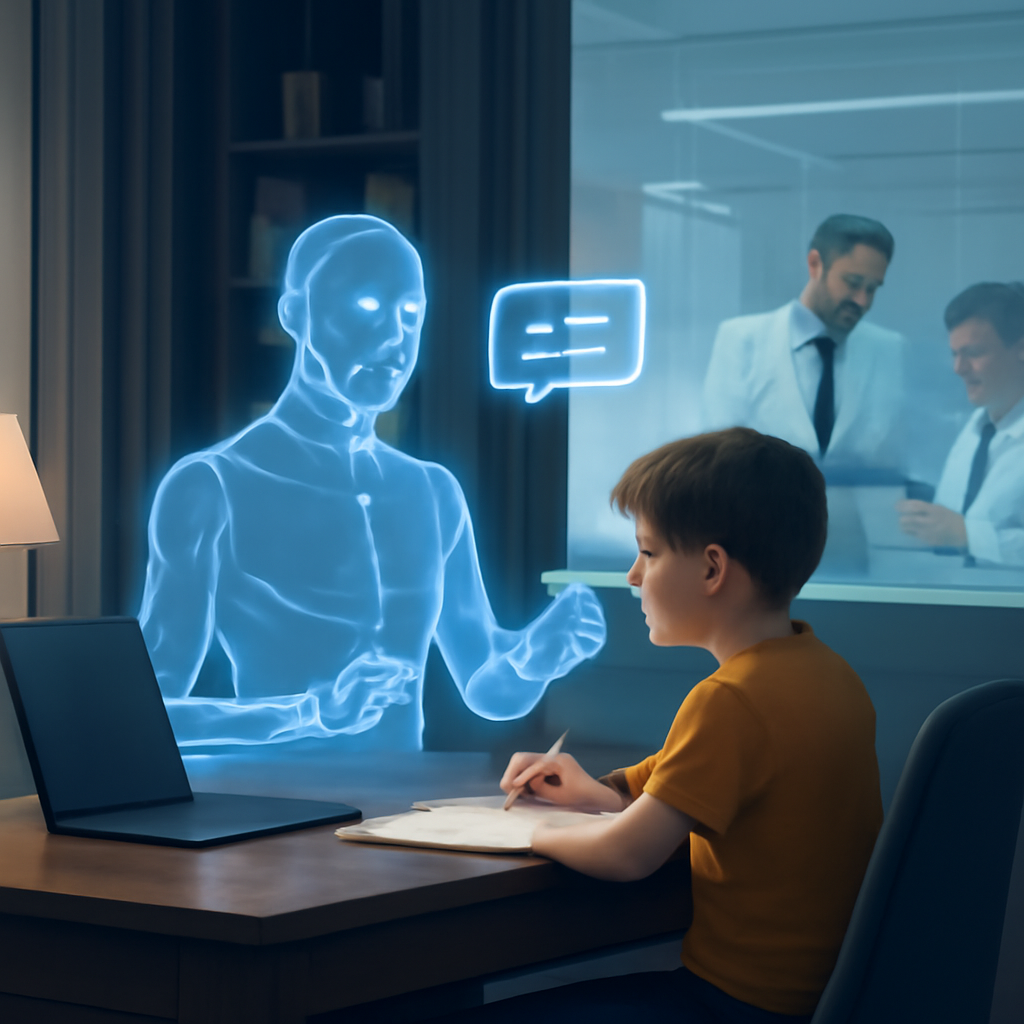
A new trend is emerging among the nation’s affluent households: using high-end artificial intelligence systems as private tutors for their children. These AI tutors, costing upwards of $75,000 per child, promise personalized curricula, adaptive learning experiences, and the ability to teach unconventional skills. Reports indicate that the educational content can be both eclectic and experimental—one noted example being a lesson on using glue as a pizza topping. While some parents are drawn by the promise of customized education and the cachet of cutting-edge technology, others express concern about the potential for frivolous or untested teaching approaches.
Measuring Time Without a Known Start
In a separate development, scientists have revealed a novel approach to measuring time. Traditionally, timekeeping hinges on knowing when an event begins. However, the new method allows researchers to determine the passage of time without needing any information about the initial moment. This breakthrough leverages statistical analysis and observable changes in a system, enabling accurate measurement even when the start point is unknown or unknowable. The technique has immediate applications in physics, biology, and other fields where precise timing is critical but initial conditions are hard to define.
Why It Matters
The adoption of AI tutors by the wealthy raises questions about educational equity, the effectiveness of machine-led learning, and the future of traditional schooling. While these tools may offer advantages in customization and efficiency, they also risk deepening the divide between those who can afford advanced technology and those who cannot. The content delivered by AI—ranging from the innovative to the questionable—underscores the need for oversight and quality standards in AI-driven education.
The new method of measuring time is significant for both fundamental research and practical applications. By removing the requirement to know a starting point, scientists can study processes that were previously difficult or impossible to analyze, from biological development to particle decay. This advance could lead to more precise experiments, improved data analysis, and new discoveries in fields dependent on accurate timing.
Key Stats
- $75,000: The reported fee some families pay for cutting-edge AI tutoring per child.
- 100%: The reduction in reliance on known start times for the new time measurement method.
- Unconventional curriculum: AI tutors have delivered lessons as unusual as using glue on pizza, highlighting experimental approaches.
- Immediate applications: The new time measurement technique can be used in physics and biology where start times are often uncertain.
What's Next
We can expect further adoption of AI tutors among elite families, potentially leading to increased calls for regulation and standardization in AI-driven education. As the technology matures, scrutiny will likely intensify around both the quality of instruction and the broader societal impacts. Meanwhile, the scientific community will begin applying the new time measurement method to a range of complex systems, with possible breakthroughs in understanding phenomena where the beginning is inherently ambiguous. The dual advances in education and measurement signal a continued trend toward leveraging technology to overcome traditional limitations, while also raising important questions about access, oversight, and the pace of change.