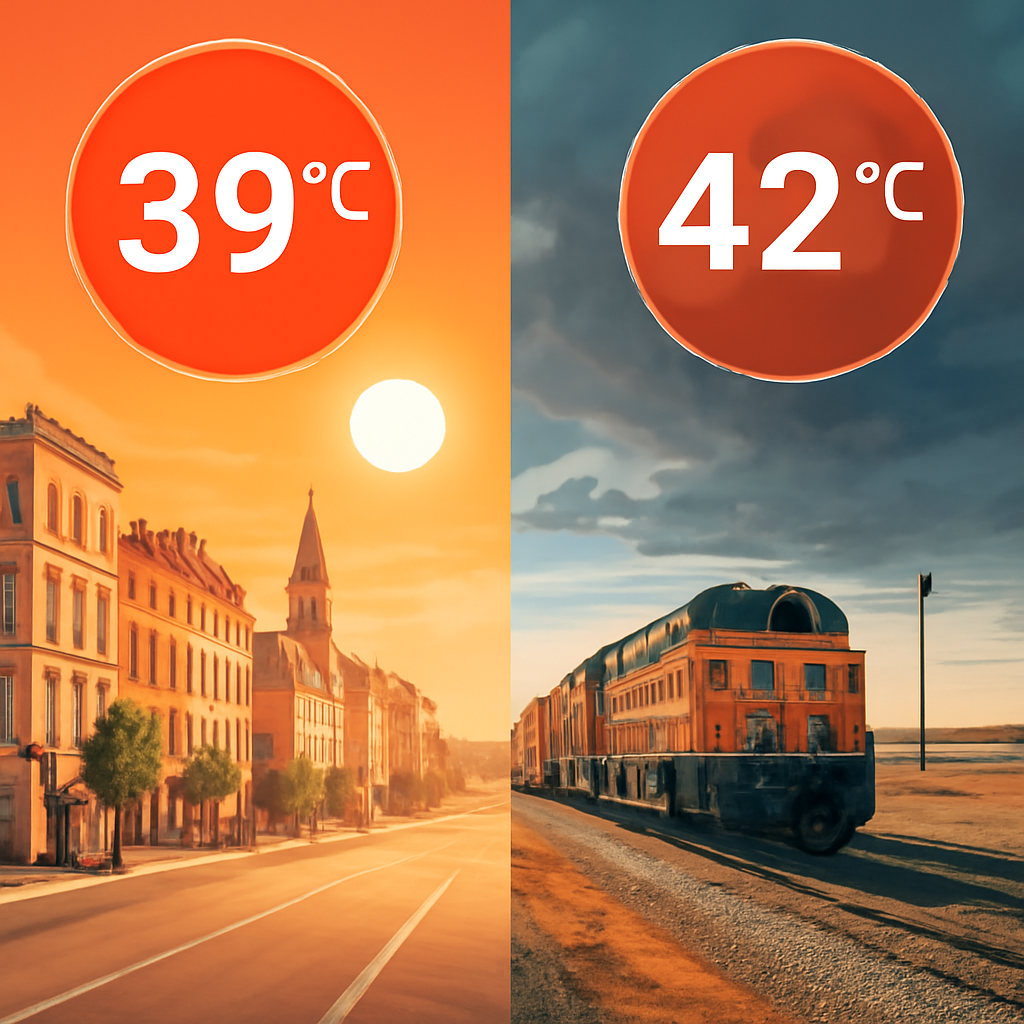
Extreme Heat and Weather: Italy and the U.S. Confront Climate Challenges
Intro
The ongoing impacts of extreme weather are being felt across continents. Italy is experiencing its third major heatwave of the season, leading to nationwide alerts and dangerous storms. Meanwhile, in the United States, Union Pacific is implementing new strategies to safeguard rail operations as temperatures soar. Both stories highlight the growing influence of climate change on daily life and critical infrastructure.
What Happened
On July 18, 2026, Italy remained under pressure from an intense heatwave, with the Ministry of Health issuing maximum heat alerts for 14 cities. This marks the third significant heat event of the summer. While relief is predicted for northern regions starting tomorrow, the rest of the country continues to face high temperatures and health advisories.
Simultaneously, Italy is also contending with violent thunderstorms, marked by hail, strong winds, and lightning. These sudden shifts from heat to storms have caused damage in several areas, raising questions about public safety and preparedness.
Across the Atlantic, Union Pacific, one of America’s leading freight railroads, is addressing the effects of rising temperatures on rail infrastructure. The company has adopted innovative heat management techniques, contributing to its best derailment incident rate in 2025—a 19% improvement year over year.
Why It Matters
These developments underline the growing challenges that extreme weather presents, not just to public health, but also to the reliability of key infrastructure. In Italy, heatwaves are placing vulnerable populations at risk and testing emergency services. The added threat of severe storms complicates response efforts and increases the potential for property damage.
In the U.S., the safe and efficient movement of freight is essential for the economy. Union Pacific’s proactive measures to manage heat-affected tracks demonstrate how infrastructure operators are adapting to climate realities. Their success in reducing derailments provides a model for resilience in the face of environmental stressors.
Key Stats
- 14 Italian cities under maximum heat alert as of July 18, 2026
- Italy experiencing its third major heatwave of the summer
- Union Pacific improved its full-year derailment incident rate by 19% in 2025
- Severe storms in Italy have resulted in property damage across multiple regions
- Union Pacific’s heat management strategy is part of a broader climate adaptation plan
What's Next
For Italy, weather forecasts predict a gradual return to normal temperatures in the north, but high heat is expected to persist elsewhere. Authorities continue to urge caution, particularly for vulnerable groups. Ongoing monitoring for storms remains essential.
In the U.S., Union Pacific and other infrastructure operators are likely to expand their climate adaptation measures as extreme weather events become more frequent. Both cases highlight the need for coordinated public and private responses to emerging climate risks.