What Happened
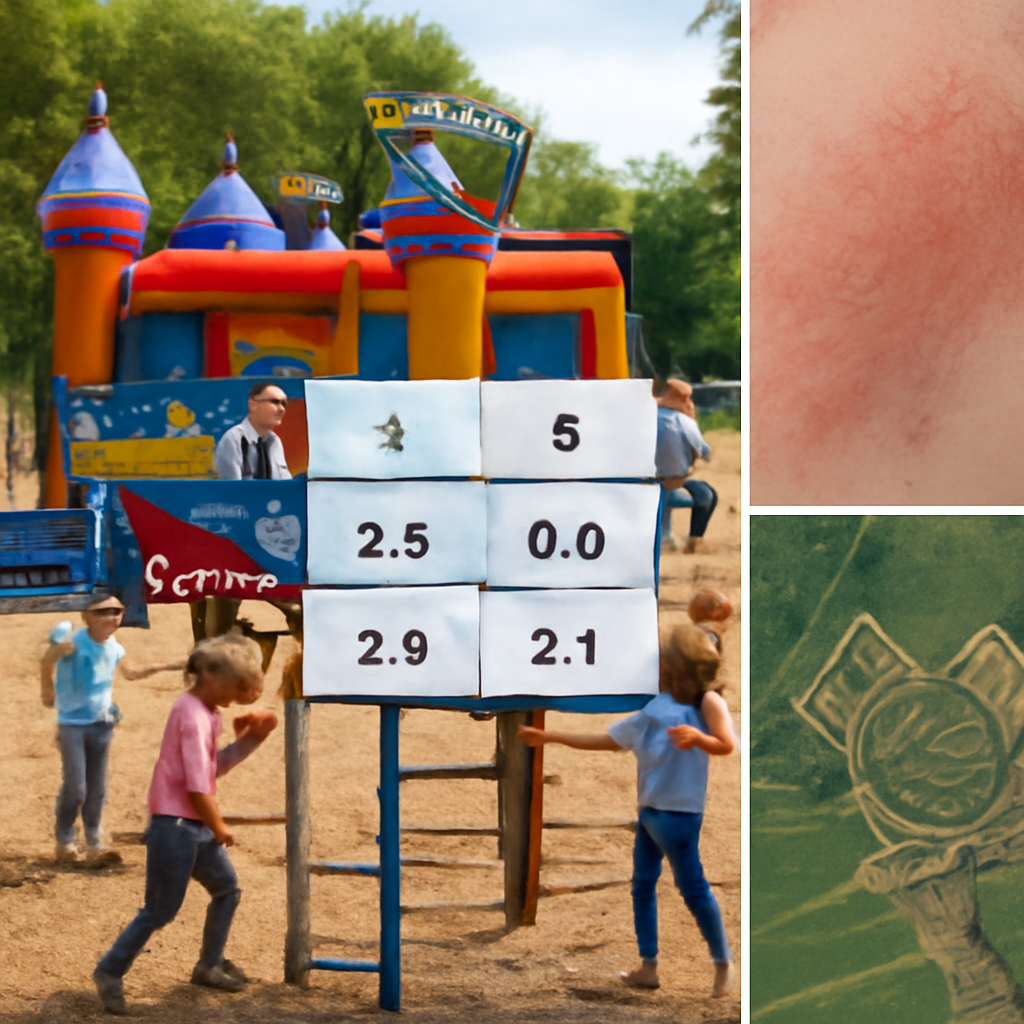
Today’s science and health news covers a range of developments: from theoretical advances in game theory, to real-world health incidents and environmental changes. Researchers found that introducing random rewards to classic game-theory scenarios makes the strategies more complex, offering richer insights into how humans and animals compete under uncertain conditions arstechnica.com. In Ireland, a bouncy castle was the source of a hypervirulent MRSA outbreak, affecting dozens of children arstechnica.com. Meanwhile, a field guide compiled common and rare bodily oddities, explaining how frequent or unusual certain reflexes, illusions, and bodily tricks are vester.si.
A new technique for manipulating satellite photos has enabled the revelation of ancient images, potentially opening up new avenues for archaeology and earth sciences spinoff.nasa.gov. On the health technology front, a case in which a boy developed a rare “toasted skin” condition from daily laptop use highlighted the subtle risks of everyday electronics arstechnica.com. Lastly, Italy is seeing a shift in weather patterns as the Azores anticyclone returns, ending an anomalous heatwave but only for a brief period startupbusiness.it.
What Changed
Several notable shifts occurred today. Theoretical science moved forward by showing how unpredictability can deepen our understanding of strategic behavior. In public health, the MRSA outbreak in Ireland represents a significant event, both because of its scale and the unusual source—a communal play structure. The awareness of rare but real health effects from technology use, such as “toasted skin syndrome,” signals a need for better health guidance regarding everyday devices. Environmental conditions in Italy are also shifting, with a temporary return to seasonal norms after a period of abnormal heat.
Why These Stories Matter Together
These stories collectively illustrate the interconnectedness of theoretical science, practical health, and environmental conditions. Understanding how randomness affects competitive strategies could influence fields from economics to biology. The MRSA outbreak and the laptop-related skin condition both underscore how human environments—be they recreational or technological—can unexpectedly impact health. Meanwhile, the new satellite imaging technique shows the power of technology in uncovering the past, while Italy’s weather changes remind us that natural systems are constantly in flux. For readers of DailyDrops Science, these developments highlight the importance of adapting scientific insights to real-world challenges.
Key Stats
- 48 children were affected by a hypervirulent MRSA outbreak linked to a bouncy castle in Ireland arstechnica.com.
- A single boy developed “toasted skin” syndrome from using a laptop every day, demonstrating a rare but real health risk arstechnica.com.
What's Next
Further research into random rewards in game theory could influence a range of scientific and economic models. Public health officials in Ireland are likely to review safety protocols for communal play equipment in response to the MRSA outbreak. Increased awareness of health risks associated with everyday technology may prompt new safety recommendations. The new satellite imaging technique is expected to aid archaeological and environmental studies. Meanwhile, Italy’s brief return to seasonal weather patterns may be followed by renewed climate variability, keeping meteorologists and the public alert.
For more updates on science and health, visit the DailyDrops Science section.
Related on DailyDrops
- Trending now: Top News
- Read next: Extreme Ice Experiments and Italy’s Heat Shift: Science & Health Daily Recap