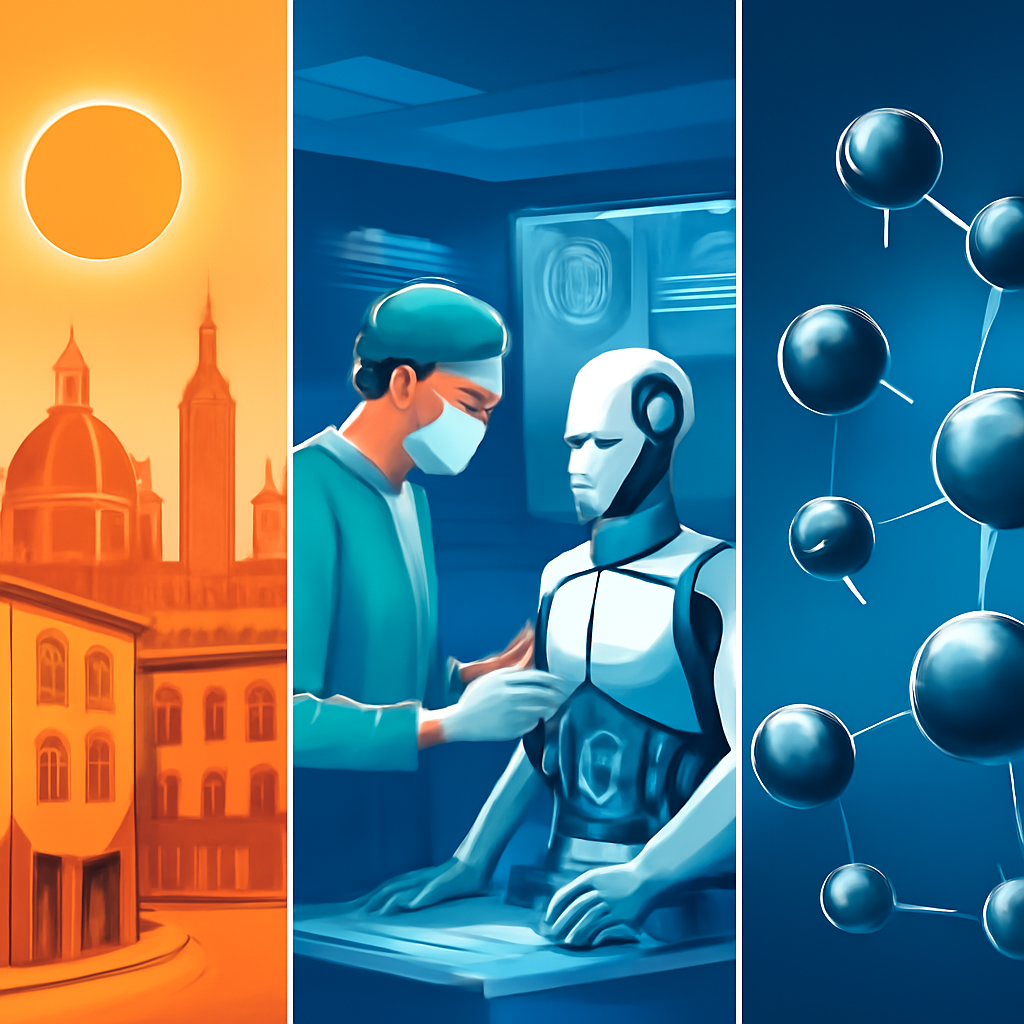
Extreme Heat, Medical Breakthroughs, and Evolutionary Clues: Science & Health Recap for July 9, 2026
This week’s top Science & Health stories span continents and disciplines: Italy faces unprecedented heatwaves, medical robotics make surgical history, and researchers rethink the chemistry of the heaviest elements. Meanwhile, disease outbreaks and new perspectives on human evolution capture global attention.
What Happened
Italy is bracing for another surge of extreme heat, with temperatures projected to reach up to 40°C next week. Red alerts are in effect for cities like Florence and Perugia due to health risks posed by the heatwave. In the US, Michigan is dealing with an explosive outbreak of a diarrheal parasite, with over 1,200 cases reported and neighboring Ohio also affected.
In medical technology, a preclinical trial has seen surgeons remotely operate humanoid robots to perform surgery on live pigs—a world-first that could signal new directions for robotics in healthcare. Meanwhile, a study on Homo floresiensis, the so-called Flores “hobbits,” suggests their dietary habits may challenge assumptions about their evolutionary origins.
On the scientific frontier, researchers have found direct experimental evidence that Einstein’s theory of relativity alters chemical bonding in heavy elements, overturning textbook models. Finally, a report examines why ambulance rides in the United States remain so expensive, highlighting systemic issues in emergency care economics.
Why It Matters
Extreme weather events like Italy’s heatwave pose growing health challenges, especially for vulnerable populations. The diarrheal parasite outbreak in Michigan underscores the importance of rapid public health response and monitoring. Advances in robotic surgery hint at a future where complex procedures could be performed with greater precision and possibly improved outcomes.
Insights into ancient human relatives such as Homo floresiensis help refine our understanding of human evolution and adaptation. The new findings on chemical bonds in heavy elements may have far-reaching implications for chemistry, materials science, and even quantum physics. Lastly, the persistent high cost of ambulance services in the US spotlights ongoing challenges in healthcare access and affordability.
Key Stats
- 40°C: Expected peak temperatures in Italy’s upcoming heatwave, with red alerts for Florence and Perugia.
- 1,200+ cases: Reported in Michigan’s diarrheal parasite outbreak; over 500 cases in neighboring Ohio.
- First-ever: Humanoid robots, controlled by surgeons, performed live pig surgery in a preclinical trial.
- Direct evidence: New research shows relativity changes chemical bonds in heavy elements.
What's Next
Authorities in Italy are preparing emergency measures to protect residents from the heat, while health officials in Michigan and Ohio monitor and respond to the parasite outbreak. Medical researchers will continue evaluating the safety and effectiveness of humanoid surgical robots, with human trials possibly on the horizon. Ongoing studies into ancient human species and chemical bonding in heavy elements are expected to yield further insights. Meanwhile, debates over ambulance costs and emergency care may prompt policy reviews or new strategies.