From Lunar Impacts to Genetic Mysteries: Science & Health Headlines for July 31, 2026
Intro
Today’s science and health news spans space, earth, and life itself. A SpaceX rocket is set to make lunar history, Italy copes with both a major earthquake and ongoing heatwaves, and researchers uncover surprising clues about our ancient ancestry. Meanwhile, a rare medical case sheds light on an unusual syndrome, and authorities investigate a tragic loss of elephant life in Kenya.
What Happened
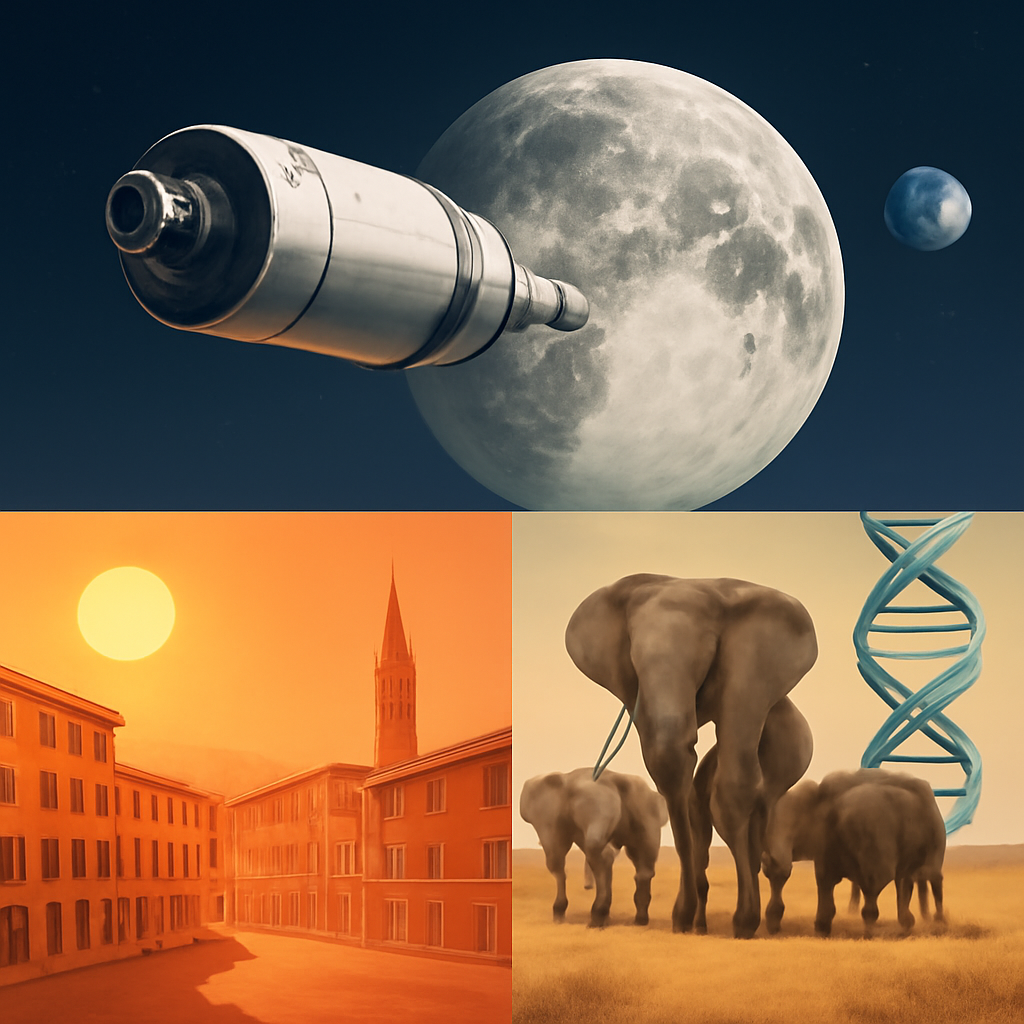
- SpaceX’s Falcon 9 Rocket to Crash Into the Moon: After years in orbit, a spent Falcon 9 rocket stage is on a collision course with the Moon. The impact is expected to create a visible plume of debris, offering astronomers a rare chance to observe such an event from Earth through telescopes.
- Earthquake Strikes Campi Flegrei, Italy: A 4.7-magnitude earthquake, the strongest in the region in four decades, shook the volcanic area of Campi Flegrei near Naples. The quake caused structural collapses in Pozzuoli and injured at least 10 people. Disruptions included halted train service and power outages.
- Extreme Heatwave Grips Italy: The country continues to experience its fourth major heatwave of the summer, with August set to begin under record-breaking temperatures and tropical nights. The persistent heat is putting additional strain on infrastructure and public health systems.
- Ancient ‘Ghost Lineage’ in African DNA: New research reveals that a previously unidentified group, now extinct with no direct descendants, contributed significant genetic material to modern humans in Africa. This “ghost lineage” adds a new layer to our understanding of human evolution.
- Rare Shoulder Syndrome Identified: Doctors investigating a patient’s severe shoulder pain discovered the absence of a shoulder joint, a rare condition linked to Milwaukee Shoulder Syndrome, first described in the early 1980s. The syndrome is characterized by rapid joint destruction, typically in elderly women.
- Fifteen Elephants Die in Kenyan National Park: Authorities are probing the deaths of 15 elephants at a national park in Kenya. Early indications suggest poisoning from pesticides used on nearby farms may be responsible, raising concerns about wildlife protection and agricultural practices.
Why It Matters
These stories highlight the interconnectedness of scientific inquiry, environmental health, and human wellbeing. The lunar rocket crash provides a unique research opportunity, while Italy’s dual crises underscore the challenges of natural disasters in densely populated regions. Genetic research continues to reshape our understanding of human history, and rare medical cases remind us of the complexity of the human body. Meanwhile, the elephant deaths in Kenya point to ongoing tensions between conservation and agriculture.
Key Stats
- 4.7: Magnitude of the earthquake at Campi Flegrei, the strongest in 40 years.
- 10: People injured in the Italian quake, with significant infrastructure disruption.
- 15: Elephants found dead in a Kenyan park, suspected pesticide poisoning.
- 1981: Year Milwaukee Shoulder Syndrome was first described.
- 4: Number of major heatwaves in Italy this summer, with record-breaking temperatures expected to continue.
What's Next
Astronomers will closely monitor the Falcon 9’s impact on the Moon, seeking to learn more about lunar geology and debris behavior. Italian authorities are assessing damage and preparing for further seismic or heat-related emergencies. Geneticists will continue to explore the implications of the ghost lineage discovery, potentially rewriting parts of human evolutionary history. In Kenya, ongoing investigations may lead to tighter controls on pesticide use near wildlife reserves. Medical professionals will use rare case studies to better understand and diagnose unusual syndromes affecting joint health.