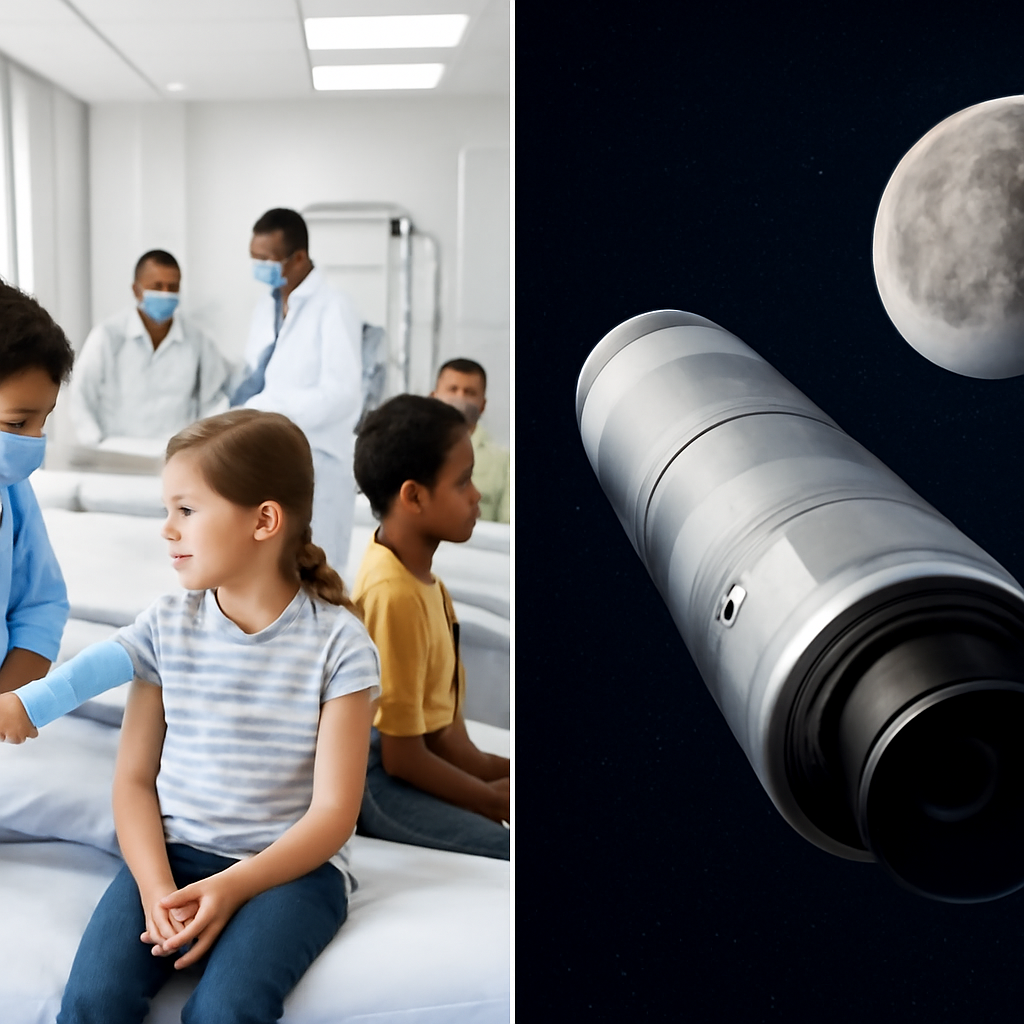
Record Measles Outbreak in the US and SpaceX Rocket Debris Heads for the Moon
What Happened
In a significant development for health and space science, the United States is experiencing its largest measles outbreak in 35 years, surpassing previous records with months left in 2026. Health authorities have raised alarms over the number of cases, prompting public figures, including Robert F. Kennedy Jr., to advocate for vaccination. Simultaneously, a section of a SpaceX rocket is on a collision course with the Moon. The upper stage is expected to crash on August 5 at 2:35 AM US time (8:35 AM in Italy), marking another chapter in the growing issue of space debris.
Why It Matters
The resurgence of measles in the US highlights ongoing challenges in public health, particularly in vaccine coverage and misinformation. Measles, a highly contagious disease, can lead to severe complications, especially in children. The outbreak underscores the importance of immunization campaigns and public trust in vaccines. Meanwhile, the impending impact of SpaceX rocket debris on the lunar surface draws attention to the environmental consequences of increased space activity. As more missions launch, managing space debris—both in Earth's orbit and beyond—has become an urgent topic for scientists and policymakers.
Key Stats
- The US has recorded the highest number of measles cases since at least 1991, with several months remaining in 2026.
- Robert F. Kennedy Jr., a prominent public figure, has publicly recommended vaccination amid the outbreak.
- A SpaceX rocket upper stage will hit the Moon at 2:35 AM US time on August 5, 2026.
- The incident illustrates growing concerns over space debris as commercial launches accelerate.
What's Next
US health authorities are expected to intensify vaccination campaigns and public information efforts to contain the measles outbreak. Ongoing surveillance and response strategies will be essential to prevent further escalation. In the space sector, the lunar impact of the SpaceX rocket will likely fuel further debate on space debris management and international regulatory frameworks. Scientists may use the opportunity to study the impact and its effects on the lunar surface, contributing to future mission planning and planetary protection protocols.